
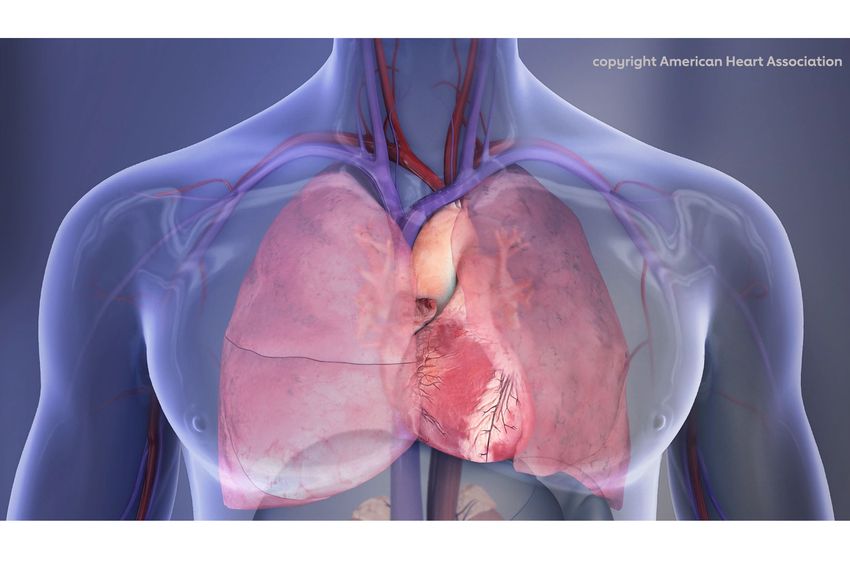
DALLAS and WASHINGTON — In a landmark move for cardiovascular care, the American Heart Association (AHA) and the American College of Cardiology (ACC) jointly released the first clinical practice guideline on acute pulmonary embolism (PE) today, detailing fresh approaches to diagnosis, management and follow-up care for the potentially life-threatening condition.
Published simultaneously in Circulation and the Journal of the American College of Cardiology, the guideline introduces a new Acute Pulmonary Embolism Clinical Category system designed to refine severity classification and guide treatment decisions for adults experiencing a PE. A pulmonary embolism occurs when a blood clot, often originating in a deep vein in the leg, travels to the lungs and blocks an artery.
Approximately 470,000 people are hospitalized with PE annually in the U.S., and roughly one in five high-risk patients die, according to the AHA’s 2026 Heart Disease and Stroke Statistics. The guideline aims to improve outcomes by providing comprehensive recommendations tailored to the care setting – emergency department, inpatient, or outpatient – and the availability of local resources.
“There have been significant advances in the understanding of pulmonary embolism and treatments to effectively manage this condition,” said Dr. Mark A. Creager, chair of the guideline writing committee and a professor of medicine at the Geisel School of Medicine at Dartmouth College. “This guideline is a road map to help clinicians navigate these advances for the safest and most effective approaches to care for people with this condition.”
The new clinical categories – A through E – classify patients based on the severity of their symptoms and risk for adverse outcomes. Patients in categories A and B, exhibiting no or mild symptoms and a low risk of complications, may be safely discharged from the emergency department. Categories C through E encompass individuals with more pronounced symptoms and a higher risk, requiring hospitalization.
The guideline identifies several risk factors associated with acute PE, including recent surgery or hospitalization, trauma, prolonged immobility, pregnancy, obesity, cancer, and blood clotting disorders. Prompt diagnosis is crucial, but often challenging, as symptoms like shortness of breath, chest pain, and rapid heartbeat can mimic other conditions.
Diagnostic testing begins with assessing the clinical probability of PE and may include a blood test to measure D-dimer, a protein fragment released when a blood clot breaks down. Normal D-dimer levels suggest PE is unlikely. If D-dimer levels are elevated, or the clinical probability is high, a computed tomography pulmonary angiography (CTPA) is recommended to visualize the location and size of any blood clots. Alternative imaging, such as a lung ventilation/perfusion scan, is available for patients unable to undergo CTPA.
Anticoagulants, or blood thinners, remain the primary treatment for confirmed acute PE. The guideline favors direct oral anticoagulants (DOACs) like rivaroxaban, apixaban, edoxaban, or dabigatran over vitamin K antagonists like warfarin, citing their safety, ease of use, and reduced bleeding risk. However, DOACs are not recommended during pregnancy, and low-molecular-weight heparin or unfractionated heparin are suggested alternatives in such cases.
Patients in more severe categories (D-E) may require advanced treatments, including clot-dissolving drugs administered intravenously or through a catheter, mechanical clot removal, or surgical intervention. The guideline also addresses the need for appropriate sedation, ventilation, and circulatory support for critically ill patients.
Follow-up care is also emphasized, with recommendations for early follow-up within one week of hospital discharge to review the treatment plan and monitor for complications. A clinic visit should also occur by three months after diagnosis to determine the duration of anticoagulant therapy and assess ongoing symptoms. Long-term monitoring for chronic thromboembolic pulmonary disease (CTEPD), a condition involving persistent blood clots, is also advised.
The guideline also addresses psychological health, encouraging screening for depression, anxiety, and post-traumatic stress disorder in patients who have experienced acute PE. It also recommends encouraging early walking to promote blood flow and provides precautions for travel, including frequent movement and compression socks for long journeys.
The guideline was developed in collaboration with eight other health care organizations, including the American College of Clinical Pharmacy and the American College of Emergency Physicians.
