
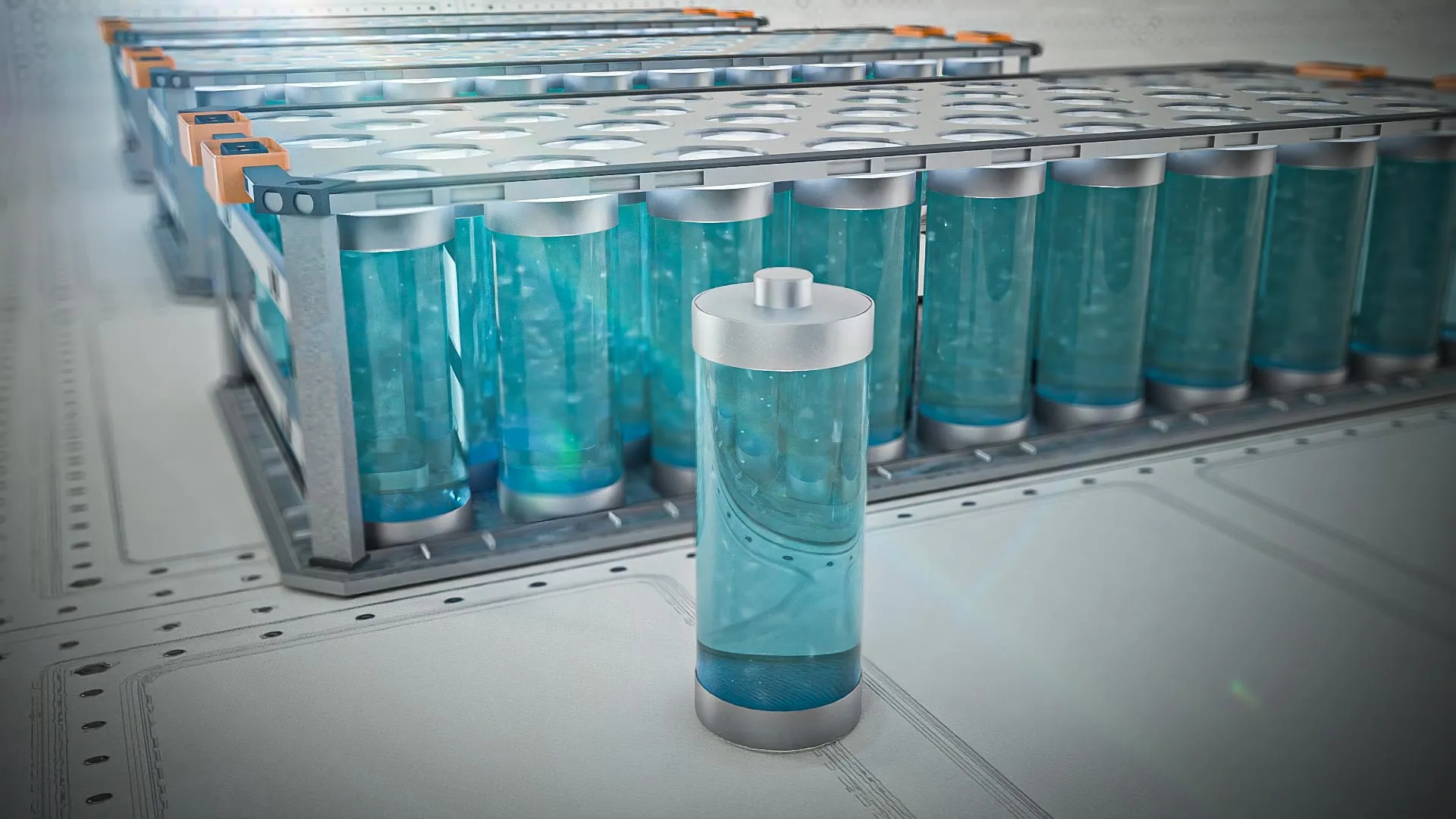
A University of Surrey research team has achieved a significant breakthrough in sodium-ion battery technology, potentially paving the way for a more sustainable and affordable alternative to lithium-ion batteries. The team discovered that retaining naturally occurring water within a key battery material, sodium vanadium oxide, dramatically improves its performance and stability, and even enables a process of electrochemical desalination.
The findings, published in the Journal of Materials Chemistry A, challenge conventional wisdom in battery development, where removing water from materials like sodium vanadium oxide was previously considered essential. Researchers found that the “wet” version of the material, formally known as nanostructured sodium vanadate hydrate (NVOH), stored almost twice as much charge as typical sodium-ion materials, rivaling the performance of some of the best cathodes currently available.
“Our results were completely unexpected,” said Dr. Daniel Commandeur, Surrey Future Fellow at the University of Surrey School of Chemistry and Chemical Engineering, and lead author of the study. “Sodium vanadium oxide has been around for years, and people usually heat-treat it to remove the water because it’s thought to cause problems. We decided to challenge that assumption, and the outcome was far better than we anticipated. The material showed much stronger performance and stability than expected and could even create exciting new possibilities for how these batteries are used in the future.”
Beyond improved energy storage, the research revealed an unexpected capability: the NVOH material continued to function effectively when immersed in salt water. During testing, the system simultaneously removed sodium ions from the saltwater, while a graphite electrode extracted chloride ions, a process called electrochemical desalination. This suggests the potential for sodium-ion batteries to not only store energy but also contribute to water purification.
“Being able to use sodium vanadate hydrate in salt water is a really exciting discovery, as it shows sodium-ion batteries could do more than just store energy — they could also help remove salt from water,” Dr. Commandeur explained. “In the long term, that means we might be able to design systems that use seawater as a completely safe, free and abundant electrolyte, while also producing fresh water as part of the process.”
Sodium-ion batteries offer several advantages over their lithium-ion counterparts. Sodium is significantly more abundant and widely available than lithium, making it a potentially cheaper and more sustainable resource. The University of Surrey’s breakthrough addresses a key challenge in sodium-ion technology – achieving performance levels comparable to lithium-ion batteries. The improved stability of the NVOH material, demonstrated by over 400 charge cycles in testing, is a crucial step towards commercial viability.
The potential applications of this technology are broad, ranging from large-scale energy storage for power grids to powering electric vehicles. The simplified production process enabled by the Surrey team’s findings could accelerate the development and deployment of commercially viable, sustainable energy storage solutions. According to a University of Surrey press release issued October 20, 2025, the discovery could also accelerate the development of sodium-ion batteries as a viable alternative to current lithium-based technology.
Researchers are continuing to investigate the long-term performance and scalability of the NVOH material in sodium-ion batteries, with ongoing tests exploring its behavior in various saltwater conditions.
