
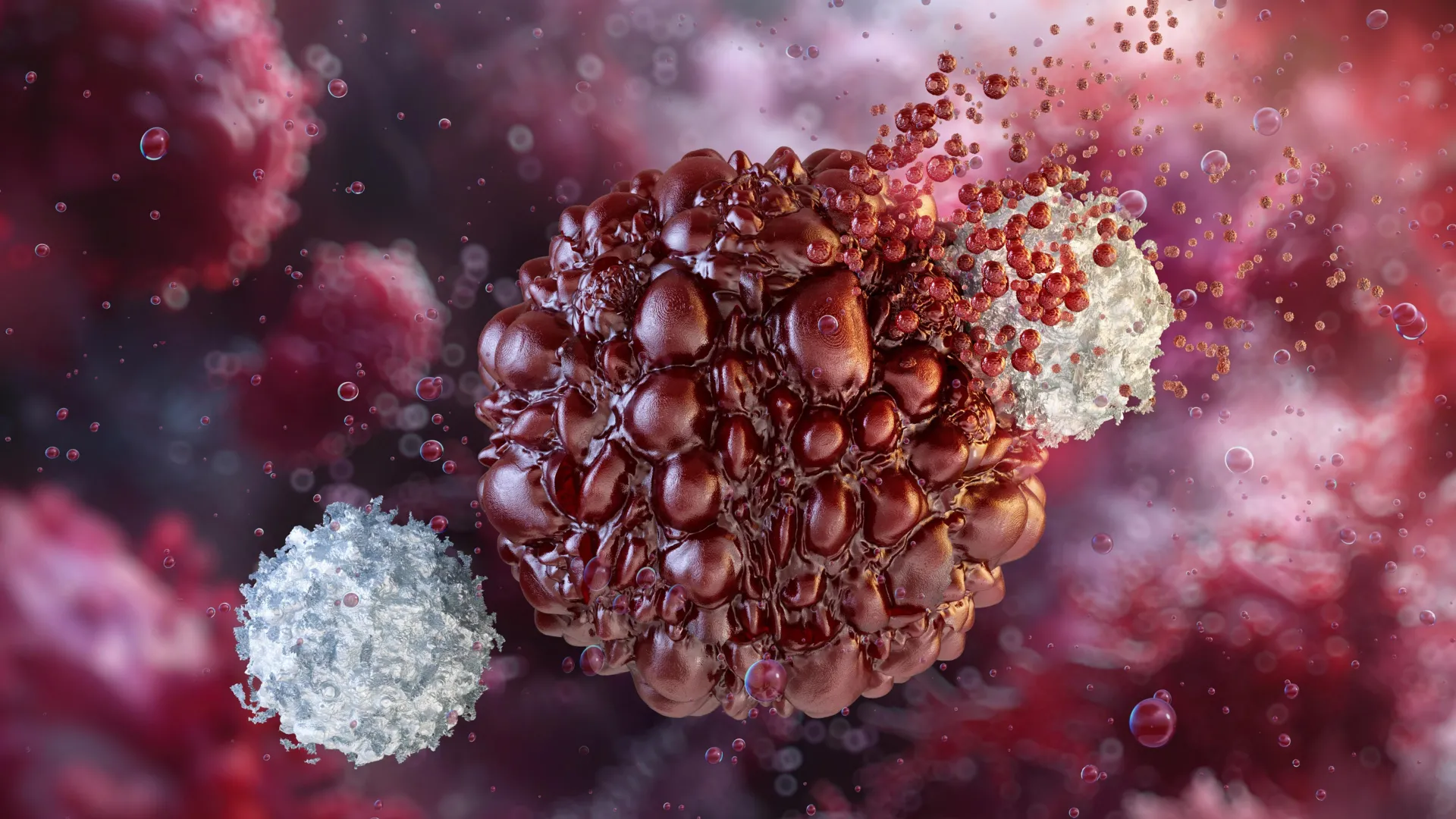
Chinese scientists have achieved a significant breakthrough in cancer immunotherapy, demonstrating the ability to generate millions of tumor-killing natural killer (NK) cells from a single stem cell. The research, conducted by a team at the Institute of Zoology of the Chinese Academy of Sciences, offers a potentially more efficient and cost-effective method for producing these crucial immune cells for cancer treatment.
NK cells are vital components of the body’s innate immune system, providing a rapid response to viral infections and cancerous growths. Their ability to recognize and destroy abnormal cells without prior sensitization makes them attractive candidates for immunotherapy, particularly in the form of chimeric antigen receptor (CAR)-NK therapy. This therapy involves genetically engineering NK cells to express a CAR, enabling them to target specific markers on cancer cells with greater precision.
Traditional methods of obtaining NK cells for CAR-NK therapy have relied on mature NK cells harvested from peripheral blood or cord blood. Yet, these approaches are hampered by inconsistencies in cell quality, limited genetic modification efficiency, high production costs, and lengthy processing times. Professor WANG Jinyong and his team sought to overcome these challenges by initiating the process with CD34+ hematopoietic stem and progenitor cells (HSPCs) derived from cord blood.
The team’s innovative approach focuses on generating induced NK (iNK) cells and CAR-engineered iNK (CAR-iNK) cells from these early-stage stem cells. Previous attempts to derive NK cells from cord blood-derived CD34+ HSPCs were limited by low efficiency and immature cell function. The researchers addressed this by shifting the genetic engineering step earlier in the developmental process, directly modifying the CD34+ HSPCs. This strategy combined CAR transduction with robust expansion of the progenitor cells and guided differentiation towards the NK cell lineage, according to findings published in Nature Biomedical Engineering.
The process utilizes a three-stage expansion and differentiation system. Initially, CD34+ HSPCs – or CD19 CAR-transduced HSPCs – are expanded using irradiated AFT024 feeder cells, resulting in a cell multiplication rate of approximately 800- to 1,000-fold within 14 days. Subsequently, the expanded cells are cultured with OP9 feeder cells, which form artificial hematopoietic organoid aggregates. These aggregates provide a supportive microenvironment that promotes efficient commitment to the NK cell lineage and subsequent development.
The final stage involves allowing the committed NK cells to mature and further proliferate. This refined process yields highly purified iNK or CAR-iNK cells that express endogenous CD16, a marker associated with NK cell activation. Remarkably, the researchers demonstrated that a single CD34+ HSPC can generate up to 14 million iNK cells or 7.6 million CAR-iNK cells. The team estimates that just one-fifth of a standard cord blood unit could potentially provide enough cells for thousands of treatment doses.
Beyond the substantial increase in cell yield, the recent method also significantly reduces the amount of viral vector required for CAR engineering. Compared to the quantities typically needed to modify mature NK cells, this approach utilizes approximately 1/140,000 to 1/600,000 of the viral vector by days 42 and 49 of the culture, respectively. This reduction in viral vector usage has implications for both cost and safety.
Laboratory testing confirmed the potent tumor-killing capabilities of both iNK and CAR-iNK cells. In preclinical studies using cell line-derived xenograft (CDX) and patient-derived xenograft (PDX) mouse models of human B-cell acute lymphoblastic leukemia (B-ALL), CD19 CAR-iNK cells effectively reduced tumor growth and prolonged the survival of the animals.
The research was supported by funding from the Ministry of Science and Technology of the People’s Republic of China and the National Natural Science Foundation of China.
