
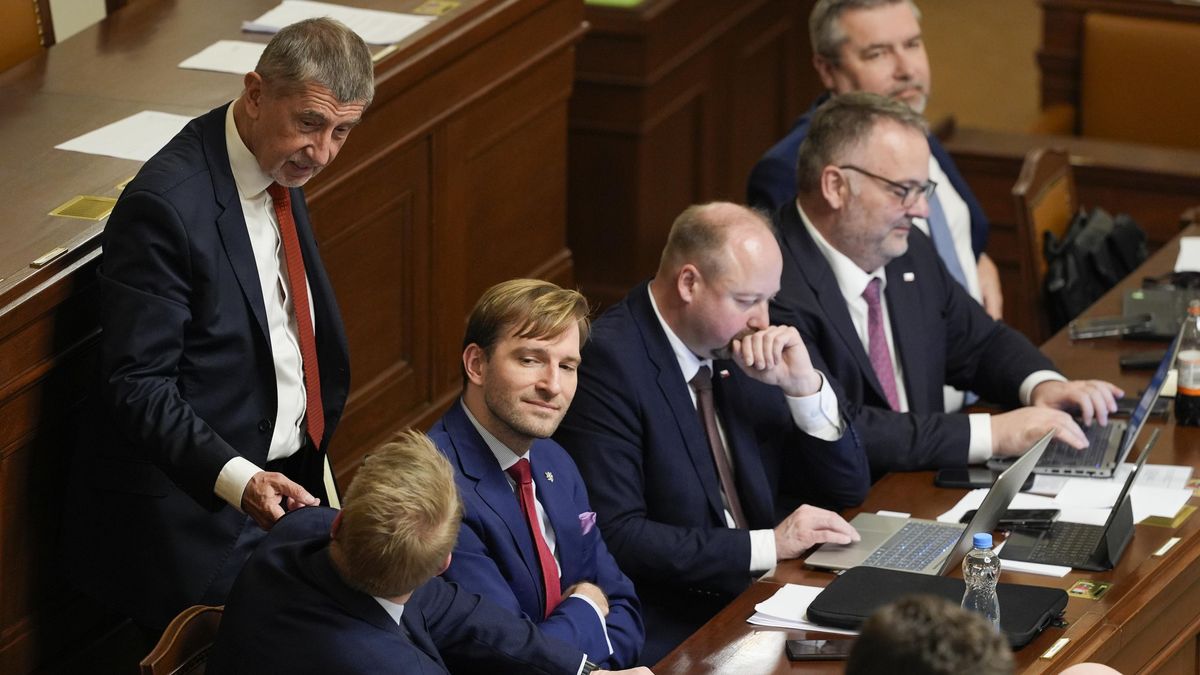
The Czech government approved a bill earlier this month designed to allow authorities to seize assets suspected of illicit origin, even without a direct link to a specific crime. The legislation, championed by Justice Minister Jiří Tejic, aims to combat money laundering and disrupt criminal networks operating within the country.
According to Tejic, the law will target funds flowing through Czech “transit accounts” – those used briefly to deposit and then quickly transfer money, effectively laundering it. “The money simply warms up on these so-called transit accounts and then flows on, thereby legalizing it,” he explained. He added that this method is also used to launder proceeds from drug trafficking and tax fraud.
Lukáš Kraus, a lawyer and coordinator for the Odolné Česko (Resilient Czechia) initiative, stated that as much as 100 billion Czech crowns (approximately $4.3 billion USD) passed through the Czech Republic in 2020, and 2021. Kraus highlighted the case of Mikhail Gutseriev, a Russian businessman subject to sanctions, whose refinery sent 750 million Czech crowns to a newly established Czech firm. A significant portion of that sum was then allegedly routed to companies in the British Virgin Islands, a pattern investigators identified as sophisticated money laundering.
Currently, Czech authorities can seize suspicious funds, but are required to release them if investigators cannot connect them to a specific criminal offense. The new law seeks to overcome this obstacle, particularly in cases involving international cooperation – or lack thereof – such as those involving Russian entities.
The previous government, led by Petr Fiala, had tasked then-Justice Minister Pavel Blažek with drafting a similar law by the finish of 2024, but the effort stalled following October’s parliamentary elections. The current bill fulfills a directive issued at the European level.
Under the proposed legislation, if the value of the assets exceeds one million Czech crowns and involves an organized crime group, a court can order the forfeiture of the assets in a public hearing. The owner of the funds would have the opportunity to demonstrate legitimate ownership.
The Ministry of Finance initially expressed concerns about the bill’s constitutionality, arguing it could infringe on property rights. Tejic stated that his ministry responded to the criticism and revised the proposal, including expanding the accompanying report to address constitutional concerns. “The final version of the proposal was submitted to the government without objection, and Notice currently no doubts about its constitutionality,” he said.
It remains unclear whether the bill will pass through the Chamber of Deputies. The Justice Ministry maintains it has done everything possible to ensure broad acceptance of the legislation.
