
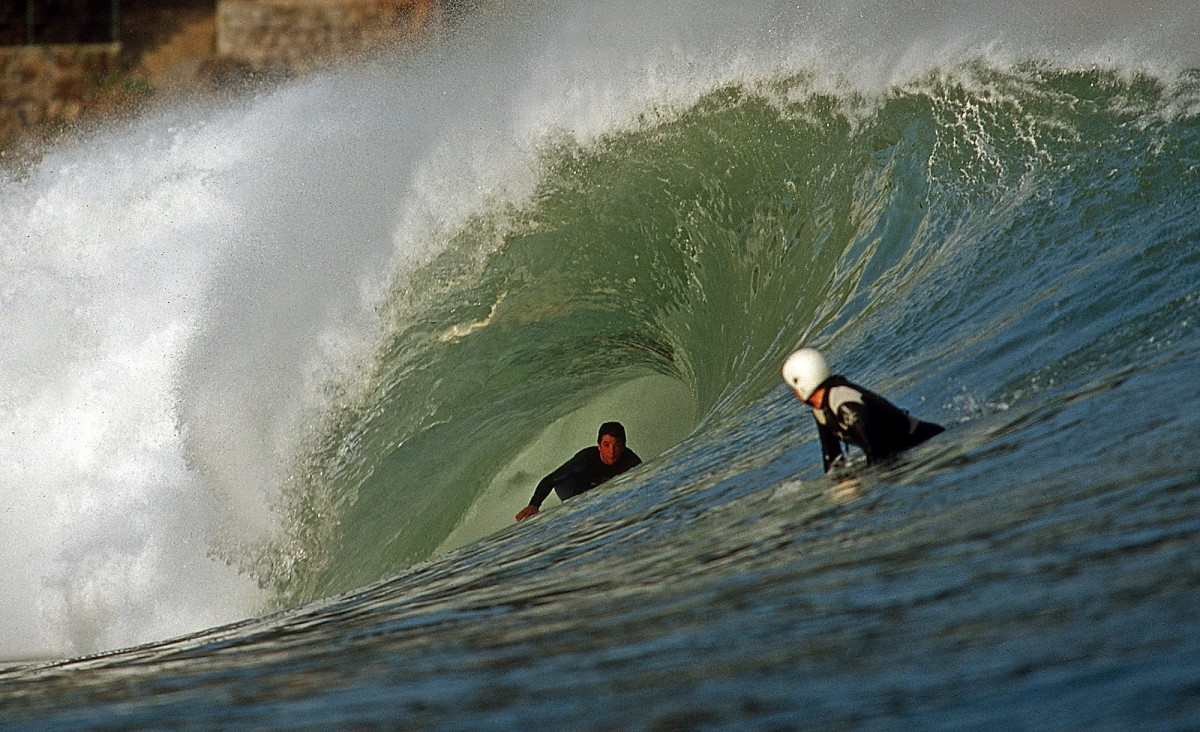
The righthand wedge at Molhe Leste in Peniche, Portugal, remains fiercely guarded by a local contingent of bodyboarders and surfers, a pattern echoed at surf breaks around the globe where territorialism dictates access to waves. While the World Surf League occasionally relocates competitions to Molhe Leste when conditions at the nearby Supertubos beachbreak are unfavorable, the wave itself is typically reserved for those deemed “invited” – a status rarely extended to visiting surfers.
This localized control isn’t unique to Portugal. Surf historian Matt Warshaw observed that, “That’s the thing about the Bay Boys and their thuggish behavior: they’ve kept their break free of crowds. Localism works.” This sentiment reflects a longstanding dynamic within the surfing world, where established communities often prioritize maintaining access and quality of waves over welcoming outsiders.
In Mundaka, Spain, a particularly strong winter swell has created world-class conditions, but access remains highly restricted. The wave, which breaks properly for only a few hours around high tide, is protected by a small, highly skilled group of Basque surfers who are deeply connected to the break. While overt violence is uncommon, the wave’s natural limitations and the locals’ dedication effectively limit opportunities for others.
Similar dynamics are at play in Tamarin Bay, Mauritius, where a group known as the “White Shorts” – reportedly French expatriates – enforce a strict localism. The bay, featured in the 1970s film “The Lost Island Of Santosha,” is both crowded and fickle, contributing to the locals’ protective stance. A 2017 incident involving a tourist and a local enforcer, Bruno, highlighted the tensions, though reports suggest the situation may have eased somewhat.
On the island of Lanzarote, El Quamao has been a localized spot for decades. The Europe Stormrider Guide, dating back to the late 1980s, described a “Coliseum atmosphere” and noted that it was “one of the most localised” breaks in the Canary Islands. While locals are willing to share the wave, establishing credibility requires years of dedication and enduring challenges. Neighboring Gran Canaria, by contrast, is described as a complete no-go zone for visitors.
In California, Topanga Beach has seen a rise in aggressive localism, particularly since the surge in surfing’s popularity following the COVID-19 pandemic. A Reddit review described the environment as a “unique mix of unpleasantness,” while KCRW radio reported an increase in aggression since the 1970s. One surfer recounted being “fully chewed out” by a 12-year-old girl for attempting to surf the break.
Even on Oahu, Hawaii, known for its strong surfing traditions, Westside breaks are notoriously difficult for outsiders to access. The area, centered around lifeguard tower 47 Bravo at Makaha, has a deeply ingrained hierarchy, and even experienced North Shore surfers hesitate to paddle out. The Westside has a history of producing legendary surfers like Rell Sunn and Sunny Garcia, but it remains a challenging environment for newcomers.
Jakes Point in Kalbarri, Western Australia, presents another formidable barrier to entry. The isolated left-hand break is best during winter, and the takeoff zone is described as small and crowded, often occupied by a diverse group of locals including fishermen, miners, and tradespeople. Visitors are often offered only a “crumb” – a closing-out wave – if they are allowed to surf at all.
