
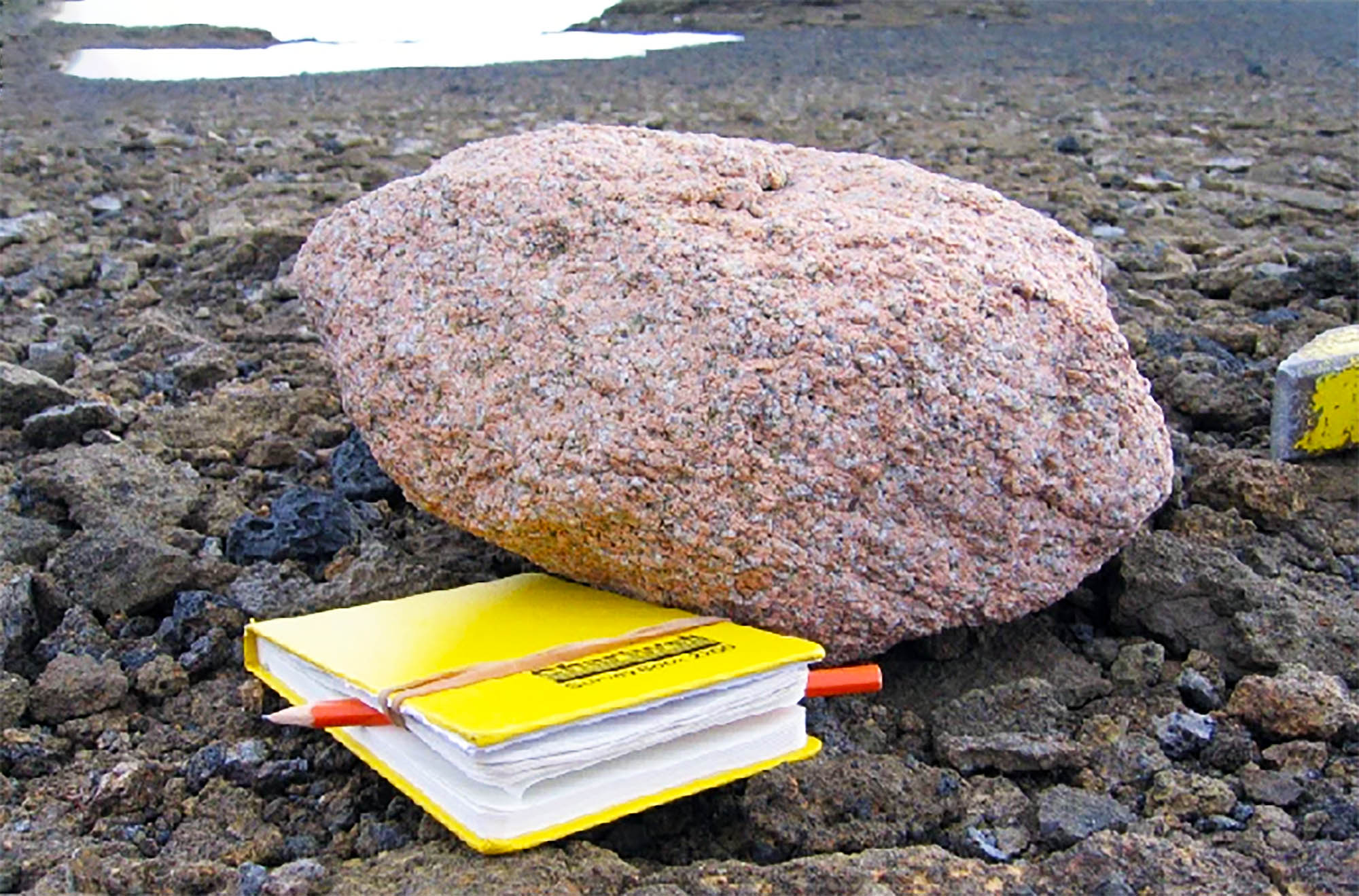
A hidden granite formation, almost 100 kilometers (62 miles) wide and seven kilometers (4.3 miles) thick – roughly half the size of Wales – has been discovered beneath the West Antarctic Ice Sheet, reshaping scientists’ understanding of the region’s glacial history and future stability. The discovery, announced February 14, 2026, originated from an investigation into the origins of scattered pink granite boulders found in the Hudson Mountains.
For decades, the presence of these pink granite boulders, contrasting sharply with the surrounding dark volcanic rock, puzzled researchers. A team from the British Antarctic Survey (BAS) began analyzing the boulders, determining through radioactive decay dating that the granite formed approximately 175 million years ago during the Jurassic period. This established the age of the rock, but not how it ended up so far from its likely origin.
The breakthrough came with airborne gravity surveys conducted over the Pine Island Glacier. Aircraft equipped with gravity sensors detected an anomaly beneath the ice, revealing the massive granite deposit. “It’s remarkable that pink granite boulders spotted on the surface have led us to a hidden giant beneath the ice,” said Dr. Tom Jordan, a geophysicist at BAS. “By combining geological dating with gravity surveys, we’ve not only solved a mystery about where these rocks came from, but also uncovered new information about how the ice sheet flowed in the past and how it might change in the future.”
Scientists believe the granite was originally part of a bedrock feature that was eroded and shaped by the Pine Island Glacier during the last ice age, roughly 20,000 years ago. The more powerful glacier of that era tore fragments of the granite from the bedrock and deposited them on the Hudson Mountains as the ice sheet thinned. The location of these boulders now serves as markers indicating the glacier’s former extent.
The composition of the bedrock beneath a glacier significantly influences its movement and melting rate. Granite, for example, can create friction that slows ice flow, although the presence of meltwater channels can accelerate it. Understanding the characteristics of this hidden granite deposit is crucial for refining models used to predict the behavior of the Pine Island Glacier, one of the fastest-melting regions in Antarctica.
Dr. Joanne Johnson, a geologist at BAS and co-author of the study, emphasized the value of the physical samples. “Rocks provide an amazing record of how our planet has changed over time, especially how ice has eroded and altered the landscape of Antarctica,” she said. “Boulders like these are a treasure trove of information about what lies deep beneath the ice sheet, far out of reach.”
The discovery highlights the interconnectedness of geological history and glacial dynamics in West Antarctica. The granite deposit influences the current ice flow, and its past behavior provides critical data for improving climate change models and predicting future sea level rise. Researchers continue to analyze data from the region, seeking to further refine their understanding of this hidden landscape and its impact on the global climate system.
