
A new clinical trial led by doctors at the Vall d’Hebron University Hospital in Barcelona has shown promising results in the fight against infant neuroblastoma, a highly aggressive childhood cancer. The trial, which involved 65 patients across seven European countries, demonstrated that combining chemotherapy with the immunotherapy drug dinutuximab beta led to tumor reduction in 30.2% of cases, compared to 18.2% with chemotherapy alone, according to results published in the Journal of Clinical Oncology.
Neuroblastoma affects approximately 90 children each year in Spain and accounts for around 10% of all childhood cancers. The disease often presents with a poor prognosis, with high rates of relapse and limited treatment options. The study focused on patients with neuroblastoma that had either stopped responding to initial treatments or had returned after periods of remission.
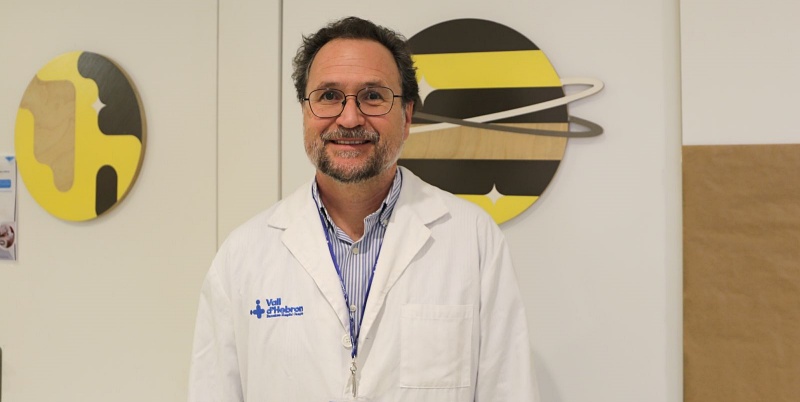
Dr. Lucas Moreno, head of the Pediatric Oncology and Hematology Service at Vall d’Hebron and leader of the Cancer and Childhood Hematological Diseases group at the Vall d’Hebron Research Institute (VHIR), spearheaded the international effort. “BEACON is the largest international clinical trial conducted to date evaluating this treatment in patients with neuroblastoma resistant to treatment or in relapse,” Dr. Moreno stated in a hospital press release.
The BEACON trial involved patients aged between one and 18 years, recruited from 29 centers across Europe. Participants were divided into two groups: 22 received chemotherapy alone, while 43 received a combination of chemotherapy and dinutuximab beta. In some cases, patients initially receiving only chemotherapy were later switched to the combined therapy if their tumors did not respond adequately.
Beyond tumor reduction, the trial also assessed progression-free survival – the length of time patients live without tumor growth or new lesions. Patients receiving the combined treatment experienced a median progression-free survival of 11.1 months, significantly longer than the 3.8 months observed in those treated with chemotherapy alone. One year after enrollment, 44% of patients on the combined therapy were still alive with stable disease, compared to 27% of those receiving chemotherapy only.
Researchers also reported that the combination therapy was generally well-tolerated, with most side effects being mild, including fever, allergic reactions, drowsiness and dizziness. “We have observed that the use of combined therapy is able to improve the clinical outcomes of patients with relapsed or refractory neuroblastoma and could therefore become a new therapeutic strategy for these children,” Dr. Moreno said.
The BEACON project is a collaborative effort involving 43 European hospitals, the European Neuroblastoma Group of the International Society of Paediatric Oncology (SIOPEN), and the Innovative Therapies for Children with Cancer (ITCC) consortium. Participating Spanish hospitals included Vall d’Hebron, the Niño Jesús University Children’s Hospital in Madrid, the La Fe University Hospital in Valencia, and Cruces Hospital in Baracaldo.
Building on the BEACON results, a follow-up trial, BEACON2, is now underway. This new study will compare the benefits of chemotherapy with bevacizumab or dinutuximab beta, as well as the combination of both drugs. Dr. Moreno described BEACON2 as a platform for evaluating new drugs and combinations in neuroblastoma, with the potential to incorporate additional treatment options in the coming years. A parallel study, BEACON-BIO, is also analyzing patient samples to identify genomic biomarkers and assess liquid biopsies, aiming to personalize treatment approaches based on individual patient characteristics.
