
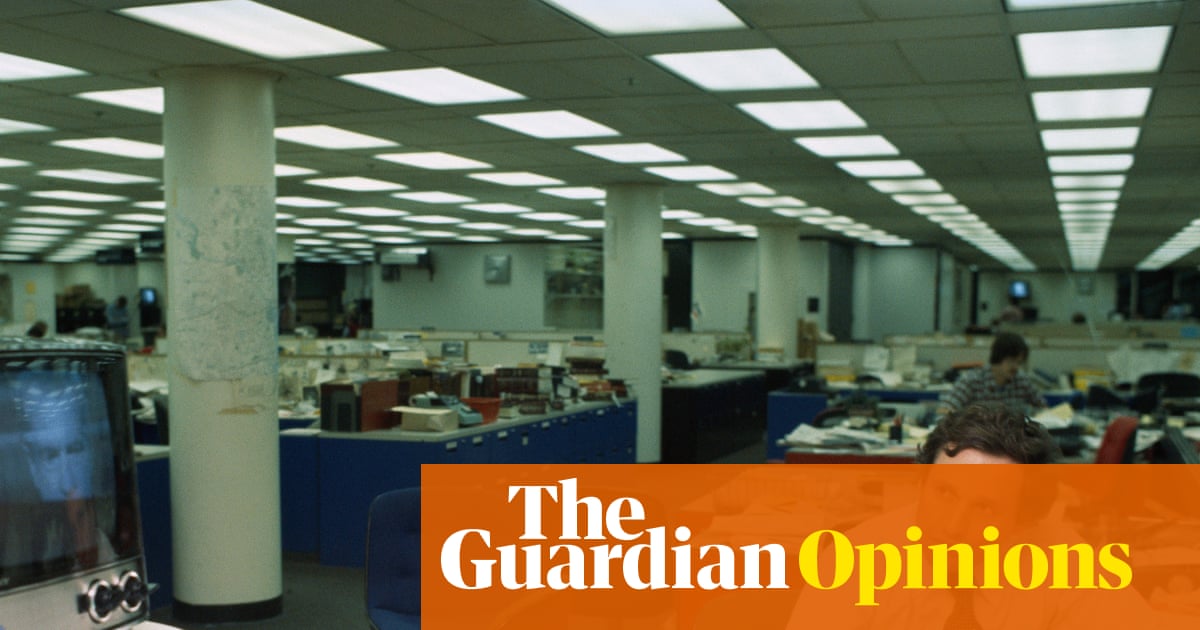
Hundreds of journalists at the Washington Post learned of their job losses on a video call last week, marking what former staffer Paul Farhi described as “the biggest one-day wipeout of journalists in a generation.” The cuts, impacting nearly half of the 790-person workforce, included the dismantling of half of the paper’s foreign bureaus, including the position of its war reporter in Ukraine.
The layoffs, announced February 5, 2026, have ignited a debate about the future of news ownership and the role of billionaires in the media landscape. The Washington Post is owned by Jeff Bezos, the founder of Amazon, who purchased the paper in 2013.
The scale and manner of the cuts have drawn comparisons to the P&O Ferries mass dismissal in 2022, criticized for its abrupt and impersonal execution. The redundancies arrive amidst a long-term financial struggle for the news industry, exacerbated by the rise of the internet and the shift in advertising revenue.
The situation has prompted accusations that Bezos is deliberately undermining the Post, potentially due to conflicts of interest with his other ventures, Amazon and Blue Origin. Slate magazine, owned by the Graham family – the Post’s previous owners – accused Bezos of “accelerating the [Post’s] decline on purpose” because of “external economic interests.”
Bezos’s ownership has been marked by periods of both investment and intervention. Following the 2013 purchase, he reportedly invested in reporter bonuses and personally intervened to secure the release of reporter Jason Rezaian from an Iranian jail. He also traveled to Istanbul to address the murder of columnist Jamal Khashoggi. However, tensions arose during the Trump administration.
In 2019, Amazon lost a $10 billion government computing contract, a decision Bezos alleged was influenced by then-President Donald Trump’s animosity towards the Washington Post. Bezos claimed Trump exerted “improper pressure” to harm a perceived political enemy, a claim the U.S. Department of Defense disputed, maintaining the selection process was free of external influence.
More recently, Bezos intervened in the Post’s editorial decisions, reportedly pulling a planned endorsement of Kamala Harris during the 2024 presidential election, citing concerns about creating distrust. He also pushed for a more free-market oriented perspective in the paper’s opinion pages. This decision led to the cancellation of approximately 250,000 subscriptions.
The financial losses at the Washington Post – estimated at $100 million annually – appear to be a minor concern for Bezos, whose personal fortune is estimated at $266 billion. His investment income alone dwarfs the newspaper’s losses.
Critics point to the ownership structure of the Post as a fundamental problem, arguing that the interests of a wealthy individual are unlikely to align with the public solid. Tina Brown, an award-winning editor, suggested that for Bezos, “the purpose of fuck-you money is to have more fuck-you money,” and a newspaper that potentially hinders that accumulation of wealth may be expendable.
Possible solutions have been proposed, including a philanthropic intervention by Bezos’s ex-wife, MacKenzie Scott, and other tech billionaires’ former spouses. Another suggestion involves establishing a trust-based ownership model, similar to that of The Guardian, which would safeguard editorial independence. However, the most likely outcome, according to observers, is a continued decline in the Post’s journalistic output and influence.
A rally in support of Washington Post guild members was held outside the paper’s office building on February 5, 2026, according to UPI/Shutterstock.
