
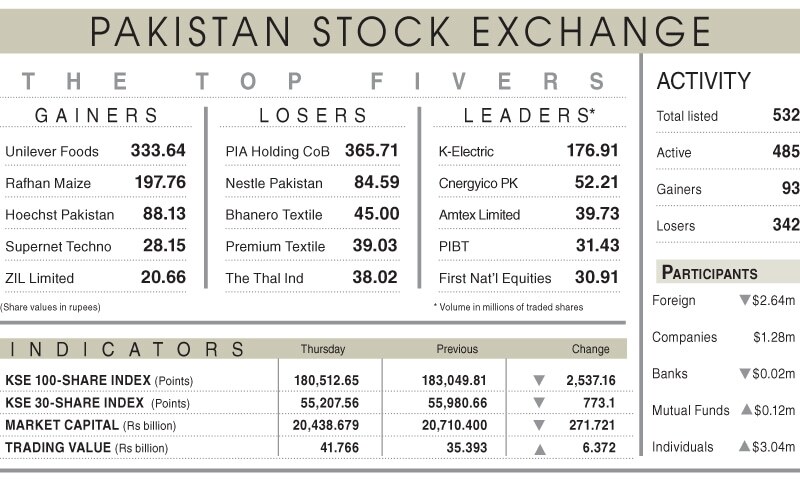
Karachi, Pakistan – Pakistan’s benchmark KSE-100 index experienced a volatile trading session on Thursday, ultimately closing at 180,512.65, a decline of 2,537.16 points, or 1.40 percent, after a sharp intraday drop triggered by concerns over corporate profitability and investor panic. The index had briefly fallen below 179,000 points during the session, erasing gains from a recent three-day recovery.
The downturn followed disappointing fourth-quarter results from Engro Fertiliser, which reported lower-than-expected gross margins and a Rs2 billion super tax charge, reducing earnings per share to Rs6.26 and resulting in a muted dividend payout of Rs4. This news acted as a catalyst for a broad-based sell-off, according to Topline Securities.
The energy sector bore the brunt of the selling pressure, with Pakistan Petroleum Ltd (PPL) and Oil and Gas Development Company Ltd (OGDCL) collectively contributing a 383-point decline to the index. Engro Fertiliser, Hub Power, Systems Ltd, and Bank Al-Habib further amplified the losses, dragging down the index by an additional 645 points.
Trading volume remained high, reaching 873 million shares, with a turnover of Rs 41.7 billion. K-Electric was the most actively traded stock, with 176 million shares changing hands.
Adding to the negative sentiment, reports surfaced regarding a comprehensive review of investments in the Reko Diq project by Barrick Gold, prompted by a deteriorating security situation in Balochistan. Arif Habib Limited’s Deputy Head of Trading, Ali Najib, attributed the market’s reaction to these reports, noting that the speculation triggered broad-based selling, particularly within the energy sector.
Economic indicators also contributed to the cautious market mood. Inflation rose to 5.8 percent in January and is projected to climb towards 8 percent, diminishing expectations for any immediate easing of monetary policy. Bloomberg reported that the International Monetary Fund (IMF) is urging a tight monetary stance, forecasting an average inflation rate of 6.2 percent for fiscal year 2026, citing risks related to oil prices.
Market participation increased compared to the previous session, with trading volume rising by almost 19 percent to 874 million shares and traded value increasing by 18 percent to Rs41.7 billion, indicating a rush by investors to exit positions amid the heightened volatility. As of 2:40 AM on February 13, 2026, the KSE100 stood at 180,512.64, with a year-to-date change of 3.71 percent, according to data from the Pakistan Stock Exchange (PSX).
Analysts suggest that a close above the 180,000 level in the final trading session of the week will be crucial for signaling continued consolidation and stability. Failure to maintain this threshold could expose the index to further downside pressure in the coming sessions.
