
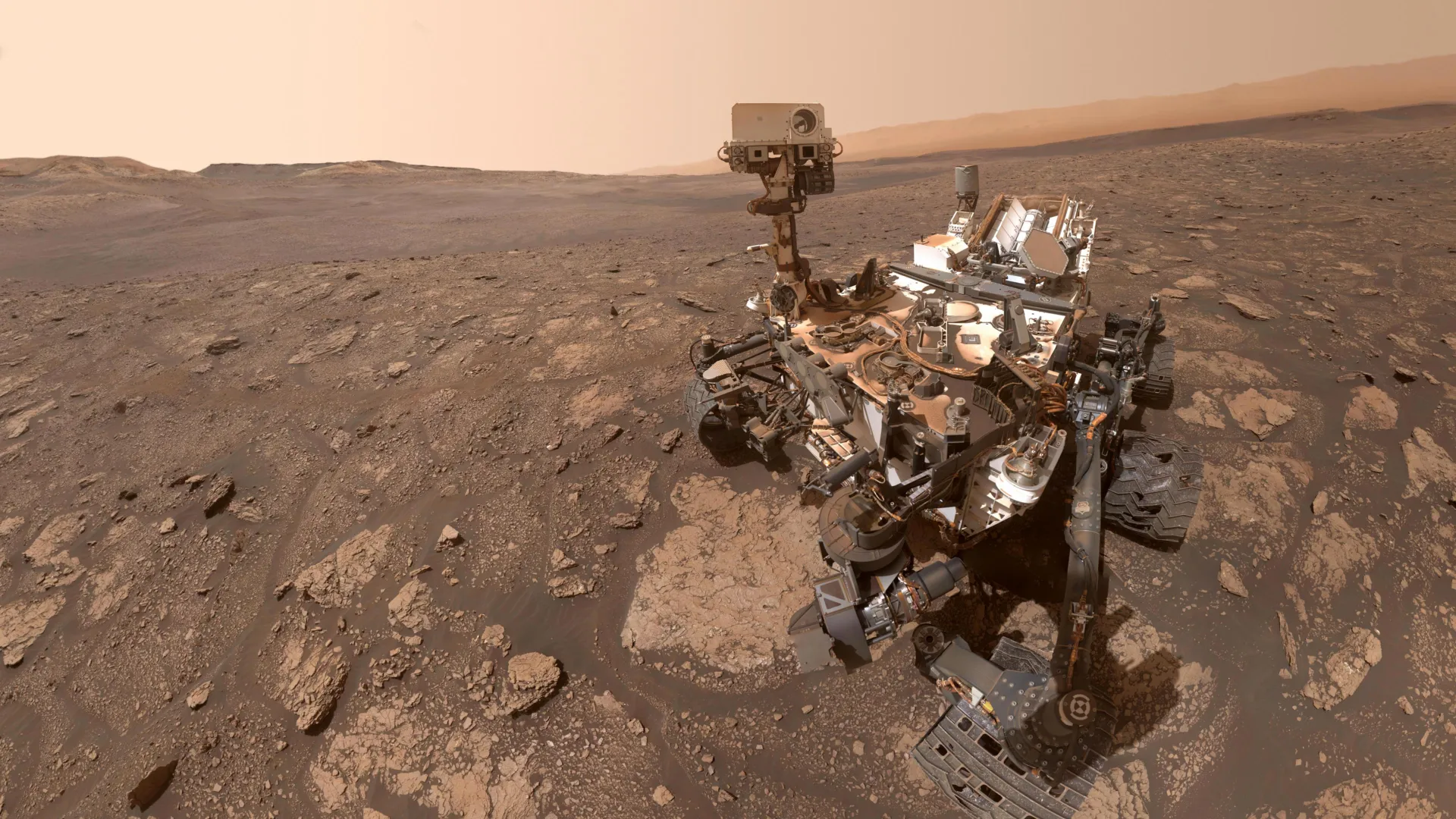
Scientists analyzing data from NASA’s Curiosity rover have found that known non-biological processes may not fully explain the abundance of organic molecules detected in an ancient Martian rock, suggesting the possibility that life may have contributed to their formation. The findings, published February 4 in the journal Astrobiology, represent a significant, though preliminary, step in the search for evidence of past life on Mars.
Curiosity, which landed in Gale Crater in 2012, is equipped with a Sample Analysis at Mars (SAM) instrument – a miniature chemistry lab capable of heating rock samples and analyzing the gases released. In March 2025, researchers announced the detection of decane, undecane, and dodecane within a mudstone sample drilled from the crater floor. These hydrocarbons, composed solely of carbon and hydrogen, are similar to fatty acids found in cell membranes on Earth, though they can also arise from geological processes.
The mudstone’s origin – formed from fine-grained sediment deposited in water – indicates that Gale Crater may have once held lakes billions of years ago. This watery environment would have been conducive to both the formation and preservation of organic molecules. However, determining whether these molecules originated from biological or non-biological sources has proven challenging.
To address this ambiguity, the research team investigated potential abiotic sources, including the delivery of organic material via meteorites. Mars has experienced numerous meteorite impacts throughout its history, and these space rocks often contain carbon-based compounds. The team assessed whether the combined contribution of meteorite impacts and other non-biological chemical reactions could account for the observed levels of organic molecules.
Their analysis concluded that these non-biological mechanisms alone were insufficient to explain the abundance of organic compounds detected by Curiosity. This finding doesn’t confirm the existence of past life on Mars, but it does suggest that biological processes cannot be ruled out as a contributing factor. “It is reasonable to consider the possibility that living organisms could have contributed to the formation of these molecules,” researchers wrote in the Astrobiology paper.
A key challenge in interpreting the data is the degradation of organic molecules over time due to exposure to cosmic radiation. Mars lacks a global magnetic field and a thick atmosphere, leaving its surface vulnerable to this radiation, which can break down complex molecules. To account for this, the team attempted to reconstruct the rock’s history, estimating that it had been exposed to the Martian surface for approximately 80 million years.
Using laboratory experiments, computer simulations, and Curiosity’s measurements, the researchers modeled the rate at which radiation destroys organic molecules. They calculated that the original quantity of organic compounds present in the rock was likely significantly higher than what could be produced by known non-biological processes. This suggests a more substantial source of organic material than previously considered.
Further research is needed to refine these estimates and better understand the breakdown rates of organic molecules in Martian rocks. Scientists emphasize the importance of conducting laboratory studies that more accurately replicate Martian conditions, including temperature, radiation levels, and atmospheric chemistry. The ongoing exploration of Gale Crater, as documented by NASA’s Science@NASA website, continues to provide valuable insights into the planet’s past.
NASA’s Curiosity rover has been steadily climbing Mount Sharp within Gale Crater since its arrival, uncovering evidence of Mars’ watery past. Recent discoveries, including the identification of rare minerals like hematite on Vera Rubin Ridge, further support the idea that Mars once harbored environments potentially suitable for life. The rover’s mission is to investigate these ancient environments and unravel the planet’s transformation into the cold, dry landscape observed today. The team at NASA’s Jet Propulsion Laboratory continues to analyze data from Vera Rubin Ridge, investigating the origin of the hematite deposits and their relationship to other formations within Gale Crater.
