
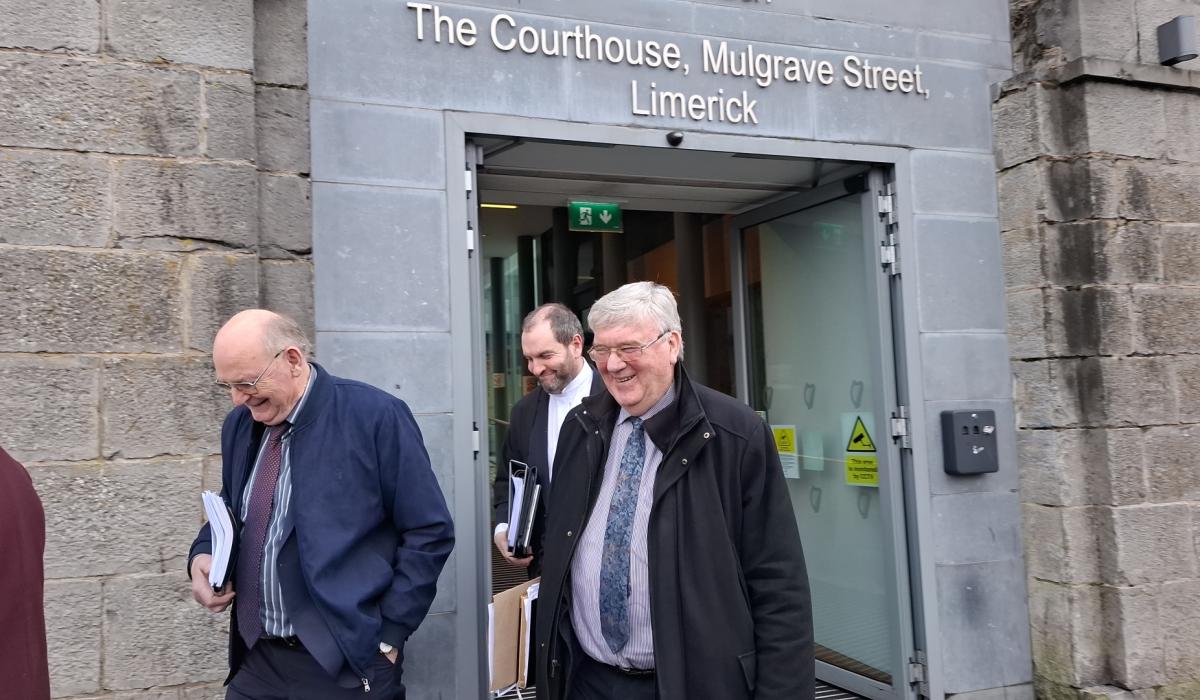
A Limerick businessman is at the centre of a legal dispute with Supermac’s, accused of lodging over 150 planning complaints against the swift-food chain, a court heard on Thursday.
The allegations surfaced during proceedings at Limerick District Court where Supermac’s is being prosecuted by Limerick City and County Council regarding signage at its Funworld premises on the Ennis Road. The case centres on one of three signs on the building’s front façade.
Executive engineer Sean McGrath testified that he initially inspected the premises on October 4, 2022, following complaints about all three signs. A warning letter was issued in November 2022, notifying Supermac’s of a potential breach of planning regulations. During a subsequent inspection on March 6, 2023, McGrath observed that the ‘Funworld’ sign had been replaced with a new, illuminated 3D sign.
McGrath told solicitor Will Leahy, representing the local authority, that the premises had planning permission dating back to 1994 for plain signage, but the new sign was “not in compliance” with the Limerick Development Plan.
During cross-examination, barrister James Charity questioned the clarity of the original warning letter, asking, “With this letter, how would I realize which sign?” He pointed out the presence of other signage, including at least two belonging to a tenant, The Hungry Lyons restaurant. Charity argued the letter failed to differentiate between the signs subject to the complaint and those belonging to the tenant.
Charity then asserted that John Lyons, owner and operator of The Hungry Lyons, had submitted the initial complaint, “along with 150 more across the country.” Leahy objected, stating that all complaints received by the council are confidential.
Charity further criticised the enforcement notice issued by the council in April 2023, deeming it “vague” and lacking specific details. “How is anyone meant to comply with that enforcement notice when it’s so vague?” he asked.
Leahy responded, informing Judge Peter White that submissions had been made to the council on behalf of Supermac’s after the court summons was issued. He stated that, based on these submissions, the council had decided to discontinue proceedings relating to two of the three signs, citing the “seven-year-rule.”
“Supermac’s acknowledged the signs referred to, so they knew which sign (was unauthorised),” Leahy argued, contending this invalidated Charity’s point. Charity countered that he was unaware of, and had not seen, the correspondence Leahy referenced, calling the submission “gravely prejudicial.”
Judge White noted that the council had not formally closed its case and expressed a desire to move the proceedings forward. He suggested that a directive to “remove all unauthorised signage may not be vague” and expected a commercial entity like Supermac’s to engage with the planning authority.
The case was adjourned for further submissions. Supermac’s operates Funworld in Limerick, which includes 10-pin bowling, a children’s adventure area, video games, and snooker and pool tables, alongside a Supermac’s restaurant, according to the company’s website. The Funworld premises were as well the subject of a High Court case in 2024, where Supermac’s boss Pat McDonagh disputed claims made by former franchisees regarding works carried out on a rival restaurant in an adjacent bowling centre.
