
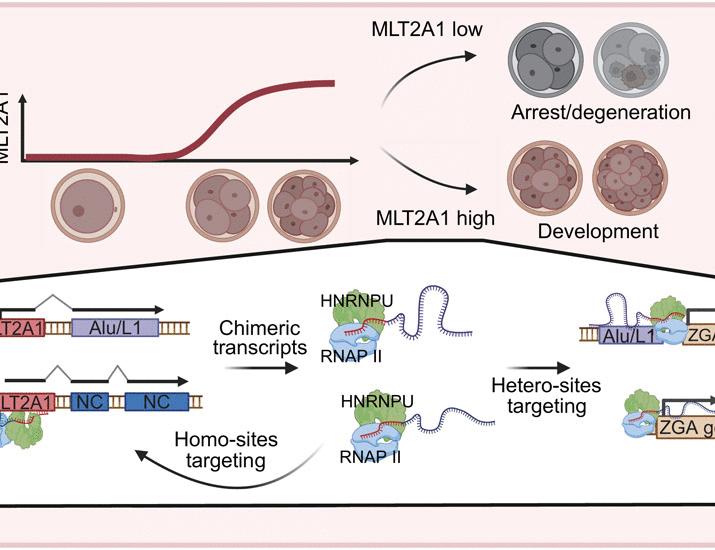
“`html
Zygotic Genome Activation Failure: A Critical Barrier to Early Human Development
Zygotic genome activation (ZGA) is a fundamental step in early mammalian development, marking the transition from maternal to embryonic control. Failure of ZGA leads to developmental arrest, presenting a notable clinical challenge for women undergoing assisted reproductive technologies (ART). Recent research has illuminated specific molecular mechanisms underlying ZGA failure in human embryos, offering potential avenues for improved fertility treatments.
Understanding Zygotic Genome Activation
Following fertilization, the early embryo relies on maternal RNA and proteins deposited in the egg. ZGA is the process where the embryo’s own genome is activated, initiating the transcription of its own genes.This switch is crucial for continued development. In humans, ZGA typically occurs around the eight-cell stage [1]. Successful ZGA allows the embryo to progress beyond this stage and initiate gastrulation, a critical process in forming the three germ layers.
The role of Endogenous Retroviruses
Researchers have observed that human embryos arresting at the eight-cell ZGA stage exhibit a specific downregulation of endogenous retroviruses (ERVs).ERVs are remnants of ancient viral infections integrated into the genome and are typically silenced. Though, they play a surprising role in early embryonic development. Studies indicate that ERV transcripts are upregulated during ZGA and contribute to the epigenetic remodeling necessary for gene expression [2].
Specifically, the downregulation of certain ERVs in arrested embryos suggests a disruption in this epigenetic regulation. This disruption hinders the activation of genes essential for embryonic development.The precise mechanisms by which ERVs influence ZGA are still being investigated, but evidence points to their involvement in chromatin structure and transcriptional control.
Clinical Implications and Future Directions
ZGA failure is a major cause of preimplantation developmental arrest, contributing to low success rates in in vitro fertilization (IVF). Identifying embryos with ZGA failure before implantation is crucial to avoid futile transfers and improve ART outcomes. Currently, morphological assessment is used, but it is often unreliable.
Recent advancements in single-cell RNA sequencing and other genomic technologies are enabling more accurate assessment of ZGA status. By analyzing the transcriptome of individual blastomeres,clinicians can identify embryos with impaired ZGA and select those with the highest developmental potential [3].
Further research is focused on understanding the upstream regulators of ZGA and identifying potential therapeutic interventions to overcome ZGA failure. this includes investigating the role of epigenetic modifiers, transcription factors, and signaling pathways involved in the ZGA process. Ultimately, a deeper understanding of ZGA failure will pave the way for more effective strategies to improve fertility and reduce the emotional and financial burden associated with ART.
References
- Petropoulos S, et al.Human preimplantation embryo development: a molecular perspective. Reproduction. 2019;158(3):R135-R146.
- Uzunidis K, et al. Endogenous retroviruses shape the human zygotic transition.Nature. 2023;623(7987):633-641.
- Blecher-Podell B, et al. Single-cell RNA sequencing reveals a conserved transcriptional program for human preimplantation development. cell Stem Cell. 202
