
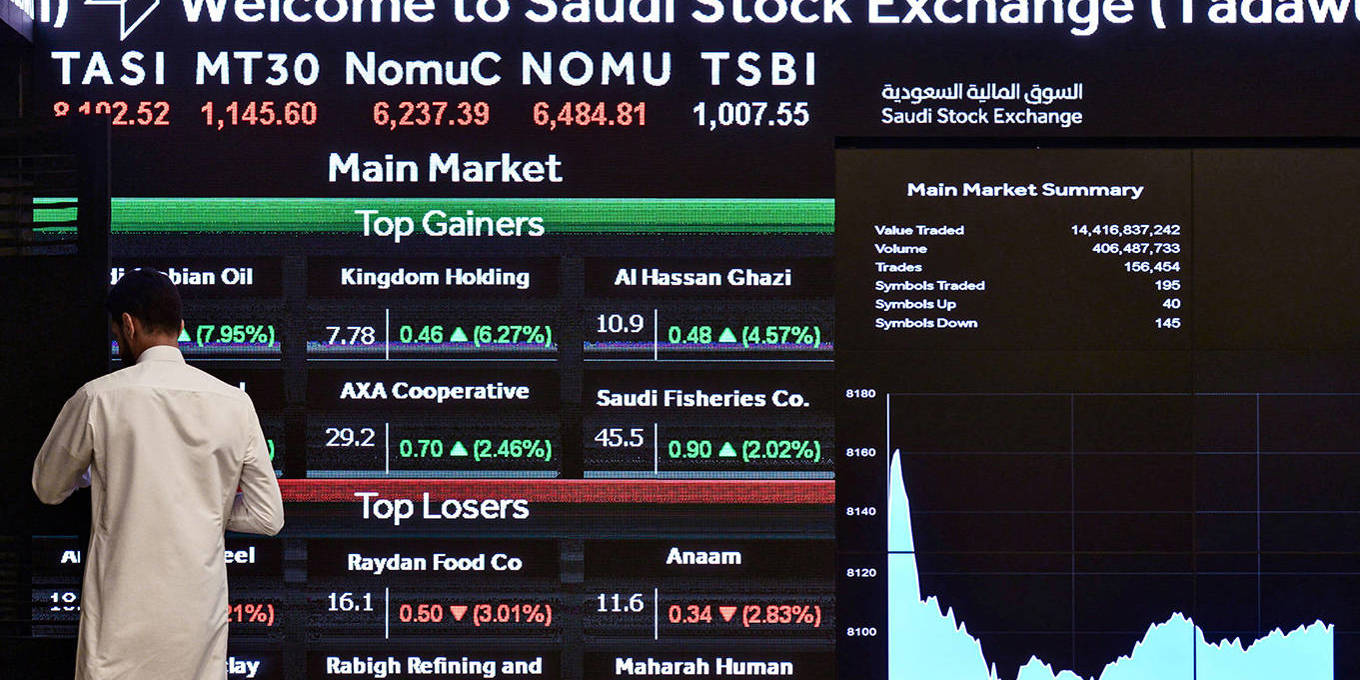
## Saudi Arabia Opens its Stock Market: A Transformative Shift for Gulf Finance
For decades,the Gulf region has largely been viewed as a reservoir of capital,fueled by ample sovereign wealth funds. While this perception holds truth – the region is home to seven of the world’s fifteen largest sovereign wealth funds, concentrated in the united Arab Emirates, Kuwait, Qatar, and Saudi Arabia [1] – a important shift is underway. Saudi Arabia’s recent move to fully open its stock exchange, the Tadawul, to all foreign investors represents a pivotal moment, signaling a strategic redefinition of the Kingdom as a premier investment destination and fundamentally altering the financial landscape of the Gulf. This isn’t merely a liberalization of a single market; it’s a structural change with far-reaching implications for regional capital flows,economic diversification,and global investment strategies.
### From Capital Exporter to Investment Hub: The Evolution of the Gulf’s Financial Role
Historically,Gulf economies have thrived on oil revenues,accumulating vast reserves that were then largely invested abroad.sovereign wealth funds like the Public Investment Fund (PIF) of Saudi Arabia, the Abu Dhabi Investment Authority (ADIA), and the Qatar Investment Authority (QIA) have become major players in global markets, acquiring assets across diverse sectors and geographies. This outward flow of capital, while beneficial for global investment, meant the Gulf region itself often lacked the depth and dynamism of more mature financial markets.However, recognizing the limitations of a purely resource-dependent economy and the need for lasting growth, Gulf nations, especially Saudi Arabia, have embarked on ambitious diversification plans. Vision 2030, Saudi Arabia’s strategic framework for economic transformation, is at the heart of this effort. A core component of Vision 2030 is attracting foreign investment, not just into the oil sector, but across a broad spectrum of industries, including technology, tourism, and manufacturing.[2]
Opening the Tadawul is a crucial step in realizing this vision. Previously, foreign investors faced restrictions on direct investment in Saudi equities, often requiring them to access the market through Qualified Foreign Investors (QFIs) or swap agreements. These mechanisms, while functional, limited participation and hindered the progress of a truly open and competitive market. The removal of these barriers, announced in early 2024 and progressively implemented, aims to unlock significant foreign capital inflows and enhance market liquidity. [3]
### The Mechanics of Market Opening and Initial Impact
The liberalization of the Tadawul involves several key changes. moast notably, the restrictions on foreign ownership limits have been lifted for most publicly listed companies. This allows foreign investors to acquire significant stakes in Saudi businesses, fostering greater shareholder engagement and potentially driving corporate governance improvements.moreover, the process for foreign investors to gain access to the market has been streamlined, reducing bureaucratic hurdles and lowering transaction costs.
The initial response has been overwhelmingly positive.Saudi stocks experienced a surge in early 2024 following the announcement, reflecting investor confidence in the Kingdom’s economic reforms and growth prospects. [4] Increased trading volumes and a broader investor base are already evident, indicating a growing dynamism in the market.
Though, the transition isn’t without its challenges. The Tadawul, while the largest stock market in the Arab world, still lags behind more developed markets in terms of infrastructure, regulatory frameworks, and data transparency. addressing these shortcomings will be crucial to sustaining the momentum and attracting long-term investment.
### Implications for Regional Competition and Capital Flows
Saudi Arabia’s move to open its stock market is likely to intensify competition among Gulf states for foreign investment.The UAE, with its established financial center in Dubai and relatively open economy, has long been a preferred destination for international capital. Qatar, despite its smaller size, has also attracted significant investment through its sovereign wealth fund and strategic partnerships.
The opening of the Tadawul presents both a challenge and an opportunity for these regional players.Saudi Arabia’s sheer size and economic weight mean it has the potential to become the dominant financial hub in the Gulf. However, the UAE and Qatar can leverage their existing strengths – such as their more diversified economies, established regulatory frameworks, and attractive business environments – to maintain their competitive edge.
The broader impact on capital flows within the region is also significant. Historically, capital has tended to flow from the Gulf to global markets. The liberalization of the Tadawul could encourage a greater proportion of this capital to be reinvested within the region,fostering economic integration and driving growth across the Gulf Cooperation Council (GCC) countries.
### Regulatory Considerations and Future Developments
