
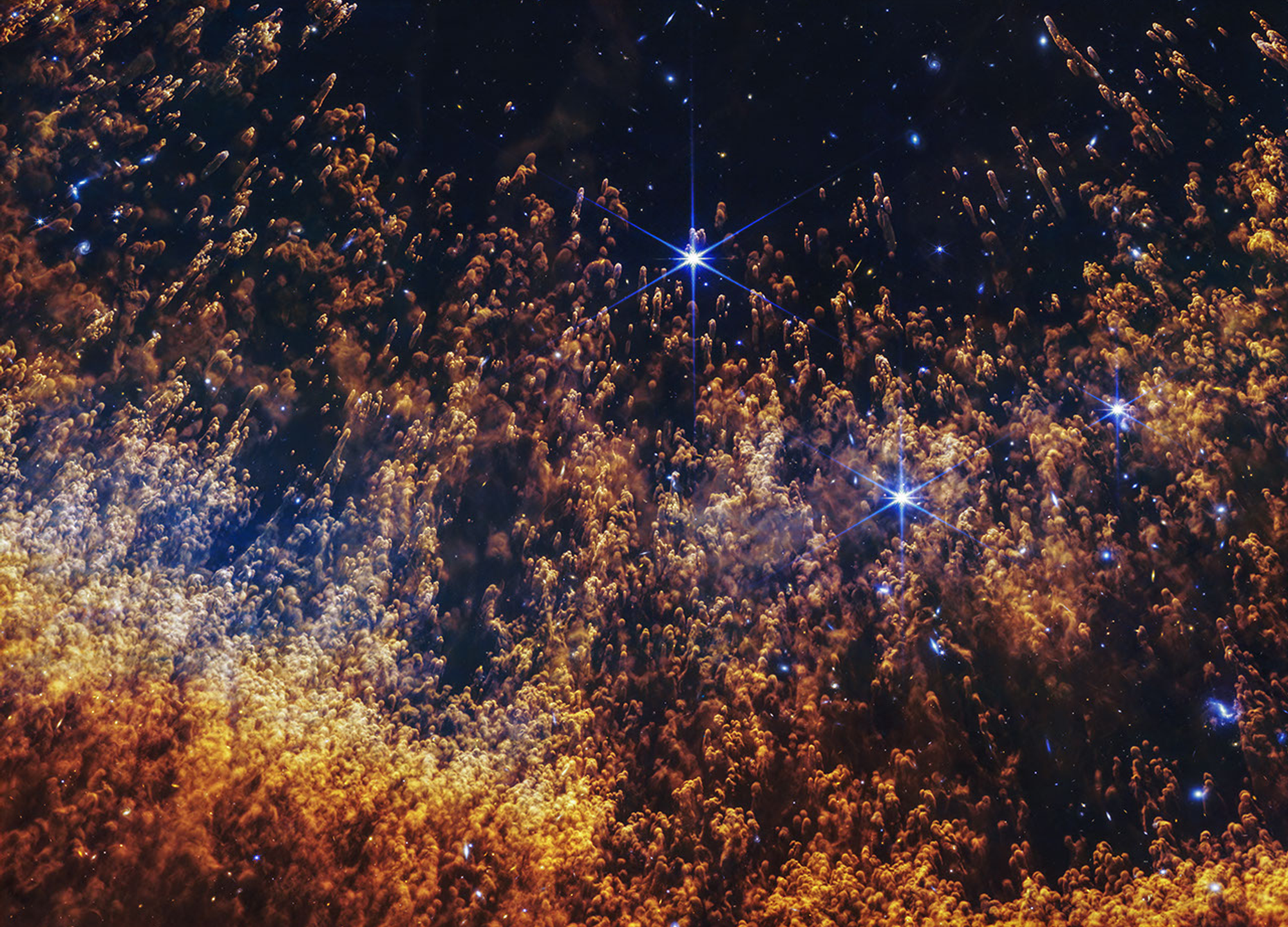
The Helix Nebula: A Cosmic Eye in the Sky
The helix Nebula, also known as NGC 7293, is a captivating planetary nebula located in the constellation Aquarius. Often nicknamed the “Eye of God” due to its striking visual resemblance, this celestial object offers astronomers and astrophotographers a unique window into the late stages of a star’s life. Its intricate structure and vibrant colors make it a favorite target for observation, and it continues to be a subject of ongoing research.
What is a Planetary Nebula?
Despite the name, planetary nebulae have nothing to do with planets. The term originated with early astronomers who, with limited telescope technology, observed these objects as fuzzy, planet-like disks. In reality, a planetary nebula is formed when a sun-like star reaches the end of its life. As the star runs out of fuel, it sheds its outer layers into space, creating an expanding shell of gas and plasma. The remaining core of the star becomes a white dwarf, which emits intense ultraviolet radiation that ionizes the expelled gas, causing it to glow.
key Features of the Helix Nebula
Central White Dwarf
At the heart of the Helix Nebula lies a white dwarf star, incredibly dense and hot. This remnant of the original star is responsible for illuminating the nebula with its powerful radiation. Its temperature is estimated to be around 120,000 Kelvin.
Cometary Knots
Perhaps the most distinctive feature of the Helix Nebula are the “cometary knots” – small,luminous clumps of gas that radiate outwards from the central star. These knots are thought to be formed by pulses of energy released by the white dwarf, interacting with the previously ejected material. they appear as streaks due to the nebula’s expansion and our perspective from Earth.
Expanding Shell
The Helix Nebula is expanding at a rate of approximately 1 arcsecond per century.This expansion allows astronomers to study the dynamics of gas ejection and the evolution of planetary nebulae over time. The shell itself is composed primarily of hydrogen and helium,along with traces of other elements like oxygen,nitrogen,and sulfur.
Complex Structure
Recent observations, especially in infrared light, have revealed a surprisingly complex structure within the Helix Nebula.Rings, filaments, and other intricate patterns suggest that the star’s mass loss wasn’t uniform, and that magnetic fields may play a important role in shaping the nebula.
Observing the helix Nebula
The Helix Nebula is relatively bright and can be observed with a small telescope under dark skies. It appears as a faint, ring-shaped object. Astrophotography reveals its stunning details, showcasing the vibrant colors and intricate structure. The nebula is best viewed during the autumn months in the Northern Hemisphere.
Scientific Meaning
The Helix Nebula serves as a valuable laboratory for studying stellar evolution and the processes that occur during the late stages of a star’s life. By analyzing the nebula’s composition,temperature,and expansion rate,astronomers can gain insights into the fate of our own Sun and other sun-like stars. The presence of complex molecules within the nebula also suggests that the conditions necessary for the formation of life may exist in these environments.
FAQ
What is the distance to the Helix Nebula?
The Helix Nebula is approximately 650 light-years away from Earth.
How old is the Helix Nebula?
Estimates vary, but the Helix Nebula is thought to be around 10,600 years old.
Will the Sun eventually become a planetary nebula?
Yes, in approximately 5 billion years, our Sun will exhaust its nuclear fuel and eventually shed its outer layers, forming a planetary nebula.
What causes the different colors in the Helix Nebula?
The colors are produced by different elements within the nebula being ionized by the central white dwarf. Hydrogen emits red light, oxygen emits green and blue light, and other elements contribute to the overall color palette.
Key Takeaways
- The Helix Nebula is a planetary nebula formed from the ejected outer layers of a dying star.
- It features a central white dwarf,cometary knots,and an expanding shell of gas.
- The nebula’s complex structure reveals insights into stellar evolution and the role of magnetic fields.
- It’s a relatively accessible object for amateur astronomers and astrophotographers.
- The Helix Nebula provides a glimpse into the future of our own Sun.
