
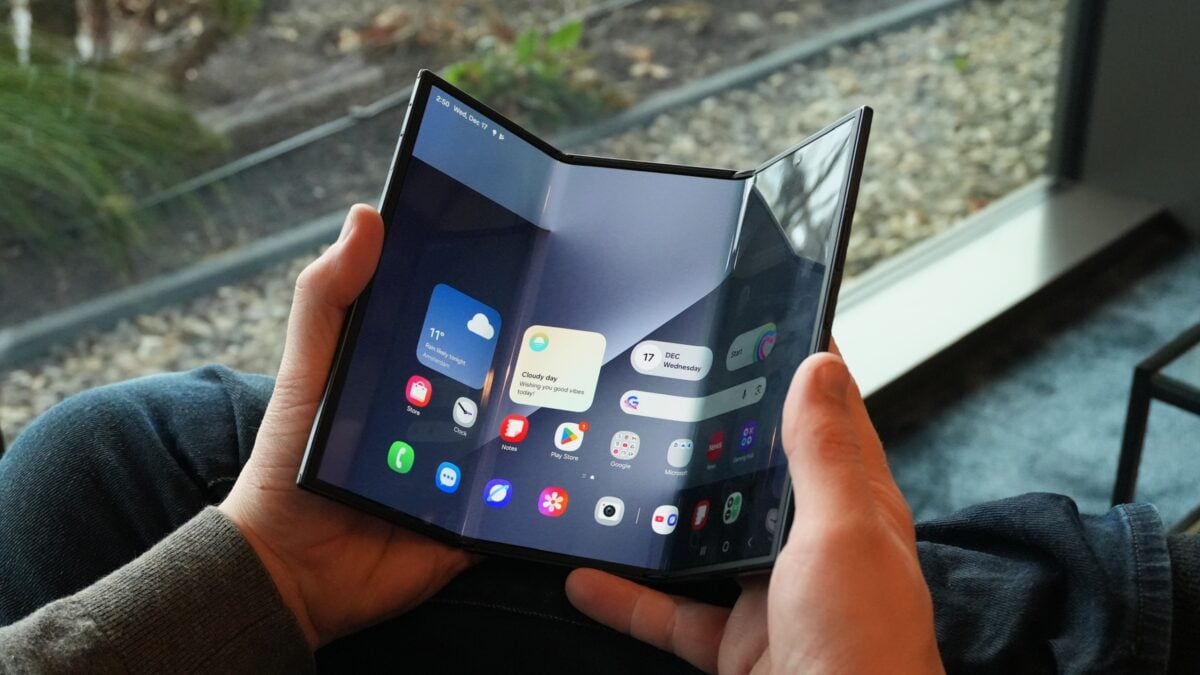
We suspected it, and now reports from Korea confirm it: Samsung is selling the Galaxy Z TriFold at a loss. This likely means a higher price tag for the TriFold 2,unless Samsung can cut production costs.
In Korea, the TriFold – available only with 512GB of storage and 16GB of RAM – launched at 3,590,400 won ($2,447). for comparison, the 512GB+12GB Galaxy Z Fold 7 sells for 2,537,700 won ($1,730). Despite the critically important price difference, Samsung reportedly spends more to *make* each TriFold than it earns from selling it.
This positions the TriFold as a “halo” product. Samsung invested heavily in its research and development, but profitability isn’t the immediate goal. Instead, it’s designed to boost the Samsung brand and generate excitement around its entire foldable lineup.
Even with these losses, Samsung is betting on long-term gains. They anticipate increased market share, a more desirable brand image, and a ripple effect of popularity for their other foldable phones.
Could this mean the Galaxy Z TriFold 2 will cost more?
It’s possible. While halo products aren’t uncommon, they aren’t a lasting strategy forever. Eventually, Samsung needs to profit from TriFolds, either by reducing production costs or increasing the launch price.
If future trifold models can’t be manufactured more efficiently, the current $2,500 price in Korea might be too low, forcing a price increase.
A shift in strategy will be even more crucial when Samsung releases the TriFold globally. Absorbing losses on a limited release is one thing,but global sales at a loss could be devastating.
Hopefully, by the time the TriFold series expands globally, the original model will have served its purpose: elevating the entire foldable lineup and driving down production costs. Irrespective, a more expensive TriFold sequel is a real possibility.
