
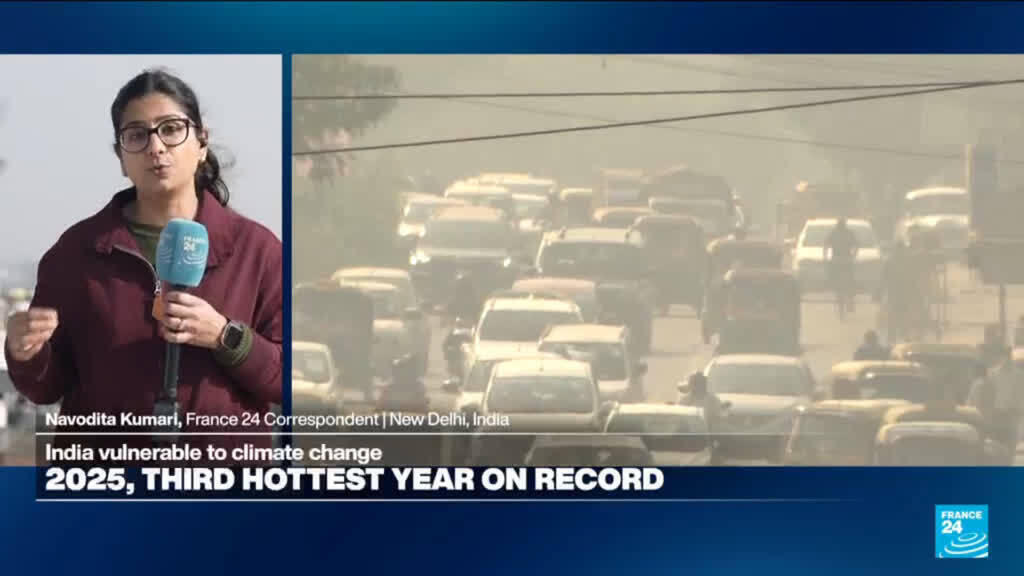
2025: Third Hottest Year on Record Signals Escalating Climate Crisis
The planet continues to warm at an alarming rate, with 2025 ranking as the third hottest year ever recorded, according to the Copernicus Climate Change Service (C3S), the European Union’s climate monitoring body. This follows 2024, the hottest year on record, and 2023, which came in a close second. The data confirms a disturbing trend: the past eleven years have all been the warmest ever documented, painting a stark picture of a rapidly changing climate and raising serious concerns about the future.
A Decade of Record-breaking Heat
The C3S annual report highlights a consistent and accelerating warming trend. Each year brings new records, and the margin by which these records are broken is increasing. This isn’t simply a matter of slightly warmer temperatures; it represents a fundamental shift in the Earth’s climate system.the report details increases in global average temperatures, sea surface temperatures, and greenhouse gas concentrations, all contributing to the escalating crisis. You can find the full report and data visualizations on the Copernicus Climate Change Service website.
Disproportionate Impact on Developing Nations
While the effects of climate change are global, the burden is not shared equally. Developing countries are disproportionately vulnerable to the consequences of a warming planet.Many nations in the Global South lack the infrastructure, resources, and economic stability to adequately protect their populations from increasingly frequent and intense extreme weather events.
- flooding: Rising sea levels and more intense rainfall events are leading to devastating floods, displacing communities and damaging critical infrastructure.
- Wildfires: Prolonged droughts and higher temperatures create ideal conditions for wildfires, which destroy forests, homes, and livelihoods.
- Extreme Heat: heatwaves are becoming more frequent, longer-lasting, and more intense, posing a significant threat to human health, notably for vulnerable populations like the elderly and those with pre-existing medical conditions.
The united Nations Climate Change website provides extensive resources on the impacts of climate change on vulnerable nations and the efforts to address this inequity.
India’s Warmest Winter in Over a Century
The effects of this global warming trend are already being felt acutely in many regions. In India, 2025 witnessed it’s warmest winter in over a century, according to the nation’s meteorological department. This unusual warmth has significant implications for agriculture, water resources, and public health. The lack of typical winter chill can disrupt crop cycles, reduce yields, and exacerbate water scarcity. The India Meteorological Department (IMD) provides detailed climate data and forecasts for the region.
The Science Behind the Warming Trend
The primary driver of this warming trend is the increase in greenhouse gas concentrations in the atmosphere,largely due to human activities such as burning fossil fuels (coal,oil,and natural gas) and deforestation. These gases trap heat, leading to a gradual increase in global temperatures. The Intergovernmental Panel on Climate change (IPCC), the leading international body for assessing climate change, provides comprehensive scientific assessments of the climate system and the impacts of human activities.
Understanding Greenhouse gases
Key greenhouse gases include:
- Carbon Dioxide (CO2): The most significant contributor to climate change,primarily from burning fossil fuels.
- methane (CH4): A potent greenhouse gas emitted from sources like agriculture, natural gas leaks, and decaying organic matter.
- Nitrous oxide (N2O): Released from agricultural practices, industrial activities, and the burning of fossil fuels.
What Does the Future Hold?
The C3S report indicates that there is no significant cooling expected in the near future. Without drastic reductions in greenhouse gas emissions, the planet is on track to exceed the 1.5°C warming limit set by the Paris Agreement, leading to even more severe and widespread consequences. The Paris Agreement, an international treaty on climate change, aims to limit global warming to well below 2, preferably to 1.5 degrees Celsius, compared to pre-industrial levels. More information can be found on the UNFCCC website.
Key Takeaways
- 2025 was the third hottest year on record, continuing a decade-long trend of unprecedented warming.
- Developing countries are disproportionately vulnerable to the impacts of climate change.
- India experienced its warmest winter in over a century in 2025.
- Human activities, particularly the burning of fossil fuels, are the primary driver of climate change.
- Urgent action is needed to reduce greenhouse gas emissions and mitigate the worst effects of climate change.
