
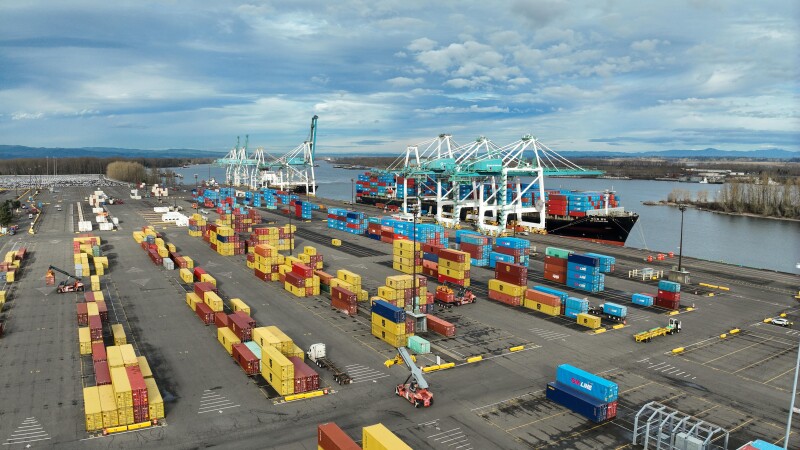
Oregon Container Terminal Launches, Bolstering Pacific Northwest Supply Chains
The Oregon Container Terminal (OCT) officially commenced operations on January 6th, 2026, at terminal 6 of the Port of Portland. This launch marks a pivotal moment for trade in Oregon,Southwest Washington,and Idaho,offering a renewed and competitive option for businesses navigating complex global supply chains. The transition from port of Portland operation to Harbor Industrial is expected to inject stability and growth into the region’s maritime infrastructure.
A New Era for Oregon Trade
For years,the future of container service at Terminal 6 remained uncertain.The transfer to Harbor Industrial, a seasoned port operator, provides a long-term solution, ensuring a reliable gateway for international trade. Oregon Governor Tina Kotek emphasized the significance of this growth, stating, “Global connections like these give Oregon a competitive edge and help secure our economic future.” She highlighted the benefits for key Oregon industries,including agriculture (cranberries,hay,wheat) and manufacturing,enabling efficient access to global markets.
Infrastructure and Connectivity: The Foundation for Success
The OCT boasts a robust infrastructure, encompassing 210 acres of developed land, a skilled workforce, and a proven track record of productivity. According to OCT President Tim McCarthy, the terminal is built on “reliability, growth and partnership.” This translates into a stable and efficient gateway for shippers throughout Oregon and inland locations. Crucially,the terminal offers:
- Direct Vessel Services: Facilitating seamless connections to international shipping routes.
- Dual-Rail Connectivity: Access to both BNSF and Union pacific rail lines, providing flexible transportation options.
- future Barge Services: Planned expansion to connect with inland locations, further extending the reach of the terminal.
Economic Impact and Job Creation
the launch of OCT is projected to have a significant positive impact on the regional economy. Curtis robinhold, Executive Director of the Port of Portland, stated that the transition “ensures a reliable, cost-effective connection to international markets for Oregon businesses.” The terminal is expected to support thousands of family-wage jobs across the supply chain, from agricultural producers to warehouse workers and dock personnel. State Representative Shelly Boshart Davis echoed this sentiment, describing the OCT as “a glimmer of hope” for Oregon businesses seeking to compete in the global marketplace.
Collaboration and the ‘ship Oregon’ Initiative
The success of the OCT is a testament to the power of collaboration between government, business, and labor. Stuart Strader, representing ILWU Local 8, underscored this point, stating that the launch represents “one of the good outcomes that can be achieved when government, business and labor work together.”
Complementing the terminal’s opening is Harbor Industrial’s “Ship Oregon” initiative. This program encourages businesses to utilize Oregon ports, aiming to reduce transportation costs, alleviate roadway congestion, lower emissions, and strengthen Oregon-centric supply chains. By prioritizing local ports,the initiative seeks to create a more sustainable and resilient trade network.
Looking Ahead: The Future of Oregon’s Global Trade
The Oregon Container Terminal represents a strategic investment in the future of pacific Northwest trade. By providing a reliable, efficient, and competitive gateway, the OCT is poised to facilitate economic growth, create jobs, and strengthen Oregon’s position in the global marketplace. The success of this venture will depend on continued collaboration,strategic infrastructure investments,and a commitment to sustainable trade practices. As the terminal expands its services and attracts more shippers, it is expected to become an increasingly vital hub for international commerce.
