
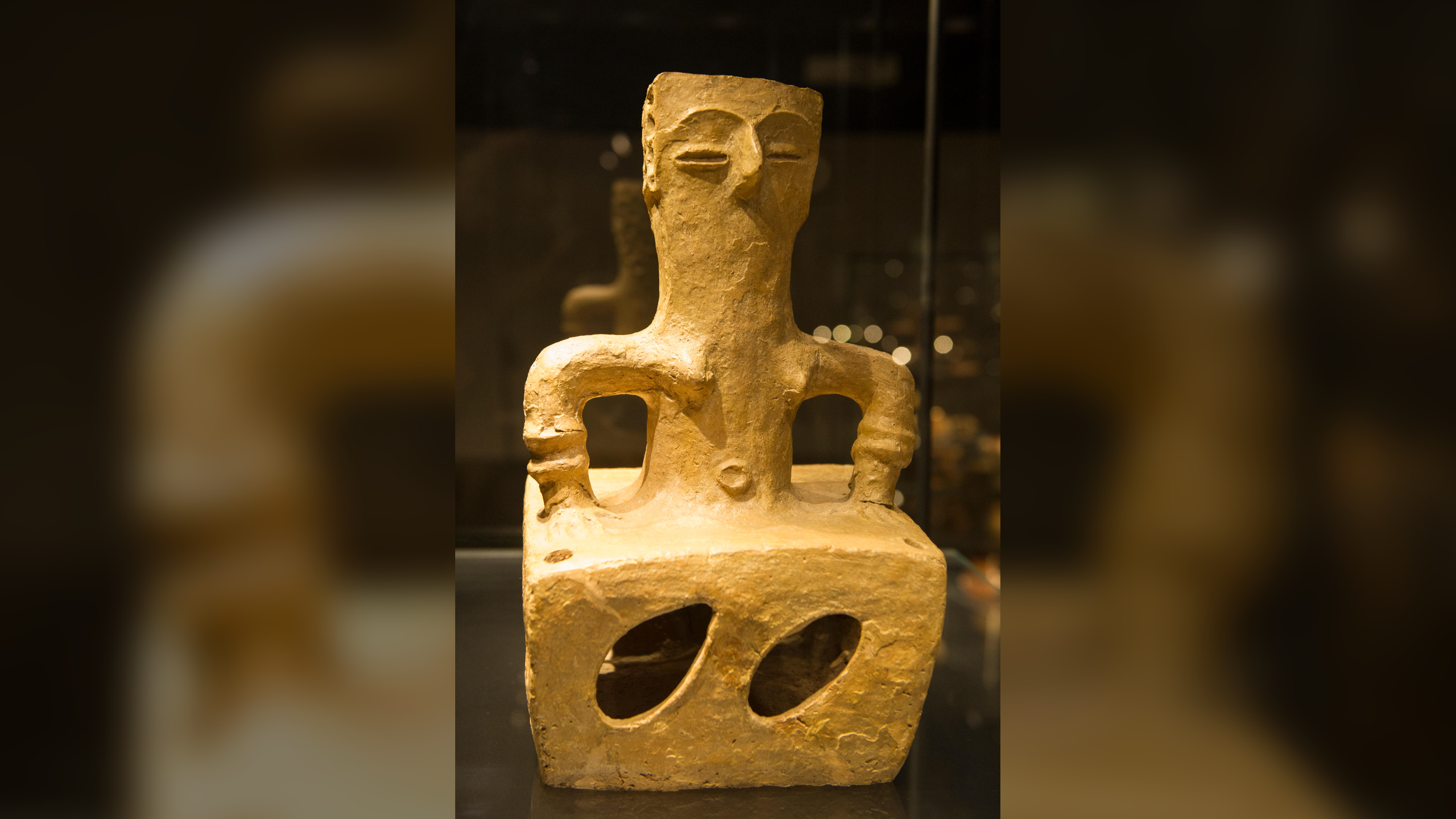
The Great Mother of Tumba Madžari: An 8,000-Year-Old Guardian of North Macedonia
In 1981, a remarkable discovery emerged from the Neolithic settlement of Tumba Madžari, near Skopje, North Macedonia: a clay sculpture now known as the “Great Mother.” This enigmatic figurine, dating back to the sixth millennium B.C., offers a captivating glimpse into the beliefs and daily life of early European societies. More then just an artistic creation, the Great Mother embodies a profound connection between humanity, home, and the divine feminine.
A Window into Neolithic Life at Tumba Madžari
The Tumba Madžari settlement, occupied between 5800 and 5200 B.C., provides invaluable insights into the Neolithic period in Southeastern Europe. Archaeological excavations reveal a thriving community centered around robust, traditionally constructed homes. These dwellings, measuring approximately 26 by 26 feet (8 by 8 meters), were built using interwoven wooden posts and a protective layer of clay [1]. Within these homes,archaeologists unearthed not only the Great Mother statue but also a wealth of everyday objects – dozens of complete ceramic pots,cups,and jugs – painting a vivid picture of domestic life nearly 8,000 years ago.
The Great Mother: Form and Function
The terracotta Great Mother stands 15.4 inches (39 centimeters) tall and is instantly striking for its unique form. While the upper half depicts a recognizably human figure – complete with a prominent nose, belly button, and breasts, as well as carefully rendered eyes beneath arched eyebrows – the lower half is distinctly cubic. This unusual shape isn’t merely artistic license; it’s believed to mirror the very architecture of the houses within the Tumba Madžari settlement.
The sculpture’s positioning within the house further suggests its protective role. The Great Mother appears to “rise above the house,” symbolizing her guardianship over the home and its inhabitants. The hollow base of the sculpture hints at a functional purpose beyond depiction – it likely served as an altar for offerings of incense, dried herbs, or grain [2]. This suggests a belief system where the home itself was considered sacred, and the Great Mother was its divine protector.
A Goddess of Fertility and Protection
The Archaeological Museum of the Republic of North Macedonia, where artifacts from Tumba Madžari are displayed, interprets the Great Mother as embodying the basic roles of women in Neolithic society. According to the museum, “the role of woman as child bearer and mother was equated with a fertility cult or the cult of the Great Mother goddess” [3]. This interpretation aligns with broader archaeological findings across Neolithic Europe and the Near East, where similar figurines representing female deities have been discovered.
However, the Tumba Madžari sculpture stands apart. Its unique, house-shaped lower half, reflecting a symbiotic relationship between the goddess and the home, is a characteristic found exclusively in the Balkans [4].This regional distinction underscores the unique cultural and spiritual beliefs of the communities inhabiting this area during the Neolithic period.
The Broader Context of Neolithic Goddess Worship
The worship of female deities was widespread throughout the Neolithic period, reflecting the importance of fertility and the life-giving power of women in early agricultural societies. These “Great Mother” or “Mother Goddess” figures were often associated with the earth, harvest, and the continuation of the community. While the specific attributes and iconography varied across different regions,the underlying theme of female power and nurturing remained consistent.
the discovery of the Tumba Madžari Great Mother adds a crucial piece to this puzzle, demonstrating the sophisticated beliefs and artistic traditions of Neolithic communities in north Macedonia. It highlights the deep connection between the spiritual world, the domestic sphere, and the fundamental human need for protection and prosperity.
Looking Ahead: Preserving the Legacy of Tumba Madžari
The Great Mother of Tumba Madžari is more than just an ancient artifact; it’s a tangible link to our ancestors and a testament to the enduring power of human creativity and belief. Ongoing archaeological research at Tumba madžari continues to reveal new insights into the lives of these early Europeans. Preserving this site and its artifacts is crucial for understanding our shared human history and appreciating the rich cultural heritage of North Macedonia.
As we continue to uncover the secrets of the past, the Great Mother stands as a powerful symbol of the enduring connection between humanity, home, and the divine.
