
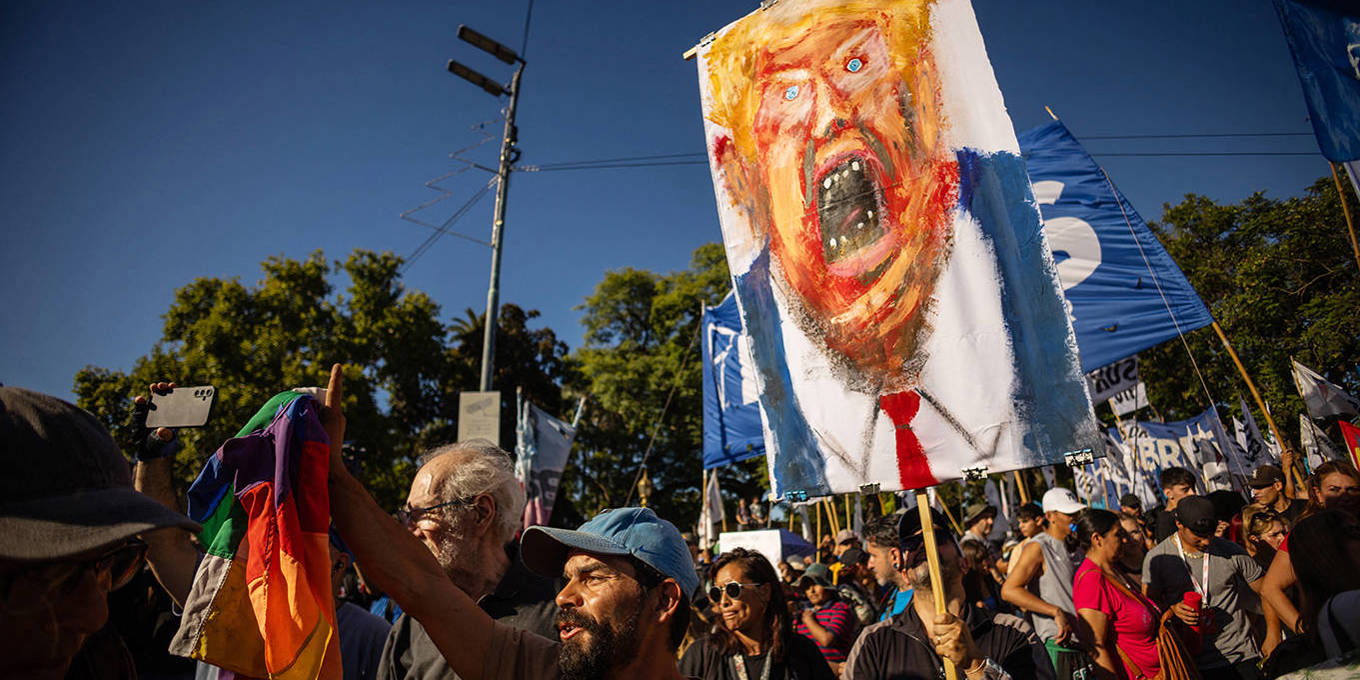
Echoes of Empire: Examining US Policy in Venezuela and teh Resurgence of the Monroe Doctrine
The recent actions of the United States towards Venezuela, particularly during the presidency of Donald Trump, have drawn comparisons to a historical pattern of intervention in Latin America. Specifically, parallels have been made to the era of US expansionism at the close of the 19th century, when leaders sought to exert influence – and often control – over nations emerging from Spanish colonialism. While the context and methods differ, the underlying ambition of shaping the geopolitical landscape of the western Hemisphere remains a consistent thread. This article will explore the historical roots of this interventionist impulse, analyze the modern request of the Monroe Doctrine, and assess the potential consequences of pursuing such policies in the 21st century.
The Shadow of 1898: The Spanish-American War and its Legacy
The Spanish-American War of 1898 marked a turning point in US foreign policy. Driven by a combination of economic interests, expansionist ideology, and a burgeoning sense of national power, the US intervened in Cuba’s struggle for independence from Spain. the conflict resulted in the US acquiring territories like Puerto Rico,Guam,and the Philippines,effectively establishing the nation as a colonial power. This period was characterized by a belief in “Manifest Destiny” – the idea that the US was destined to expand its dominion and spread its values across the continent and beyond.
However, the gains from the Spanish-American War proved less considerable than initially anticipated. The Philippines, for exmaple, experienced a brutal and protracted insurgency against US rule. The economic benefits where often concentrated in the hands of a few, and the US faced growing international criticism for its imperial ambitions. As historian Walter LaFeber argued in his seminal work, The New Empire, the war laid the foundation for a more assertive – and frequently enough interventionist – US role in global affairs.
The Monroe Doctrine: A Historical Overview
The roots of US interventionism in Latin America can be traced back to the Monroe Doctrine, articulated by President James Monroe in 1823. Initially intended as a warning to European powers against further colonization or interference in the Americas, the doctrine asserted US dominance in the Western Hemisphere. Over time, it evolved into a justification for US intervention in the internal affairs of Latin American nations.
Throughout the 19th and 20th centuries, the US invoked the Monroe Doctrine to justify military interventions in countries like Mexico, Nicaragua, Haiti, and the Dominican Republic. These interventions were often motivated by economic interests, such as protecting US investments in the region, and by a desire to maintain political stability favorable to US interests. Critics argue that the doctrine was used as a pretext for US hegemony and a violation of the sovereignty of Latin American nations.
Trump’s Venezuela Policy and the Revival of the monroe Doctrine
The trump administration’s approach to Venezuela closely mirrored historical patterns of US intervention. Recognizing Juan Guaidó as the legitimate president of Venezuela in 2019,despite Nicolás Maduro remaining in power,was a direct challenge to the Maduro government’s sovereignty. The administration imposed crippling economic sanctions on Venezuela, aiming to force regime change.These sanctions, while intended to pressure the Maduro government, had a devastating impact on the Venezuelan population, exacerbating an already dire humanitarian crisis.
This policy was explicitly framed by some within the administration as a revival of the Monroe Doctrine.National Security Advisor John Bolton, for example, openly called for a return to the principles of the doctrine, advocating for a more assertive US role in the region. Though, this approach failed to achieve its desired outcome. Maduro remained in power, and the situation in Venezuela continued to deteriorate. The policy was widely criticized internationally for its unilateralism and its disregard for international law.
Why Reviving the Monroe Doctrine is Unrealistic in the 21st Century
Several factors make a 21st-century revival of the Monroe Doctrine both impractical and counterproductive.
- Multipolar World: The world is no longer unipolar, with the US as the sole superpower.The rise of China, Russia, and other regional powers has created a more complex geopolitical landscape. These actors have their own interests in Latin america and are unlikely to passively accept US dominance.
- regional Integration: Latin American nations are increasingly integrated through regional organizations like the Community of Latin American and Caribbean States (CELAC) and the union of South American Nations (UNASUR). These organizations provide a platform for regional cooperation and a counterweight to US influence.
- International Law and Norms: The principles of national sovereignty and non-intervention are enshrined in international law. Unilateral interventions, like those justified by the Monroe Doctrine, are increasingly viewed as illegitimate and are likely to face international condemnation.
- Economic Interdependence: The global economy is highly interconnected. Economic sanctions and other forms of coercion can have unintended consequences and can harm US interests as well as those of the targeted country.
The Path forward: A New Approach to Latin America
A more effective US policy towards Latin America requires a shift away from interventionism and towards a model based on cooperation,respect for sovereignty,and mutual benefit. This includes:
- Diplomacy and Dialog: Engaging in constructive dialogue with all parties in the region, including governments with whom the US has disagreements.
- Economic Assistance: Providing economic assistance to promote sustainable growth and address the root causes of instability.
- Support for Democracy and Human Rights: Promoting democracy and human rights through non-interventionist means, such as supporting civil society organizations and promoting free and fair elections.
- Regional Cooperation: Working with regional organizations to address common challenges, such as climate change, drug trafficking, and migration.
Conclusion
The attempt to revive the monroe Doctrine, as exemplified by the Trump administration’s policy towards Venezuela, represents a misguided and ultimately unrealistic approach to foreign policy. The historical lessons of the Spanish-American War and the subsequent interventions in Latin America demonstrate the limitations and dangers of interventionism. In the 21st century,a more effective US policy towards Latin America requires a commitment to cooperation,respect for sovereignty,and a recognition that the region’s future should be determined by its own people.
