
The Mounting Toll: Russia’s Officer and Soldier Losses in Ukraine
as the conflict in Ukraine enters its fourth year, the human cost continues to escalate dramatically. Russia has suffered important losses, not only in personnel but also in experienced military leadership. Recent reports indicate a disturbing trend: Russian losses are accelerating, and the impact is being felt across all levels of the armed forces. this article examines the documented losses of Russian generals, the overall casualty figures, and the demographic patterns of those who have perished, providing a extensive overview of the war’s devastating impact on Russia’s military and population.
A High Command Under Fire: The Loss of Russian Generals
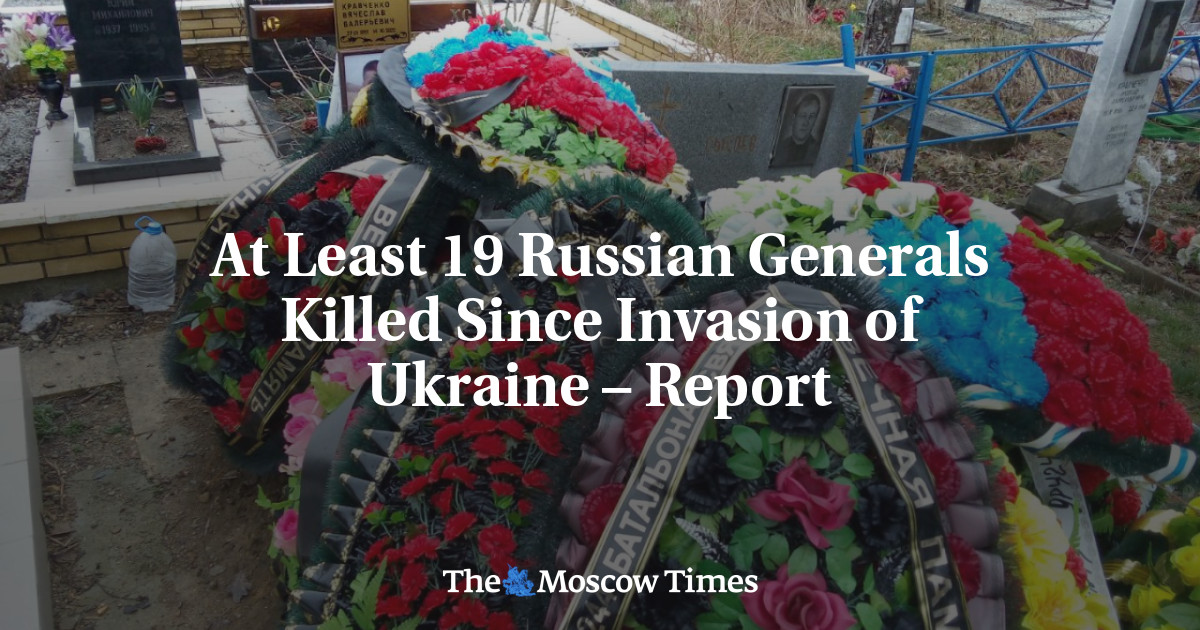
Sence the full-scale invasion began in Febuary 2022, at least 19 Russian generals have been killed in Ukraine, according to investigations by The Insider [[1]]. This represents a considerable attrition of experienced leadership, impacting Russia’s ability to effectively command and control its forces. The deaths haven’t always been officially acknowledged by Russian authorities, highlighting a potential effort to downplay the extent of the losses.
The fallen generals include:
- 2022: Andrei Sukhovetsky, Oleg Mityaev, Vladimir Frolov, Andrei Simonov, Kanamat Botashev, and Roman Kutuzov.
- Subsequent Years: Sergei Goryachev, Oleg Tsokov, and Vladimir Zavadsky.
- Recent Losses: Igor Kirillov (head of Russia’s radiation, chemical and biological defense troops), Yaroslav Moskalik (deputy head of the General Staff’s main operational directorate), Mikhail Gudkov [[1]] (deputy commander-in-chief of the Navy), and Fanil Sarvarov (head of the General Staff’s operational training department).
These officers have been killed in a variety of circumstances, ranging from frontline combat to strikes on command posts, aviation incidents, and suspected sabotage. the fact that senior officers have been targeted suggests a Ukrainian capability to penetrate Russian defenses and target high-value assets.Furthermore, the inclusion of retired officers and those serving in volunteer formations, such as the Wagner Group and storm Z units, underscores the breadth of the mobilization and the risks faced by all involved.
Escalating Casualties: A Grim Tally
Beyond the loss of generals, the overall number of Russian casualties is staggering.A senior NATO official estimated in early December that the total number of Russian soldiers killed or wounded could be approaching 1.15 million [[1]]. This figure, if accurate, represents a crippling blow to Russia’s military strength.
Independent verification of casualty figures is challenging in wartime, but data compiled by BBC Russian and Mediazona indicates that at least 152,142 Russian military personnel have been confirmed dead as of late November 2025 [[1]]. This number is likely a conservative estimate, as it only includes deaths that have been independently verified through open-source data.Recent analysis suggests that Russian losses are now rising at a faster rate than at any point since the beginning of the invasion [[1]].
Alarmingly, projections indicate that by early 2025, over 400,000 Russians had been killed or wounded for only 0.8 percent of Ukrainian territory [[2]]. This stark statistic underscores the immense cost of the war in terms of human life and the limited territorial gains achieved by Russia.
Demographic Impact: Who is Bearing the Burden?
The casualties are not evenly distributed across Russian society. Data from BBC Russian and Mediazona reveals that approximately 67% of confirmed deaths have come from rural areas and towns with fewer than 100,000 residents [[1]]. This suggests that rural communities are disproportionately affected by the war, possibly exacerbating existing socio-economic disparities.
furthermore,The Economist estimates that Russia may have lost roughly 1% of its pre-war male population by late autumn 2025 [[1]]. This represents a significant demographic loss, with long-term implications for Russia’s workforce, economy, and future population growth.
Implications and Future Outlook
The high and escalating casualty figures have profound implications for Russia’s military capabilities and its long-term strategic outlook. The loss of experienced officers and a substantial portion of its fighting force will undoubtedly weaken Russia’s ability to sustain offensive operations and defend its borders. The demographic impact, especially the loss of young men, will have lasting consequences for Russian society.
As the conflict continues, it is likely that Russian casualties will continue to rise. The Kremlin faces a difficult choice: continue to escalate the war and accept further losses, or seek a negotiated settlement. The human cost of the war in Ukraine is already immense, and the future remains uncertain.
Published: 2026/01/12 02:38:11
