
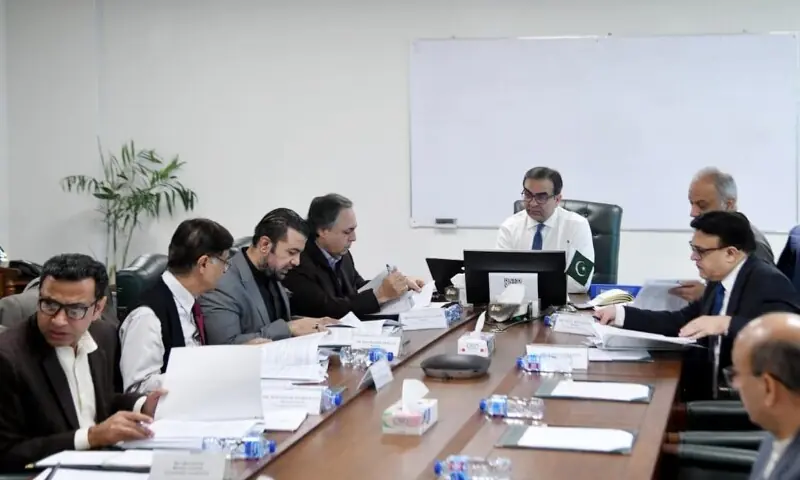
Pakistan Privatisation commission Advances Airport sale, reconsiders Housing Finance Company Deal
Islamabad, Pakistan – January 11, 2026 – The Privatisation Commission of Pakistan has announced important progress in its ongoing privatisation efforts, including the inclusion of Islamabad International Airport in the program and a re-evaluation of the proposed sale of the House Building Finance Company Ltd (HBFCL). These decisions, made during a board meeting on Friday, signal a renewed push to attract foreign investment and improve the efficiency of state-owned enterprises.
Islamabad International Airport Privatisation
The board of the Privatisation Commission has recommended including Islamabad International Airport (IIA) in the national privatisation program.This move comes after the Cabinet committee on Inter-Governmental Commercial Transactions (CCoIGCT) rejected a government-to-government transaction model on January 1st. Rather, the Commission will pursue a concession model through an open and competitive bidding process. This approach aims to attract a wider range of investors and secure the most favorable terms for the Pakistani government.
To ensure a robust and competitive process, the board has decided to invite fresh Expressions of Interest (EoIs) for the appointment of a financial advisor. This decision was prompted by a narrowing of potential bidders from seven to just two following initial legal and technical compliance screenings. The Commission believes a new round of EoIs will broaden the pool of qualified candidates and ultimately lead to a more successful transaction. The Commission has also been authorized to begin direct negotiations with the Asian Development Bank (ADB) to potentially serve as the financial advisor for the airport privatisation. The ADB’s expertise in infrastructure financing and project management could be invaluable in navigating the complexities of this significant undertaking. Asian Development Bank
Understanding Concession Models
A concession model, as opposed to outright sale, grants a private company the right to operate and maintain a public asset – in this case, Islamabad International Airport – for a specified period. The concessionaire typically invests in the asset, manages its operations, and shares revenue with the government. This model allows the government to retain ownership while benefiting from private sector efficiency and investment. Successful airport concessions globally, such as those in Brazil and India, demonstrate the potential for improved service quality, increased capacity, and enhanced revenue generation.
HBFCL Privatisation Process Halted
The Commission also addressed the stalled privatisation of the House Building Finance Company Ltd (HBFCL). The negotiated sale process for a 51% shareholding has been terminated after the sole bidder,Pakistan Mortgage Refinance Company (PMRCL),submitted an offer of Rs4.2 billion. This offer was considerably below the reference price of Rs13.55 billion previously approved by the cabinet Committee on Privatisation.
The board concluded that the PMRCL’s offer did not adequately reflect the value of HBFCL. As a result, the privatisation process will be restarted with the appointment of a new financial advisor to reassess the company’s valuation and attract more competitive bids. This decision underscores the Commission’s commitment to achieving fair market value for state assets.
The Role of the Pakistan Mortgage Refinance Company (PMRCL)
The PMRCL plays a crucial role in developing the mortgage market in Pakistan by providing refinancing facilities to banks and financial institutions.Pakistan Mortgage Refinance Company While its interest in HBFCL suggests a strategic alignment,the significant gap between its offer and the reference price indicates a difference in valuation perspectives. The restart of the HBFCL privatisation process will likely involve a more thorough due diligence process and a broader marketing effort to attract a wider range of potential investors.
Privatisation of Hesco and Sepco
In addition to the airport and HBFCL decisions, the board approved the formation of a transaction committee to oversee the privatisation of Hyderabad Electric Supply Company (Hesco) and Sukkur Electric Supply Company (Sepco). These regional power distribution companies have long been plagued by inefficiencies and financial losses. Privatisation is seen as a key step towards improving their performance and reducing the burden on the national exchequer. The formation of this committee marks the beginning of a formal process to prepare these entities for sale or concession.
Challenges and Opportunities in Power Sector Privatisation
privatising power distribution companies in Pakistan presents both significant challenges and opportunities. Challenges include addressing legacy issues such as high transmission losses, circular debt, and political interference. However, successful privatisation could lead to increased investment in infrastructure, improved service quality, and reduced electricity costs for consumers. The government will need to carefully structure the privatisation process to ensure a smooth transition and protect the interests of all stakeholders.
The Privatisation Commission’s recent decisions demonstrate a proactive approach to attracting investment and reforming state-owned enterprises. The inclusion of Islamabad International Airport in the privatisation program is a notably significant development, signaling the government’s commitment to modernizing its infrastructure and fostering economic growth. The re-evaluation of the HBFCL sale and the initiation of the Hesco and Sepco privatisation processes reflect a commitment to maximizing value for taxpayers and ensuring a enduring future for these vital assets.
