
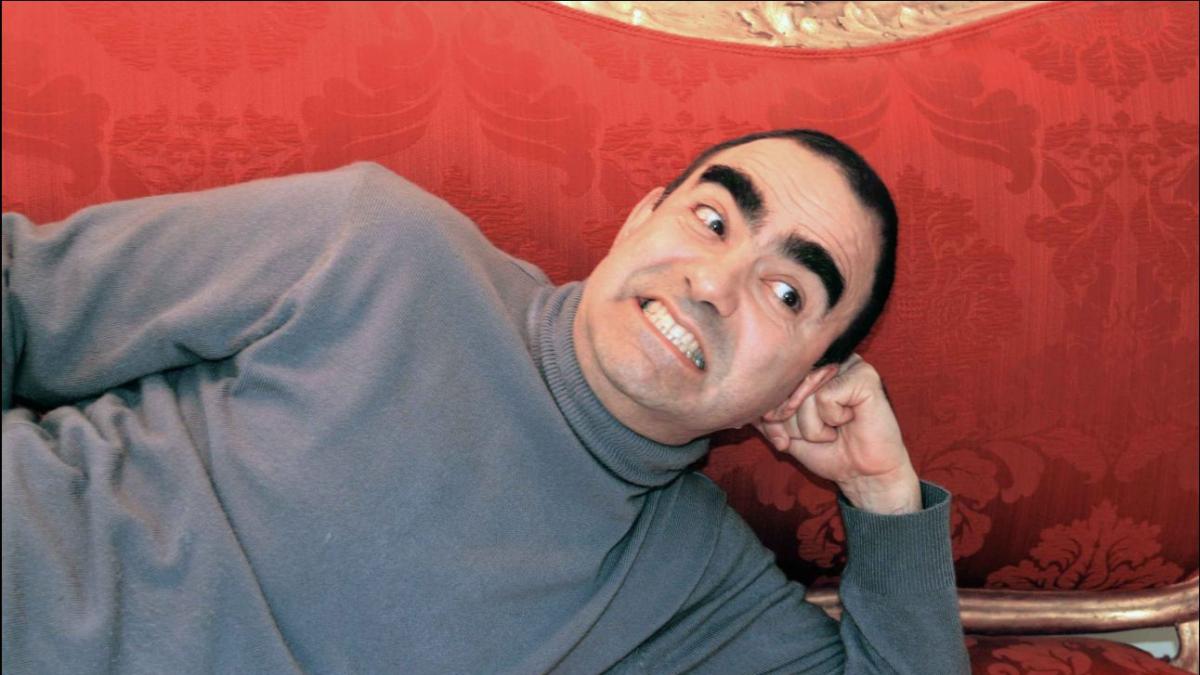
Elio e le Storie Tese: More Than Just Laughter
Elio, born Stefano, possesses a unique duality – a captivating blend of melancholy and comedic energy. To Walter Veltroni,he embodies a rare artistic spirit,capable of evoking both profound sadness and infectious joy. This interview delves into Elio’s upcoming summer tour, aptly titled “Mi resta solo un dente e cerco di riavvitarlo” (I only have one tooth left and I’m trying to screw it back in), and the “Concertozzo” – a lengthy performance scheduled for May 26th in Monza, featuring a collaboration with Trio Medusa.
The Enduring Appeal of Elio e le Storie Tese
“It will be a party,” Elio explains, “We’ll be playing from 3 PM to midnight. It’s the third time we’ve done this, and we’ll be hosting people we like, such as Trio Medusa. most importantly, it will be live music, with people actually playing instruments on stage, not relying on autotune or other tricks. Everything will be real, live.”
Navigating Fame and Artistic Integrity
rumors of the band’s disbandment are frequent, but Elio dismisses them with a characteristic wryness. “We enjoy playfully mimicking groups that split up easily, often followed by a reunion tour lasting a decade. We’re also intrigued by the idea of smashing instruments on stage, like Jimi Hendrix used to do. We did it – using inexpensive guitars, we’d smash five at a time.”
The Challenge of Making People Laugh Today
Elio reflects on the changing landscape of comedy, noting, “It’s very tough today to make people laugh. It feels like it’s almost forbidden. When it happens, it’s as if the Virgin Mary has appeared. I did a show, Lol. We filmed it in September, and it aired at Easter; I barely remembered participating. People would stop me on the street, thanking us for making them laugh, as if we were saviors from an impending sadness. there used to be so much fun.In the 1970s, we had terrorism, drugs, and kidnappings, yet we still laughed like crazy. I think about the birth of the Derby in Milan,and the inherent madness of those who frequented it.Just reading their names makes you smile.”
When asked what makes him laugh now, Elio responds, “Not much. Everyone is holding back,fearful of the ever-present,always-judging social media tribunal that sanctions anything that deviates from unwritten rules,dictated by an unkown authority. There has never been a more bigoted, conservative time. There should be no limits in art and culture. We must feel and be free to say anything. That’s how democracy should work.”
the Art of Balancing Humor and Music
“Elio doesn’t laugh, he just worries about making others laugh?” the interviewer asks. “No, no,” Elio clarifies. “I love the surreal, the absurd. I remember discovering Cochi and Renato, Jannacci. They seemed to have fallen from another world. I love Mel Brooks, Monty Python, and even Frank Zappa made me laugh.Among today’s comedians, I enjoy Lundini; he has that lunar, unpredictable type of comedy that I love.”
Elio acknowledges the band’s unique combination of humor and musicality. “Even Skiantos were good. We’ve had a long run of success, which isn’t always a good thing, as it can lead to complacency. Today, I’m very happy with what we do musically. Of course, we’ve always tried to be unique in our lyrics and staging. But believe me, the musical part is vital to reaching the audience fully.”
A Theatrical Approach to music and a Connection with the Audience
“You put on a musical show that’s as close to theater as possible. And you’ve never arrogantly dismissed a large audience.” Elio agrees.“We even went to Sanremo. we saw it as a public service. we knew there was an audience made up of people like us, and we wanted to represent them – a splendid minority. We came in second twice, though. With ‘La terra dei cachi,’ we almost won, perhaps we even did.”
He recounts a subsequent judicial investigation, stating, “I was interrogated, and I was very proud of it. They asked me senseless questions, like whether Pippo Baudo had interfered with the song’s composition. At the end of the interrogation,the police officer told me,off the record,that we had won,that they had found blank ballots. Giorgia told me she had been given the same information. The mystery deepened. But we didn’t care. We had gone there to cause trouble, and we succeeded.”
Loss, Remembrance, and the Power of Performance
The conversation turns to a more somber note: the passing of Feiez. “That was the worst day for me and the band,” Elio shares. “It happened right before our eyes. I don’t know how many people have witnessed a friend die like that, someone you’ve shared days, dreams, hopes, and anger with. He was 36 years old. When he collapsed while playing, I felt like a part of me had gone with him, that nothing would ever be the same. It happened on December 23rd, and I remember the surreal atmosphere of those days, a mix of mourning and celebration, with gifts and dinners intertwined with the death of a friend. It was all surreal, but sadly, it was all true.”
Reflecting on a more joyful memory, Elio recalls their second appearance at the Sanremo Festival. “We dressed up as fat men, which would rightly be condemned as body shaming today, but it was a different time, and everything must be historicized. I went to hear Pagliacci by Leoncavallo and realized that when Tonio is insulted by the lovely woman, they had changed the word ‘hump’ to ‘back.’ Anyway,trapped in those costumes,we were eager to go to the bathroom. But they gave us all the possible awards. Fatigued,when the final rankings were announced,we feared we had won. We didn’t know if our waterproof suits would allow us to receive the award…”
Autism Awareness and Advocacy
The conversation shifts to a deeply personal topic: Elio’s involvement with autism awareness, sparked by his son’s diagnosis.“We noticed it early on. My wife first perceived anomalies in Dante’s behavior.I comforted her, telling her everything would be alright. but we have twins, and the differences in their development were clear.It was difficult to find someone who could give us a clear diagnosis and guidance. There’s no phone number to call,no address to go to. You quickly realize that your child’s autism is coupled with the utter loneliness of parents. And this applies to all types of disabilities.”
Elio emphasizes the importance of early detection. “The first thing I want to say to parents is to act quickly, don’t wait untill age three, don’t postpone. We noticed that Dante had an obsessive focus on spinning tops, and he would spin himself endlessly. He paid attention to things, not people. Autism can lead to serious relational difficulties, and also mental, motor, and cognitive delays.”
He laments the lack of support systems. “It’s all uncertain, the first reaction is despair. I’m honest: it’s fear, desperation. Everything is missing, believe me. There’s no protocol that a mother and father can follow, a compass in that earthquake.They have to search with a lantern,alone,doubting they’ve found the right people and solutions.”
Critique of Current Approaches and a Call for Inclusion
Elio weighs in on General Vannacci’s controversial views on differential classes for students with autism, stating, “It’s a very old idea, superseded by experience. What works is inclusion. That’s what needs to happen to benefit our children.These kids need to be helped to grow up with others, not separated. And that’s good for everyone. The goal is autonomy and independence, as much as possible. The path of differential classes, conversely, leads to ghettoization.”
He shares an update on Dante’s progress. “He’s 14 now, and he’s aware. Perhaps too aware, he says constantly. He’s done incredible work, a grueling effort. In this regard, autistic children pay a price compared to their peers. Everything has been a struggle for him: putting on a shirt, going to the bathroom, talking. Everything had to be taught. He worked hard, but we were able to afford to get him the support he needed. But what about those who can’t afford it? Here, when public assistance should level the playing field, it actually exacerbates social inequalities. There are associations, but they are private. There’s nothing public that addresses the problem of autism and is close to families.”
He envisions a future for his son with a mix of hope and uncertainty. “I can’t imagine it. On one hand, it’s a nightmare, his loneliness when we’re no longer here. On the other hand,it’s a dream,a life of freedom and independence. This is the drama of hundreds of thousands of people in this country. It seems to be uncomfortable or inappropriate to even talk about it. In Lombardy, they’ve even cut funding for caregivers for cases of severe disability.”
A Concert for Awareness and a Celebration of Neurodiversity
Elio concludes, “So, the meeting in Monza will be an opportunity to give a voice to families and associations. We’ll come together, us parents, to talk to learned people who have studied this growing problem. And to share fantastic experiences like that of PizzAut – founded by Nico Acampora, father of an autistic boy – which is becoming a real phenomenon. Instead of keeping the boys in institutions, he decided to employ them in a restaurant and is now planning 107 mobile units, each with five autistic boys on board. Isn’t that splendid? They even generate income, becoming taxpayers. President Mattarella, with his well-known sensitivity, wanted to highlight this exceptional experience. But it was a father who invented it. Politics, governments, are nowhere to be found.”
“It’s also a huge experience of socialization for the boys,” Elio adds. “One of them said, ‘When I was in an institution, I felt like I was dying a little every day.’ They do a job, they’re together, they learn to relate to people, they have satisfaction. The work, in this case, has a compensatory value. Darwin said, ‘Work ennobles man.’ But in the case of autistic boys, it’s more than that. It gives them fragments of life that would otherwise be denied. There are 600,000 registered cases, and who knows how many are unknown as hidden by social shame. One in 75 newborns is autistic. And we don’t know why. But if we don’t invest in research, we’ll never know.And we’ll never find remedies.”
“You are connected, you families?” Elio asks. “Through associations. But going around, I meet so many people who tell me ‘Me too.’ The amount and measure of loneliness of those whose lives have been overturned by the intrusion of autism is extraordinary. Whether they are the boys or their parents. Alone, both of them. It’s meaningful to talk about it,not to close in on yourself,not to hide. It’s an army of mute people, often annihilated by something that changes everything. The effort, for everyone, is frequently enough unbearable. There are no breaks, no moments free of thoughts, never.”
“Like Chaplin’s Calvero, you want, you must give joy while carrying this weight,” Elio concludes. “I have always lived my artistic activity as something that allows me to give to others. I like to see the audience laugh. It seems to me that we sow good, which is much needed in these times.”
May 13, 2024 (modified May 13, 2024 | 16:41)
© RIPRODUZIONE RISERVATA
