
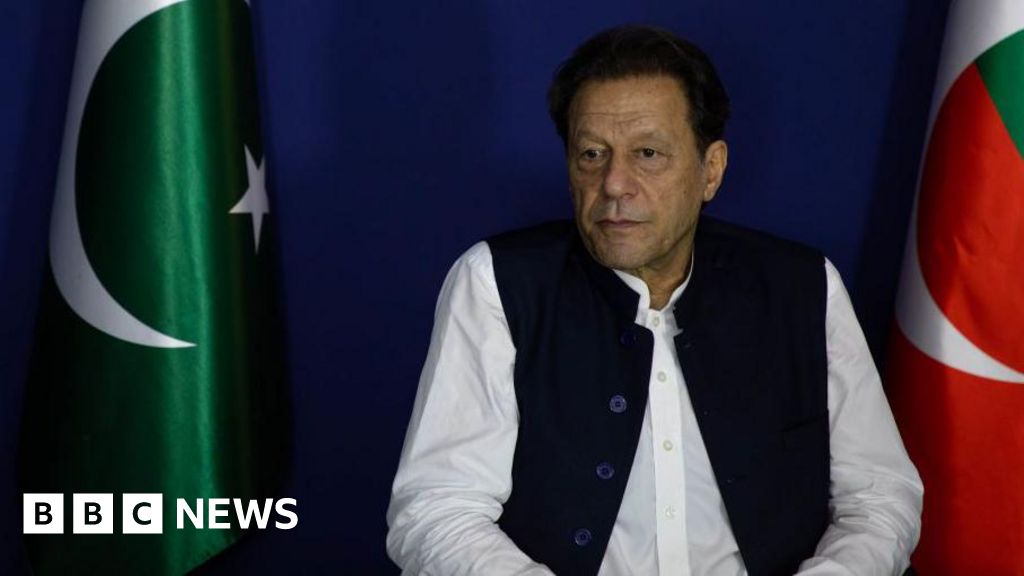
Imran Khan is now at teh center of a structural shift involving the politicisation of Pakistan’s legal system and civil‑military power balance. The immediate implication is heightened uncertainty for domestic stability and foreign policy continuity.
The Strategic Context
Since his ouster in 2022, Khan has been the focal point of a broader contest between Pakistan’s elected political class and the entrenched military establishment. The judiciary has increasingly become a tool for managing elite rivalries, a pattern observable in other multipolar states where weak institutional checks allow courts to serve as arenas for political settlement. The Toshakhana‑2 case, involving alleged undervaluation of a Saudi gift, fits within a long‑standing practice of leveraging corruption allegations to marginalise opposition figures. This dynamic is reinforced by Pakistan’s fragile fiscal habitat, where state‑gift management intersects with broader concerns about openness and patronage networks.
Core Analysis: Incentives & Constraints
Source Signals: The court sentenced Khan and his wife to concurrent terms for criminal breach of trust and misconduct related to a Saudi‑gift jewelry set. Khan’s camp describes the charges as politically motivated and plans a high‑court challenge.The couple are already serving sentences from earlier convictions, and the judge cited “old age” as a mitigating factor. Khan continues to use social media to criticize the current government and the army chief.
WTN Interpretation:
The ruling serves multiple strategic purposes. For the civilian government, it demonstrates a willingness to act against a popular former premier, thereby signaling control over the judiciary and attempting to curtail his mobilising capacity. For the military, a weakened Khan reduces the risk of a populist challenger who could threaten the established civil‑military equilibrium.Khan’s incentive is to preserve political relevance and leverage his public platform to pressure the establishment, while his legal team seeks procedural avenues to overturn the verdict. Constraints include the judiciary’s limited independence, the army’s de‑facto influence over security and political decisions, and international scrutiny that could be triggered by perceptions of a crackdown on democratic opposition.
WTN Strategic Insight
“When a dominant military establishment co‑opts the judiciary to neutralise a charismatic civilian leader, the resulting legal veneer masks a deeper power‑rebalancing that reverberates across regional security calculations.”
Future Outlook: scenario Paths & Key Indicators
Baseline Path: If the high‑court upholds the sentencing and Khan remains incarcerated, his party’s capacity to organize mass protests diminishes, leading to a period of relative political quite. The civilian government consolidates its authority, while the military maintains its strategic primacy, preserving the status quo in Pakistan’s foreign‑policy posture toward Afghanistan, India, and the Gulf.
Risk Path: If the high‑court overturns or significantly reduces the sentences, Khan could be released, reigniting large‑scale mobilisations and intensifying civil‑military friction.Escalated protests could provoke a security crackdown, potentially destabilising key economic reforms and inviting external actors to recalibrate their engagement with pakistan.
- Indicator 1: Outcome of the high‑court appeal scheduled within the next 90 days.
- Indicator 2: Frequency and scale of public demonstrations linked to Khan’s party in the next six months, as reported by local security briefings.
