
answer.
Oklahoma City is now at the center of a structural shift involving Olympic venue diversification. The immediate implication is expanded sponsor activation opportunities for the LA 2028 Games.
The Strategic Context
U.S. municipalities have increasingly positioned themselves as ancillary sites for major international sporting events, leveraging existing infrastructure to attract sponsorship dollars and community engagement while mitigating the fiscal risks of hosting primary venues. This trend aligns with a broader pattern of “distributed Games” that spreads economic and branding benefits across multiple regions, reducing concentration risk for the host city and creating a networked legacy.
Core Analysis: Incentives & Constraints
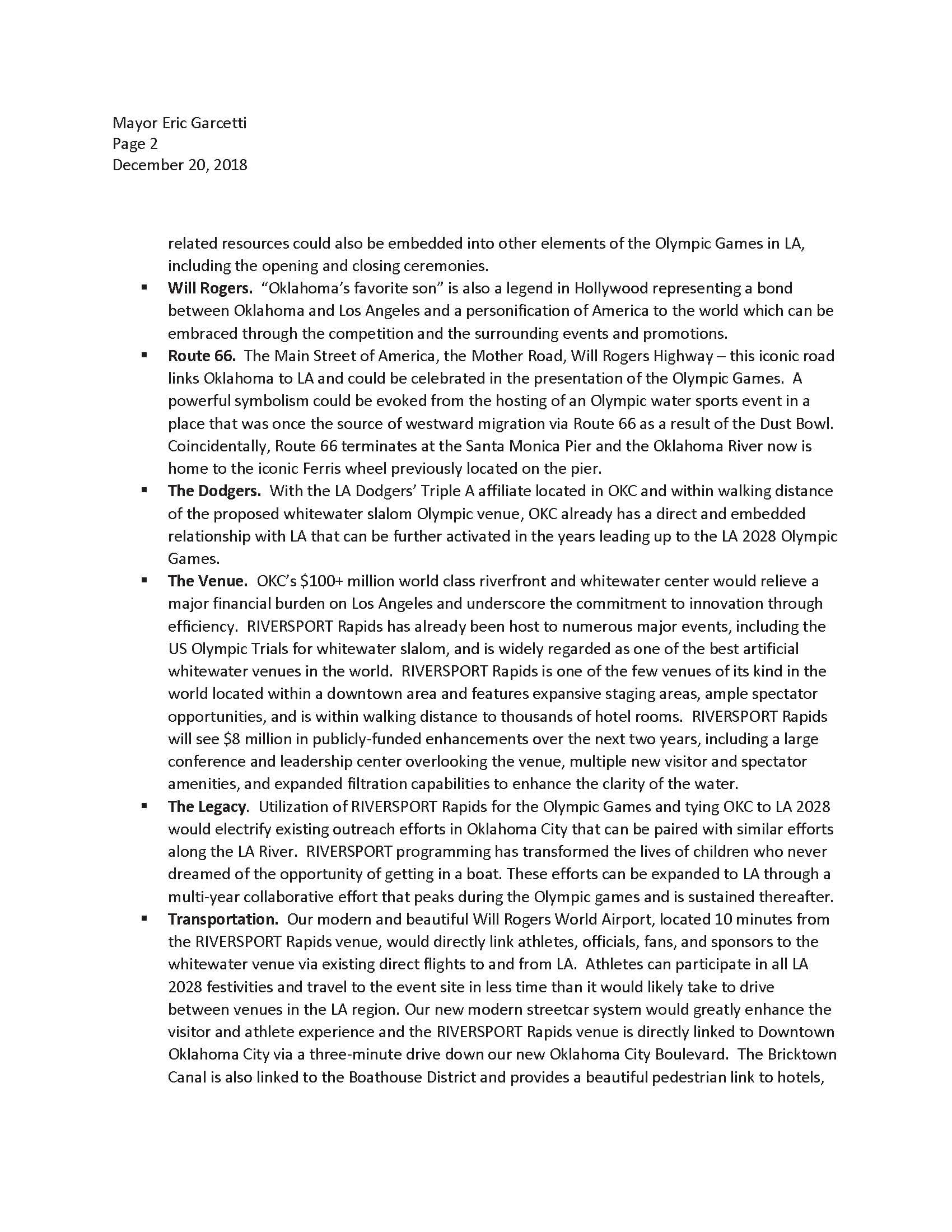
Source Signals: The mayor’s letter outlines Oklahoma City’s existing Boathouse District and RIVERSPORT Rapids as ready-made facilities for rowing and canoe/kayak sprint events. It emphasizes sponsor activation, pre‑Games camps, youth progress, and a willingness to host test events and Olympic‑era programming. The city positions itself as a “model for sustainable and influential programming” that can be replicated in Los Angeles.
WTN Interpretation:
- incentives: Oklahoma city seeks national visibility, tourism growth, and a durable sports legacy that can justify past public investments. By aligning with LA 2028, the city can attract corporate sponsorships that would otherwise flow to the primary host, diversifying its revenue base.
- Leverage: The Boathouse District offers a ready‑to‑use, water‑based venue that fills a niche for rowing and sprint canoe/kayak-sports that lack comparable facilities elsewhere in the U.S. This gives Oklahoma City bargaining power in negotiations over event allocation.
- Constraints: The city must navigate federal and state funding approvals, potential community opposition to large‑scale event traffic, and the logistical complexity of integrating a satellite venue into the LA 2028 operational plan.Competition from other U.S. cities also limits the certainty of selection.
WTN Strategic Insight
“Distributed Olympic venues turn a single‑city showcase into a regional growth engine, converting sponsorship spill‑over into lasting community infrastructure.”
Future Outlook: Scenario Paths & key Indicators
Baseline Path: If the LA 2028 Organizing Commitee proceeds with a distributed‑venue model and selects Oklahoma City for rowing and sprint canoe/kayak events, sponsor activation programs will expand into the Midwest, generating incremental branding value for both the Games and local businesses. the city’s youth development pipelines will likely receive federal and private funding, cementing a long‑term sports ecosystem.
Risk Path: If budgetary pressures or political scrutiny force LA 2028 to consolidate events within the core metropolitan area, Oklahoma City’s proposal could be sidelined. In that case,the city may experience a shortfall in anticipated sponsorship revenue and face pressure to repurpose the Boathouse District without the Olympic catalyst.
- Indicator 1: The LA 2028 Organizing Committee’s venue‑selection briefing scheduled for the next 3 months.
- Indicator 2: federal appropriations bill for the 2025‑2026 Olympic legacy fund, expected to be debated in the upcoming congressional session.
- Indicator 3: Oklahoma City Council’s budget amendment vote on infrastructure upgrades for the Boathouse district, slated for the next municipal meeting cycle.
