
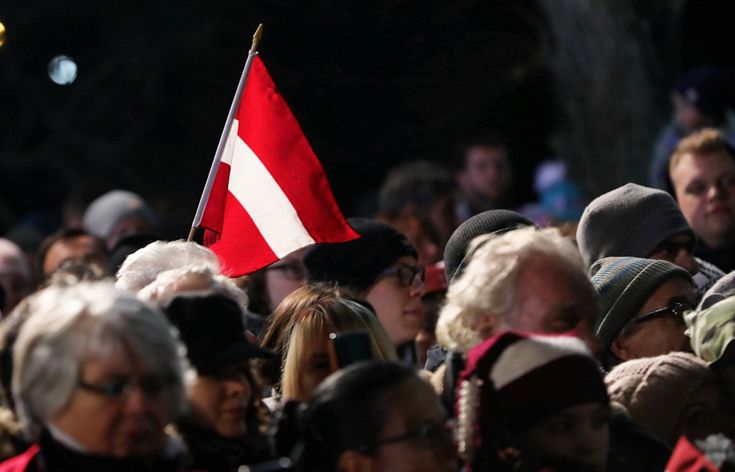
Latvia is now at the center of a structural shift involving public confidence in the European Union. the immediate implication is a potential divergence between Baltic‑EU alignment and broader EU sentiment,which could affect policy cohesion and investment flows.
The Strategic Context
since the early 2000s, the Baltic states have pursued rapid integration wiht Western institutions, leveraging EU membership to offset historic security concerns vis‑à‑vis Russia. Demographically, Latvia faces population decline and out‑migration, intensifying the need for economic stability and external support. Across the EU, macro‑economic pressures-particularly inflation and energy price volatility-have strained household budgets, while geopolitical tensions from the war in Ukraine have heightened security anxieties. Thes structural forces create a backdrop where citizen satisfaction and trust become proxies for the legitimacy of the EU project in peripheral member states.
Core Analysis: Incentives & constraints
Source Signals: The Eurobarometer survey (Oct 9‑29 2025) shows 84 % of Latvians satisfied with life, the highest historically, while 55 % express trust in the EU, unchanged since spring. Latvians identify inflation/cost of living (33 %) and health care (23 %) as domestic concerns, and Russia’s invasion of Ukraine (32 %) and immigration (27 %) as EU‑wide problems-both percentages higher then the EU average. Trust in the EU across the bloc sits at 48 %, down 4 % since spring, with Portugal at 71 % and France at 27 %.
WTN Interpretation: Latvian satisfaction reflects a short‑term perception that EU subsidies, security guarantees, and fiscal support are buffering domestic pressures. The elevated concern over Ukraine and immigration signals that Latvians view external security threats and demographic pressures as intertwined with EU policy. Latvia’s incentive is to maintain strong EU ties to secure continued financial assistance and security guarantees, especially given its proximity to Russia. Constraints include limited fiscal space to address inflation and health‑care deficits domestically, and the risk that EU‑wide fatigue over ukraine aid or migration policy could erode the perceived benefits of membership. For the EU, the challenge is balancing solidarity with Ukraine and a coherent migration framework while preserving credibility in peripheral states that already exhibit higher trust levels.
WTN Strategic Insight
“When peripheral members report higher EU trust than the bloc average,the Union’s cohesion hinges on sustaining targeted economic and security subsidies; any erosion of those levers risks a centrifugal pull toward national‑centric policy agendas.”
Future Outlook: Scenario Paths & Key Indicators
Baseline Path: if EU fiscal support (e.g., Cohesion Fund allocations, energy subsidies) and security guarantees (NATO‑EU coordination) remain steady, Latvian satisfaction and trust will stay above the EU average. This will reinforce Baltic alignment with EU policy, encouraging continued investment inflows and a stable security posture in the region.
risk Path: If EU budgetary pressures force cuts to cohesion spending or if the Ukraine conflict drags on without a clear resolution,Latvian public perception may shift. Rising inflation and stagnant health‑care reforms could lower satisfaction, while heightened concerns over immigration could amplify Eurosceptic narratives, perhaps weakening Latvia’s commitment to deeper EU integration.
- Indicator 1: EU budget negotiations and the final allocation of Cohesion Fund resources for 2026 (scheduled for Q1 2026).
- Indicator 2: Quarterly inflation and consumer price index data for Latvia (to be released by the Central Statistical Bureau, next two releases).
- Indicator 3: EU Council discussions on migration policy reforms (mid‑2026).
