
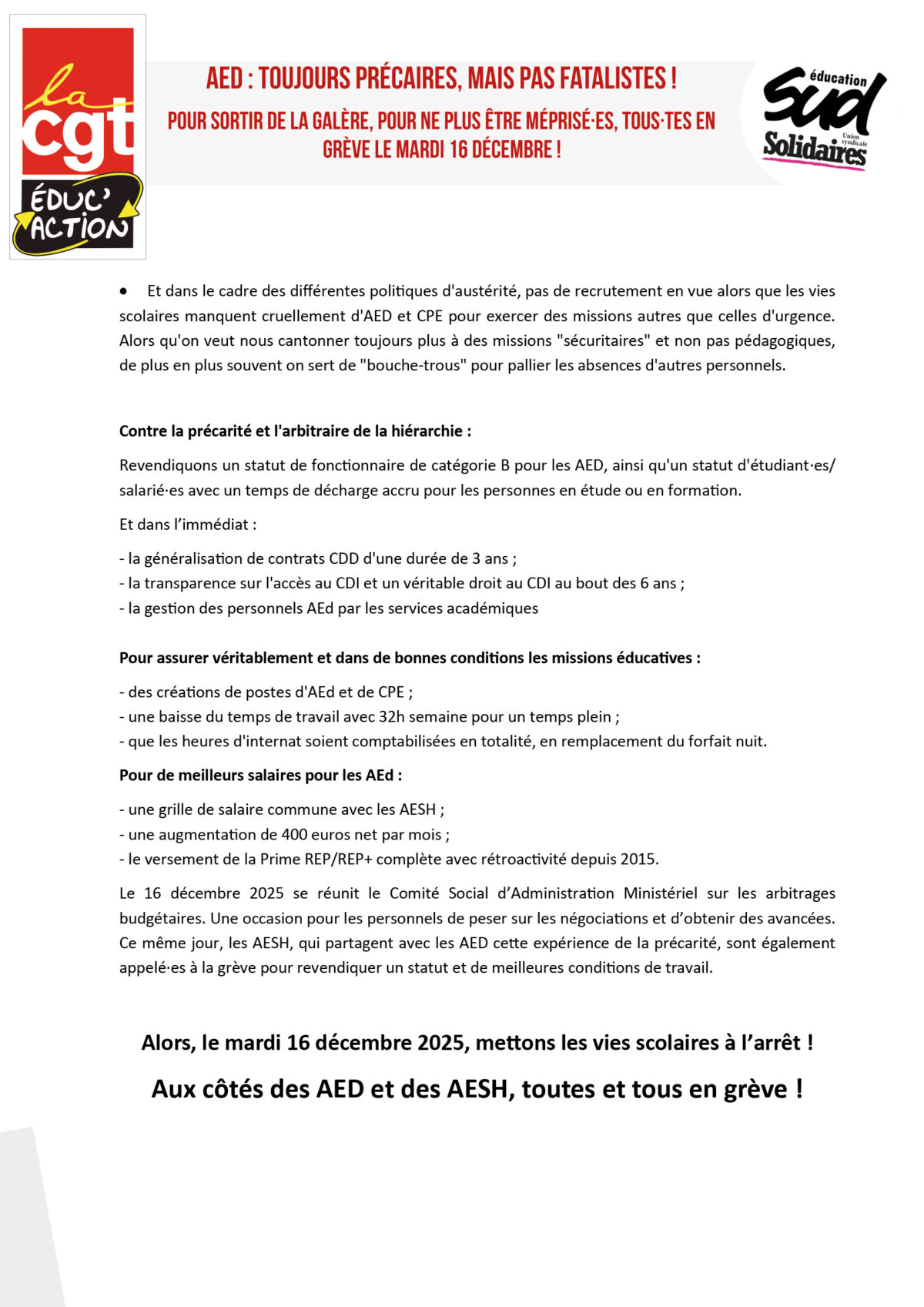
Education Assistants (AED) and Accompanying Educational Support Staff (AESH) are now at the center of a structural shift involving precarious public‑sector employment in French education. The immediate implication is heightened pressure on the Ministry of National Education to adjust civil‑service status and budget allocations.
The Strategic Context
Since the early 2000s, French public education has increasingly relied on fixed‑term contracts (CDD) for support staff while the core teaching corps remains largely career civil servants. Austerity measures and a tightening of public‑sector payrolls have limited new recruitment, creating chronic understaffing in schools and boarding establishments. The 2020‑2021 strike that secured limited access to permanent contracts (CDI) did not resolve the underlying governance gap: contract renewal remains discretionary,salary scales are fragmented across academic regions,and mobility between establishments is procedurally cumbersome.Demographic stagnation in school enrolments and a broader European fiscal consolidation trend amplify the budgetary pressure on the Ministry, while unions retain the capacity to mobilise large numbers of staff at moments of fiscal decision‑making.
Core Analysis: Incentives & Constraints
Source Signals: The communiqué calls for a nationwide strike on Tuesday 16 December 2025, coinciding with the Ministerial Social Administration Committee’s budget session. it lists grievances: discretionary renewal of fixed‑term contracts, lack of a national salary grid, limited mobility, inadequate recognition of boarding‑school duties, and the absence of recruitment. Unions demand category B civil‑servant status, three‑year CDDs, guaranteed access to permanent contracts after six years, a unified salary scale with AESH, and a €400 net monthly increase.A petition for AESH civil‑servant status has gathered over 83 000 signatures.
WTN Interpretation: The timing of the strike is designed to maximize leverage over fiscal negotiations, forcing the Ministry to address staffing costs before the budget is sealed. Unions exploit the structural dependency of schools on support staff to extract concessions without threatening core teaching functions. The Ministry’s constraints stem from macro‑fiscal targets, public‑debt limits, and political aversion to expanding the civil‑service payroll. Simultaneously, the government must preserve the perception of educational quality, especially in boarding schools where support staff fill critical safety and supervision roles. The fragmented salary regime across academies reflects a decentralised governance model that limits the Ministry’s ability to impose uniform reforms, creating a bargaining arena where regional authorities can negotiate divergent outcomes.
WTN Strategic Insight
“Precarious employment in public education is emerging as a micro‑indicator of wider fiscal consolidation pressures across European welfare states.”
Future Outlook: Scenario Paths & Key Indicators
Baseline Path: The Ministry offers limited concessions-standardising some salary scales in a few academies and extending three‑year CDDs-while retaining discretionary contract renewal. Unions accept incremental gains, and strike activity remains episodic. Budgetary pressure is absorbed within the existing fiscal framework, and the status‑quo of fragmented employment conditions persists.
Risk Path: If the ministry’s fiscal constraints tighten further (e.g.,a new deficit‑reduction mandate) or if union mobilisation expands beyond education support staff to other public‑sector groups,the government may attempt to impose top‑down reforms without union consent.This could trigger broader public‑sector unrest, legal challenges to contract‑renewal practices, and political fallout that reshapes the governing coalition’s approach to public‑service reform.
- Indicator 1: Outcomes of the Ministerial Social Administration Committee’s budget deliberations (scheduled for 16 December 2025), especially any allocations earmarked for education support staff.
- Indicator 2: Parliamentary debate or vote on the creation of a category B civil‑servant corps for AESH and AED, expected in the first half of 2026.
- Indicator 3: Trends in recruitment announcements for education support staff in the Ministry’s quarterly employment reports.
