
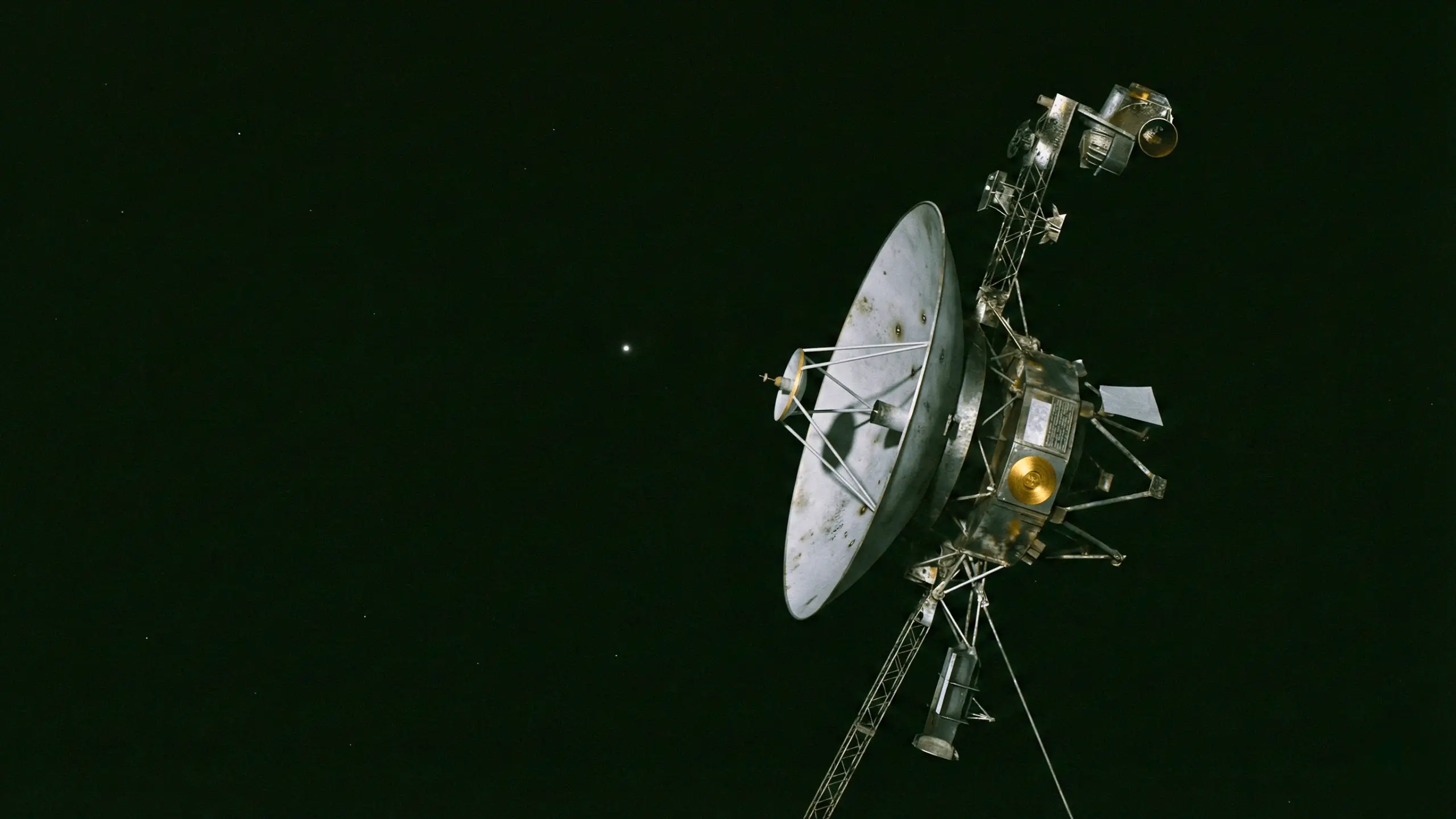
voyager 1 Enters Interstellar Space, Continues to Transmit Data After 46 Years
PASADENA, CA – In a landmark achievement for space exploration, NASA’s Voyager 1 probe has officially entered interstellar space – the region beyond the influence of our Sun – and continues to send back valuable data despite operating on dwindling power. Launched in 1977, Voyager 1 has now reached the greatest distance ever achieved by a human-made object, exceeding 14.9 billion miles (24 billion kilometers) from Earth as of March 2024.
The probe’s journey, marked by ultra-slow dialog – commands take nearly 24 hours to reach Voyager 1 and for responses to return – recently saw engineers successfully reactivate a thruster dormant for 21 years. This maneuver, completed in March 2024, demonstrates the enduring capabilities of the 46-year-old spacecraft.
Voyager 1 is currently transmitting unique measurements of plasma waves, magnetic fields, and particle flows within the interstellar medium, a region largely unexplored by other spacecraft. This data is refining our understanding of the boundary between the Sun’s influence and galactic space.
Perhaps the most enduring legacy of the Voyager 1 mission is the golden disk it carries. Engraved with sounds and images representing life on Earth, in 55 languages, the disk serves as a message to any potential extraterrestrial civilizations.
while Voyager 1 is expected to cease operations in the 2030s due to diminishing power, its journey will continue for millennia. In approximately 40,000 years,the probe will pass near a star in the Little Dipper constellation,drifting onward as a silent testament to human ingenuity and exploration.
