
Smart Glasses Market Fragmented as Companies Clash Over Core Design
SAN FRANCISCO – The smart glasses market is currently defined by starkly different visions, with manufacturers unable to coalesce around a single design philosophy. While Meta aggressively pushes feature-rich, AI-powered glasses, competitors are prioritizing privacy and a more subtle user experience, highlighting a fundamental disagreement over the future of wearable technology.
Meta recently expanded its smart glasses lineup to four models, including a new $800 Ray-Ban Display and collaborations with Oakley. The company’s strategy centers on integrating cameras, artificial intelligence, audio, and computer vision, betting consumers will embrace always-on connectivity and AI assistance.
however, other companies are taking a different tack.Even Realities’ Even G2 notably omits cameras and speakers, aiming for a lighter, more discreet design that addresses privacy concerns. This approach focuses on a “head-up display” (HUD) experience – delivering notifications and brief information at the periphery of the user’s vision without being intrusive.
Inmo Air 3 represents another divergence, offering a full-eye augmented reality screen intended for constant wear, moving beyond the home-entertainment use case.
This divergence raises key questions about the role of smart glasses: “Are smart glasses an accessory that works in the background?”, “Are they a entirely immersive computer?” Or is it an ‘Apple Watch’ attached to your face?”
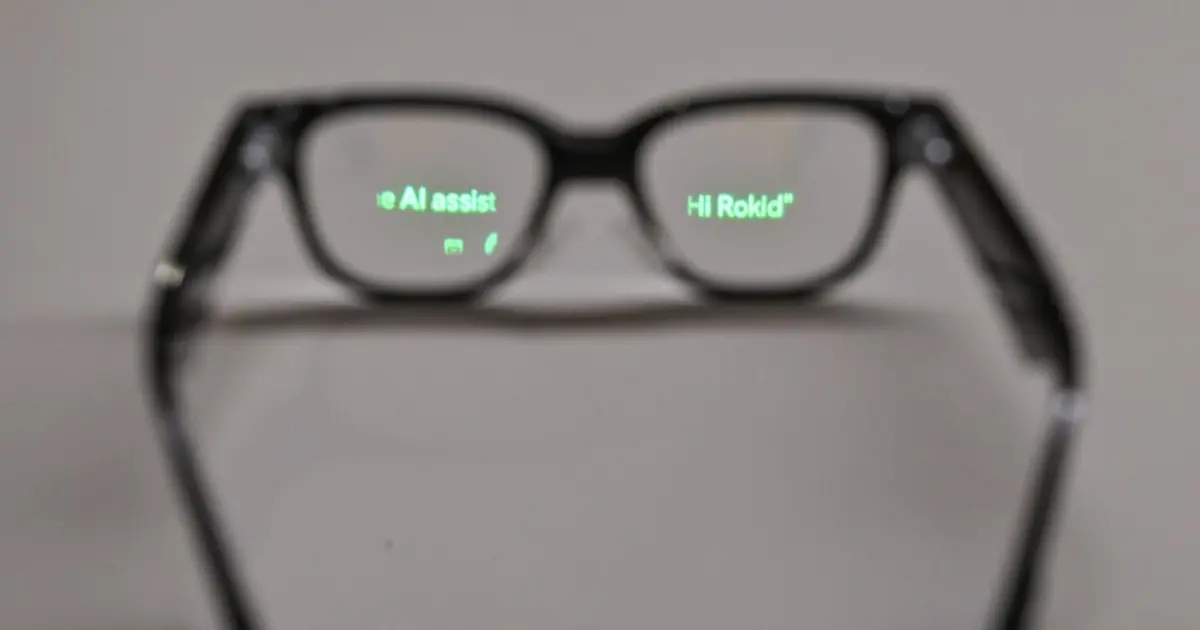
Even the underlying display technology remains contested. Meta utilizes full-color lcos displays capable of reaching 5,000 nits of brightness, while Rokid opts for a simpler green micro LED display, reflecting differing priorities between visual fidelity and functional efficiency.
The potential entry of Apple into the market looms large,with speculation that its deep ecosystem integration,interface design,and Vision Pro software could reshape the landscape. However, the lukewarm reception to the vision Pro itself demonstrates that even Apple’s considerable influence cannot guarantee success in the augmented/extended reality (AR/XR) space.
