
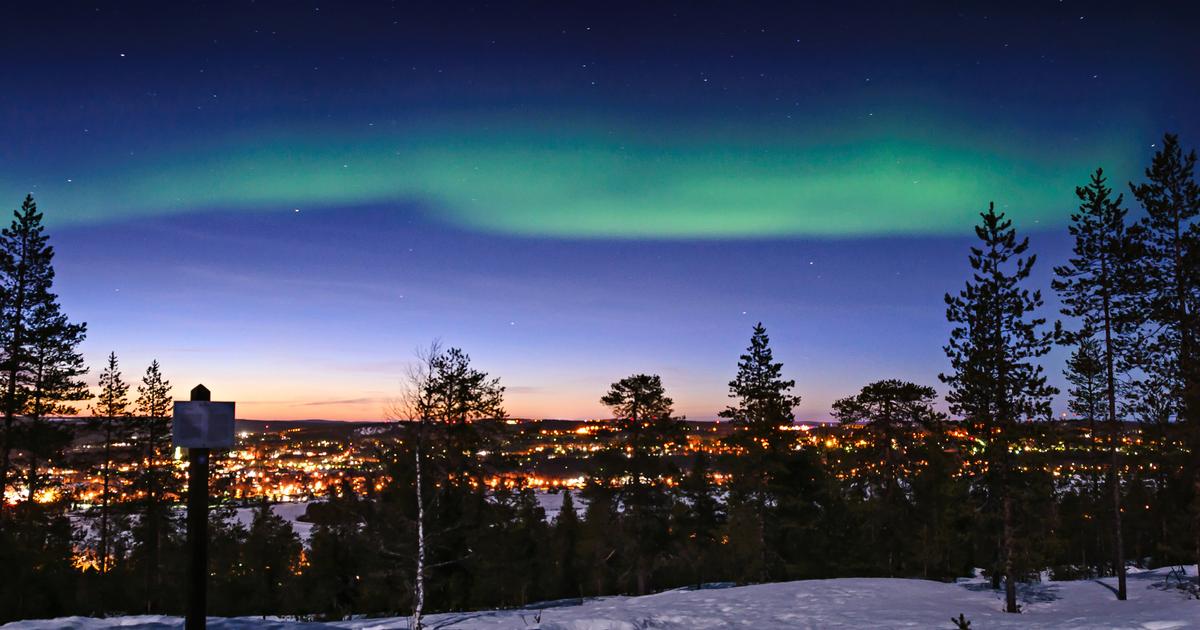
A significant solar flare erupted sunday, potentially bringing the aurora borealis-commonly known as the northern lights-to view as early as Wednesday evening in regions of the northern hemisphere. The flare, classified as X1.9 by NASA, originated from a large and active sunspot group recently appearing on the sun’s edge, and is already impacting space-based and terrestrial systems.
This event marks a notable space weather occurrence with potential effects ranging from disrupted radio communications to visible atmospheric displays. While the primary impact is expected overnight Wednesday into Thursday,the sunspot group responsible-designated AR4299-remains active and could produce further flares in the coming weeks. The strength of the aurora display, and the extent of any technological disruptions, will depend on the precise trajectory of the ejected particles and local weather conditions.
According to NASA’s Solar Dynamics Observatory, the initial flare briefly interfered with radio communications in Australia and Southeast asia. More concerning is the accompanying coronal mass ejection (CME), a surge of charged particles and magnetic fields. When a CME reaches Earth, it can trigger geomagnetic storms capable of affecting satellites, power grids, and navigation systems.
The National Oceanic and Atmospheric Administration (NOAA) has issued a geomagnetic storm alert for Wednesday night through Thursday, forecasting a potential impact reaching class G3, which experts describe as “forte.” A G3 storm could make the northern lights visible at lower latitudes than typically observed. However, forecasters caution that cloud cover and the orientation of the solar ejection will be key factors determining visibility.
