
Summary of the Article: “black Hole Stars” adn the Cliff
This article discusses a new theoretical model proposed to explain the unusual characteristics of “Little Red Dots” – distant galaxies observed by the James Webb Space Telescope (JWST). Specifically, it focuses on a notably extreme Little Red Dot nicknamed “The Cliff,” which exhibits a dramatic feature in its light spectrum called a Balmer break.
Key takeaways:
* The problem: Conventional models couldn’t explain the extreme Balmer break observed in The Cliff.Existing theories suggested evolved stars were responsible, but didn’t fit the data.
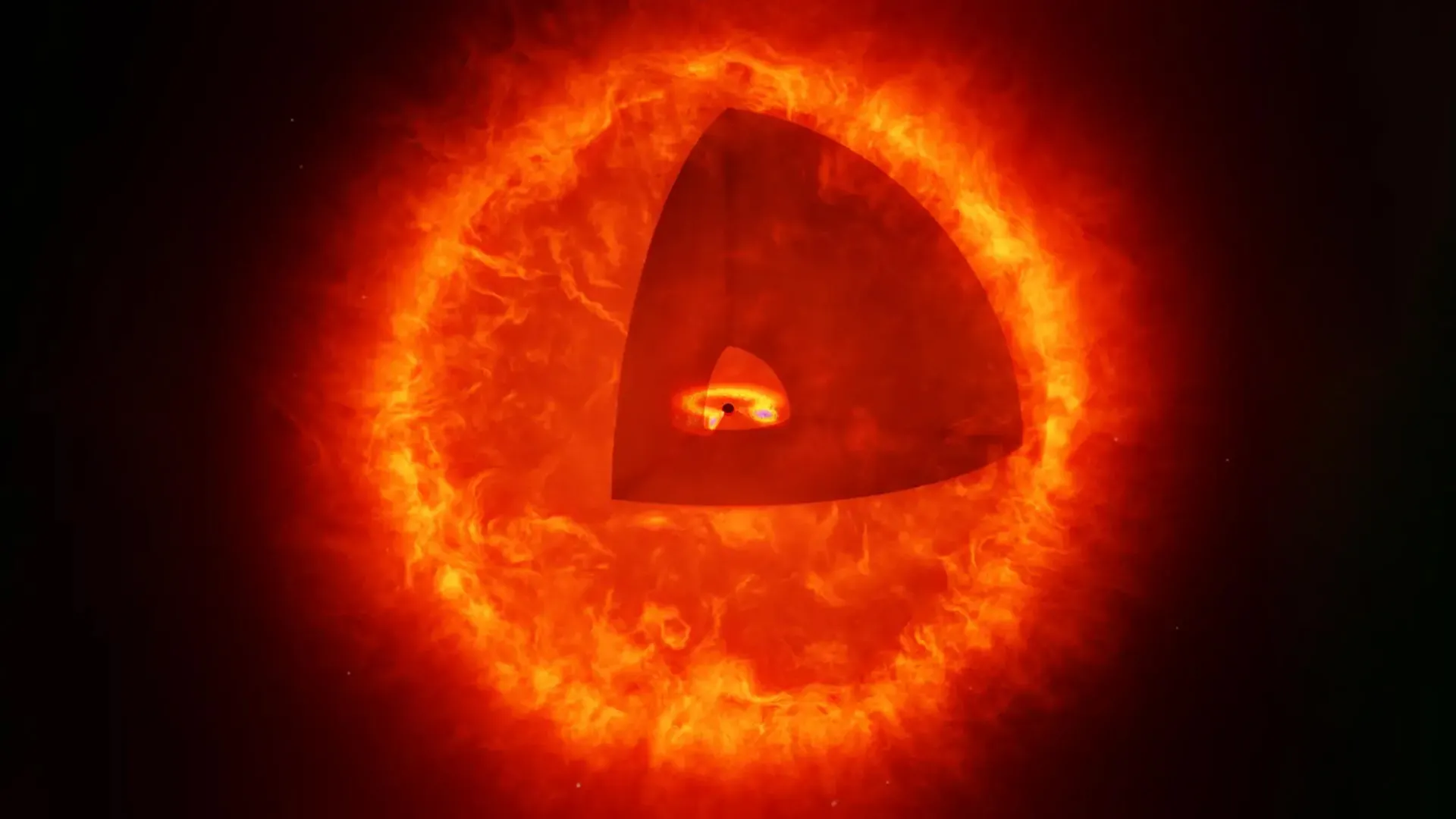
* The New Model: Black Hole Stars (BH): Researchers propose a new type of object called a “black hole star” (BH). This isn’t a true star, but an active galactic nucleus (supermassive black hole with an accretion disk) surrounded by a thick, turbulent layer of hydrogen gas.This gas reddens the light and mimics the appearance of a star.
* Explaining The Cliff: The BH* model successfully explains the steep rise in The Cliff’s spectrum, suggesting it’s an extreme exmaple dominated by the black hole star. Other Little Red Dots likely contain a mix of BH* light and light from other sources.
* Implications for Early Galaxy Growth: If BH* objects are real, they could explain how supermassive black holes grew so rapidly in the early universe. The gas envelope could facilitate faster black hole accretion.
* Future Research: The model is still early and requires further examination. Researchers are planning follow-up observations with JWST to understand how these BH* objects form, how their gas envelopes are sustained, and to confirm the model’s validity.
* Publications: The research has been accepted for publication in Astronomy & Astrophysics.
In essence, the article presents a potentially groundbreaking new clarification for the properties of some of the earliest galaxies observed, linking them to the activity of supermassive black holes hidden within dense gas clouds.
