
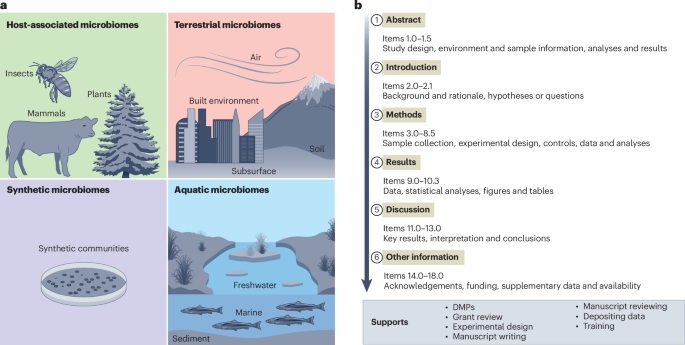
New Standards aim to Revolutionize Microbiome Research Reporting
A consortium of 25 researchers from institutions across teh globe have established complete guidelines for transparent and reproducible reporting of microbiome studies, addressing a critical need for standardization in the rapidly evolving field. The “STREAMS” (Standards for Technical Reporting in Environmental and host-associated Microbiome Studies) guidelines, detailed in a forthcoming publication, aim to improve the rigor and reliability of microbiome research impacting areas from human health to environmental science.
The initiative involved contributions from researchers at institutions including the University of Bergen (Sigmund Jensen),Queen Mary University of London (Stephania L. Tsola), University of Maryland (stephanie A. Yarwood), United Arab Emirates University (Sunil Mundra), University of Maine (Susan H. Brawley), Michigan State University (Sydney Chen), Weill Cornell Medicine (Theodore M. nelson), University of East Anglia (Thomas Mock, william Boulton), Naval Research Laboratory (W. Judson Hervey), University of South Carolina (Xuefeng Peng), SUNY College of Environmental Science and Forestry (Yaqi You), University of Rhode Island (Ying Zhang), and the Australian Institute of Marine Science (Yun Kit Yeoh).
J.M.K. and E.A.E.-F. led the writing of the guidelines, incorporating input and approval from all contributing authors, ensuring a collaborative and comprehensive approach to establishing these new standards. The guidelines seek to address inconsistencies in methodology and reporting that have historically hampered comparisons and reproducibility within microbiome research.
