
Scientists Detect Magnetic “Switchback“ Near Earth, Improving Space Weather Forecasting
NASA’s Magnetospheric Multiscale Mission (MMS) has detected a unique, zigzag-shaped structure within Earth’s magnetosphere – a magnetic “switchback” – marking the first confirmed observation of this phenomenon so close to our planet. The revelation, led by astrophysicist Emily McDougall (formerly of the University of New Hampshire), offers a new prospect to study magnetic reconnection events and improve predictions of disruptive space weather.
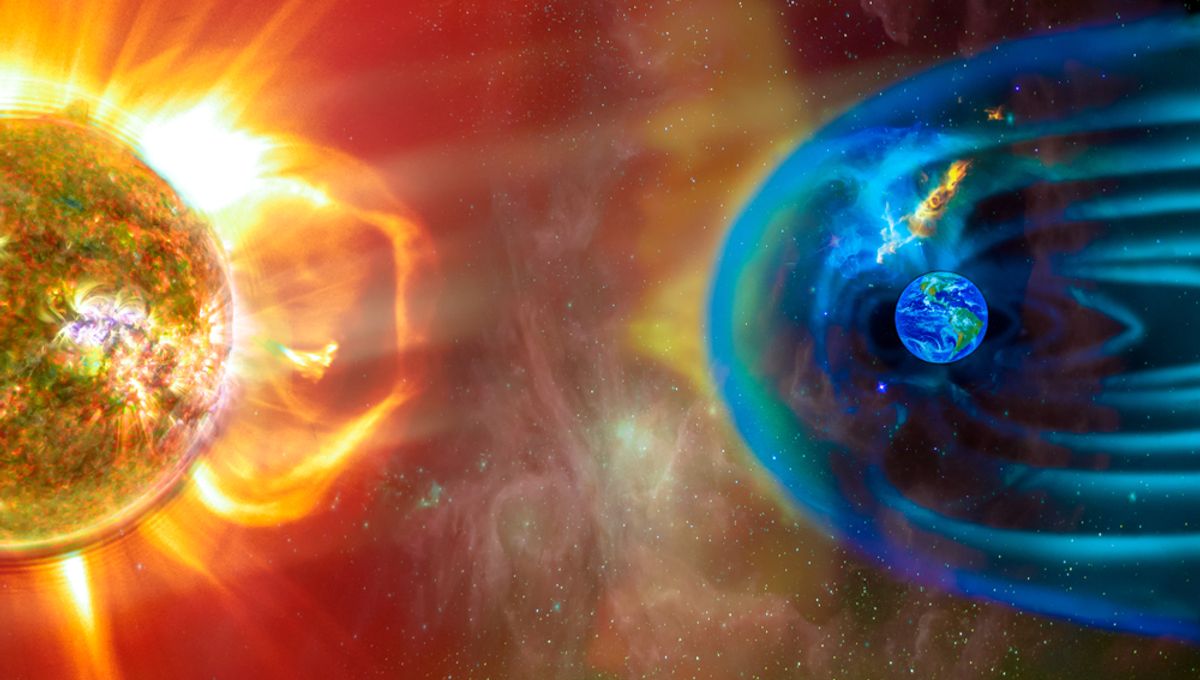
Magnetic reconnection occurs when Earth’s magnetic field interacts wiht the sun’s, releasing significant energy. These events are known to drive phenomena like auroras, but also have the potential to trigger geomagnetic storms that can disrupt power grids, radio communications, and satellite operations. Switchbacks are kink-shaped plasma structures formed by these reconnection events. While previously observed near the Sun by missions like the Parker Solar Probe, they hadn’t been directly detected in Earth’s vicinity until now.
McDougall and the MMS team found the switchback in the magnetosheath, the region just outside earth’s magnetosphere where solar wind flows after being deflected. Crucially, the switchback contained high-energy electrons originating from Earth’s own magnetic field, mixed with solar plasma. The four MMS spacecraft were able to precisely measure the rotation of the magnetic field and the speed of particles within the switchback, providing data to refine existing models of turbulence and reconnection.
This finding is significant because it brings the study of these reconnection events closer to home. Previously,researchers relied on data from probes much closer to the Sun. Having accessible data from near Earth will allow scientists to better determine which reconnection events pose a threat to manmade systems and which are less impactful. The MMS team plans further investigations of the area to understand how switchbacks form and what conditions trigger them.
The research was published in the Journal of Geophysical Research and is available here.
