
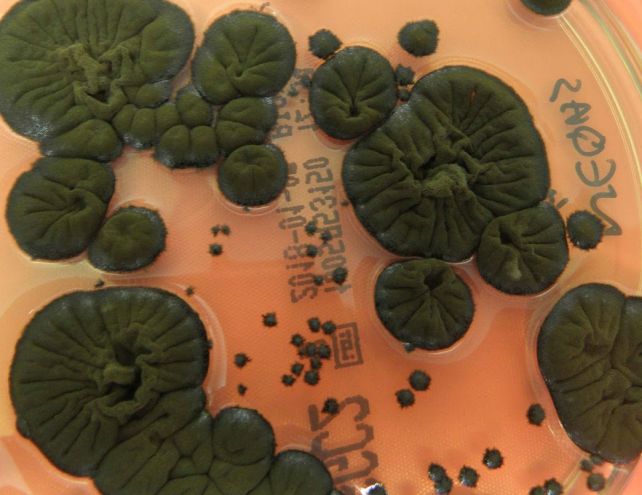
black Fungus Thrives in Chernobyl, Demonstrating Unique radiation Interaction
CHERNOBYL, UKRAINE – A species of fungus, Cryptococcus neoformans, found growing at the site of the Chernobyl disaster, exhibits a remarkable interaction with ionizing radiation, potentially offering insights into radiation shielding and the adaptability of life in extreme environments. While initial observations suggested the fungus might be utilizing the radiation as an energy source – a process called radiosynthesis – scientists have yet to confirm this.
A 2021 study revealed that less radiation penetrated samples containing the fungus compared to agar-only controls,sparking interest in its potential as a radiation shield for space travel. Though, researchers, including a team led by engineer nils Averesch of Stanford University, have been unable to demonstrate carbon fixation dependent on ionizing radiation, metabolic gain from the radiation, or a defined energy-harvesting pathway. As Averesch’s team wrote in a 2022 publication,”actual radiosynthesis… remains to be shown.”
C. neoformans is not alone in displaying unusual radiation responses. Wangiella dermatitidis,a black yeast,shows enhanced growth under ionizing radiation,while Cladosporium cladosporioides increases melanin production,but not growth,when exposed to gamma or UV radiation. This indicates the radiation response is not consistent across all melanized fungi.
the purpose behind C. neoformans’ behavior remains unknown. Scientists are investigating whether it represents an adaptation to exploit radiation as a resource or a stress response enhancing survival in harsh conditions. Regardless, the fungus’s ability to survive – and potentially even proliferate – in one of the most radioactive environments on Earth underscores the resilience of life.
