
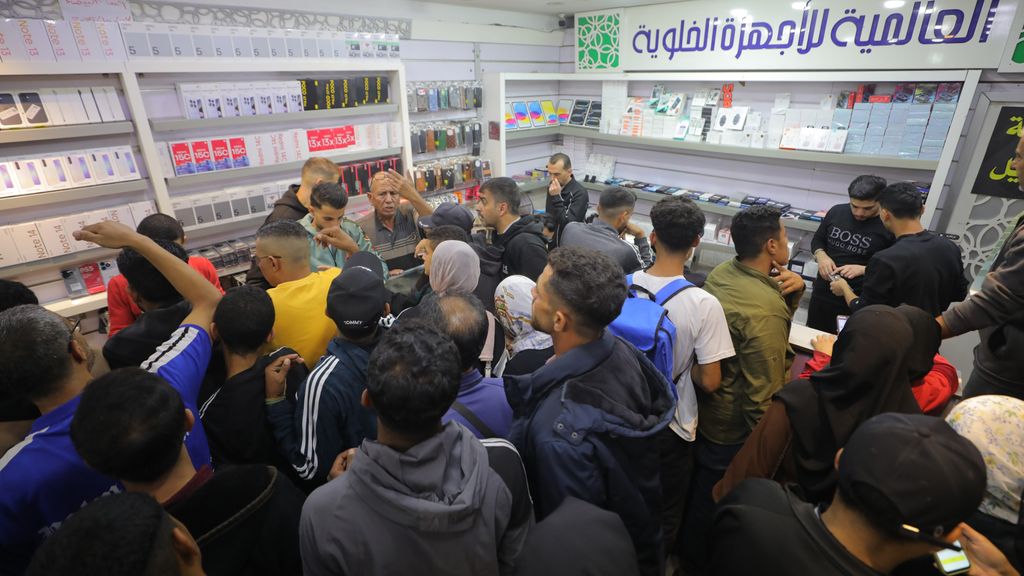
Aid workers Report Severe Shortages in Gaza Despite commercial Imports, Including Latest iPhones
GAZA – Despite a ceasefire agreement intended to facilitate humanitarian relief, critical aid supplies remain drastically insufficient in Gaza, while commercial goods – including the newest iPhone models – are reportedly available for purchase, aid workers say. The disparity highlights ongoing restrictions imposed by Israel on materials deemed to have “dual use,” perhaps for military applications, even as commercial activity continues.
Juliette verhoeven, who coordinates aid for Save the Children in gaza, notes that while Israel is permitting some commercial imports, “the humanitarian aid that Israel is now letting in is a fraction of what is needed.” The agreement brokered between Israel and Hamas stipulated the entry of 600 aid trucks daily, but the actual average is closer to 100, according to aid organizations.
This shortfall is creating a severe crisis in essential services. The United Nations reports a critical shortage of medicines, including disinfectants vital for surgeries and wound care, and also antibiotics, anesthetics, and baby food. Approximately 90 percent of Gaza’s population relies on humanitarian assistance, a situation exacerbated by recent torrential rains and the approaching winter.
“there are still major shortages of resources in healthcare.And many displaced people are still hungry every day,” Verhoeven stated.
A key obstacle to aid delivery is israel’s policy of restricting materials that could potentially be used for military purposes – a practice referred to as “dual use.” This impacts the availability of construction materials, preventing repairs to vital infrastructure.
“That is also why there is a need for much more help,” Verhoeven added. “Because a lot of construction material doesn’t enter Gaza.”
CARE’s Diaz Dönmez echoed this frustration, stating, “It dual use-Israel’s argument is frustrating. 80 percent of the Gaza Strip’s water supplies are unusable. But materials for repairing electricity and water wells are rarely or never received.These are items that we also used before the war in Gaza, for example to repair tents. Weapons have never been made from it.”
Israel maintains that restrictions on construction materials are necessary to prevent Hamas from strengthening its “military infrastructure.” Though, Dönmez argues that Israel is failing to meet its obligations under the ceasefire agreement to allow increased humanitarian aid, including construction supplies.
“Israel has been failing to fulfill its obligations on a large scale since the beginning of the ceasefire,” Dönmez said. “Israel can also do this because international attention for Gaza has waned in recent weeks.”
Verhoeven believes increased international pressure on Israel is crucial to ensure adequate aid reaches the population of Gaza.
