
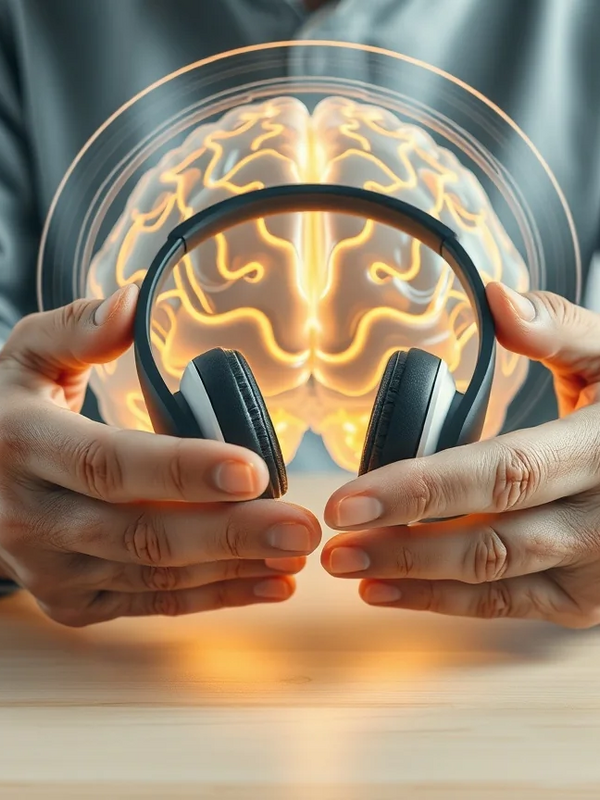
The Protective Power of Music: Lowering Dementia Risk
New research suggests a strong link between musical engagement and a reduced risk of dementia, including alzheimer’s disease. A recent study indicates that individuals who regularly listen to music may experience a 39 percent lower risk of developing dementia. This protective effect extends to both passive listening and active music-making.
The study revealed a 35 percent risk reduction for those who play a musical instrument,and a 17 percent decrease in cases of mild cognitive impairment among regular music listeners. remarkably, the study found that simply listening to music offered a substantial benefit, with the combination of listening and playing not considerably improving the results – good news for those without musical training.
How Does Music Protect the Brain?
Experts believe the benefits stem from what’s known as cognitive reserve. Music is a uniquely complex activity,together activating numerous brain areas involved in auditory processing,emotional evaluation,and memory.
Professor Ryan explains, “Thru musical engagement, we build neural networks that later serve as buffers against aging processes and diseases such as Alzheimer’s.”
Beyond direct neuronal stimulation,music also offers indirect benefits. It’s a proven stress reducer and can alleviate depression – both established risk factors for dementia. This dual action makes music a powerful tool for brain health.
Study Considerations & Future Implications
While the data is compelling, the study’s lead author, Jaffa, cautions that as an observational study, it cannot definitively prove a cause-and-effect relationship. It’s theoretically possible that individuals in the early stages of dementia might reduce their music consumption due to difficulty processing complex stimuli.
However,the researchers emphasize the strength of the connection given the large dataset and long observation period. They highlight that music is a ”low-risk, cost-effective and culturally universal intervention” with no known negative side effects, unlike many pharmaceutical approaches.
This research has significant implications for preventative healthcare and geriatric care:
* Health Policy: Musical engagement could be formally incorporated into dementia prevention guidelines, alongside recommendations for physical exercise.
* Nursing Homes: Music should be viewed not just as entertainment, but as a vital therapeutic component of care, with personalized playlists becoming standard practice.
* Digital Health: The development of apps utilizing personalized music for cognitive stimulation,based on individual biometric data,is likely to expand.
Ultimately, enjoying music isn’t just good for the soul; it’s an active investment in brain health and a potentially powerful defense against cognitive decline.
Want to learn more about boosting your brain health? Many find daily exercises helpful for improving focus and memory. A free report, “brain training made easy,” offers practical routines, nutritional tips, and a self-test to assess your current memory level. Download the free ‘Brain training’ report now
