
Cassini Data Reveals New Organic Compounds Erupting From Enceladus‘ Ocean
PASADENA, CA – In a revelation with profound implications for the search for extraterrestrial life, scientists analyzing data from NASA’s Cassini mission have identified previously unknown organic compounds originating from the subsurface ocean of Saturn’s moon, Enceladus. The findings, recently published and originally reported by Kosmonautix.cz, detail the detection of complex molecules within material ejected from plumes erupting near the moon’s south pole.
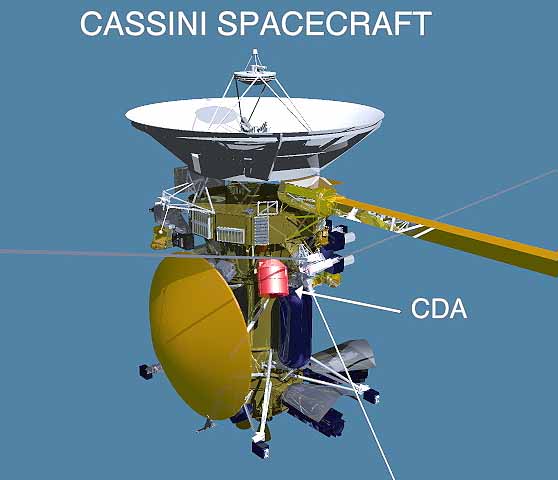
These organic compounds - aliphatic and cyclic esters and ethers, some containing double bonds – were detected in ice grains pulverized during a high-speed flyby of the Cassini spacecraft at approximately 18 kilometers per second. The impact vaporized and ionized the grains, allowing the spacecraft’s Cosmic Dust analyzer (CDA) mass spectrometer to analyze their chemical composition. Researchers were able to analyze fragments smaller then a thousandth of a millimeter, even smaller than the flu virus.
The discovery is significant as these newly identified substances, alongside previously confirmed aromatic, nitrogen, and oxygen compounds, represent potential building blocks for more complex organic processes. Astrobiologists believe these processes could be crucial in the progress of life, and the presence of these molecules narrows the search for habitable environments within our solar system.
The CDA instrument, pictured in documentation from JPL, played a key role in the analysis.Despite the violent encounter with the plume, the Cassini spacecraft continued to operate successfully for nearly another decade, continuing its exploration of the Saturn system.
The research builds on earlier findings confirming the existence of a global ocean beneath Enceladus’ icy shell, making it a prime target in the search for life beyond Earth. The data was originally published by NASA and translated from the original source by Kosmonautix.cz.
