
Comics Explore Alternatives to Capitalism as Economic Anxiety Rises
NEW YORK - As global economic uncertainty persists and discussions around wealth inequality intensify, a growing number of comic books and graphic novels are offering readers not just critiques of capitalism, but potential pathways toward alternative systems. From explorations of universal basic income to visions of ecologically sustainable societies, these works are sparking conversations and inspiring a search for solutions beyond the status quo.
The surge in politically and economically engaged comics reflects a broader cultural moment of questioning established norms. While anxieties about job security, stagnant wages, and the climate crisis are widespread, these graphic narratives provide accessible entry points for complex ideas, reaching audiences often excluded from customary economic discourse. Experts suggest this medium’s unique ability to blend personal stories with systemic analysis is proving notably resonant.
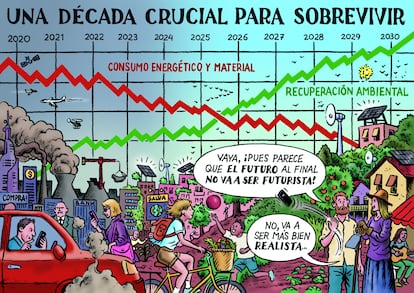
Several recent works directly address potential alternatives. Economix and Capital and Ideology both feature discussions of universal basic income as a possible safety net in an increasingly automated world. The anthology Ecotopias, published by Astiberri, presents a collection of illustrated scenarios depicting a more sustainable and equitable future. French artist Blutch’s work, particularly Spent, highlights the human cost of relentless work culture, prompting reflection on the need for prioritizing mental health within the workforce.
“The paradox of workplace suicide is that it affects the most dedicated people,” explains artist Prolongeau, whose work touches on these themes. ”If you don’t care about your job, you don’t feel that recognition is at stake.”
Political scientist and comic book reader, Goodwin, argues that existing models offer viable alternatives. “Social democracy works much better than unregulated capitalism according to practically any metric,” she states, advocating for a deliberate slowing of pace and a re-evaluation of priorities.
The accessibility of the medium is a key factor in its potential for impact. “It has a minimal barrier to entry, and it can bring more people into these discussions,” Goodwin adds. “And not just as readers.It only takes one person to write a comic. Anyone can start today.” This democratization of creative expression offers a powerful tool for imagining and advocating for a different future, even amidst the demands of daily life - to laugh, cry, eat, sleep, love, and work.
