
From flying Observatories to ‘Catfish’ Testbeds: A Look at 10 of boeing’s Most Unusual Aircraft
SEATTLE, WA – Boeing, a name synonymous with commercial air travel, has also quietly produced a series of aircraft far removed from typical passenger routes. Beyond the 747 and 737,a lineage of uniquely modified and experimental planes exists,born from the demands of scientific research,military testing,and sheer engineering curiosity. These aircraft, often operating behind the scenes, represent some of the most interesting – and strangest – creations to ever leave a Boeing factory.
These unconventional designs weren’t about maximizing passenger capacity or streamlining routes; they were about pushing the boundaries of what was possible in flight. From a 747 transformed into a mobile astronomical observatory to a 757 bristling with fighter jet technology, Boeing’s willingness to embrace the unusual has yielded some truly remarkable aircraft.
Here are 10 of the strangest Boeing aircraft ever made:
1. Boeing 747SP SOFIA – The Flying Observatory: To peer beyond the obscuring effects of Earth’s atmosphere, NASA and the German space Agency collaborated on the Stratospheric Observatory for Infrared astronomy (SOFIA). This modified 747SP, distinguished by its shortened fuselage, featured a large retractable door revealing a powerful telescope. SOFIA operated from 1996 to 2020,observing Pluto,Kuiper Belt objects,and distant galaxies. NASA retired SOFIA, concluding the knowledge gained was no longer worth the operational expense.
2. Boeing 757 Flying Test Bed “Catfish”: Lockheed Martin’s “Catfish” is a heavily modified Boeing 757 serving as a flying laboratory for F-22 Raptor systems. It sports a flattened nose – actually from an F-22 – housing the Raptor’s AN/APG-77 AESA radar, and an additional wing above the cockpit equipped with the AN/ALR-94 electronic support measures suite. the aircraft can accommodate up to 30 engineers and allows for real-time testing of F-22 software, even in formation with actual Raptors.
3.Boeing YAL-1 Airborne Laser Testbed: Perhaps one of Boeing’s most aspiring and controversial projects, the YAL-1 was a modified 747-400 equipped with a high-energy chemical laser intended to shoot down ballistic missiles. The program, plagued by technical challenges and cost overruns, was ultimately cancelled in 2012.
4. Boeing X-48 Blended Wing Body: This experimental aircraft, a collaboration between Boeing and NASA, explored the concept of blended wing body design. The X-48, resembling a flattened, wing-shaped aircraft, aimed to improve fuel efficiency and reduce noise. Multiple versions were built and tested between 2007 and 2013.
5.Boeing Bird of Prey: A demonstrator aircraft built in the 1990s, the Bird of Prey was a stealth technology testbed. Its unusual, angular design and lack of a traditional tail showcased advanced aerodynamic and stealth features, influencing future fighter jet designs. Only one was ever built.
6. Boeing 737 Airborne Regional Control (ARC): Developed in the 1970s, the ARC was a flying command post designed to provide air traffic control services in the event of a ground-based system failure. It featured extensive communications and radar equipment.
7. Boeing 720/707 Missile Test Platforms: During the Cold War, Boeing modified several 720 and 707 aircraft to serve as airborne launch platforms for testing air-to-air missiles. These planes allowed engineers to evaluate missile performance in a realistic flight environment.
8. Boeing KC-135 Stratotanker Modifications: While the KC-135 is a standard aerial refueling tanker, numerous modifications over its service life have resulted in some unusual configurations, including those used for classified testing and research.
9. Boeing C-137 Stratoliner VIP Transport: Originally designed as a commercial airliner,the C-137 was used by the U.S. Air Force as a VIP transport, often heavily modified with luxurious interiors and specialized communication equipment. President eisenhower used a C-137, nicknamed “Columbine III.”
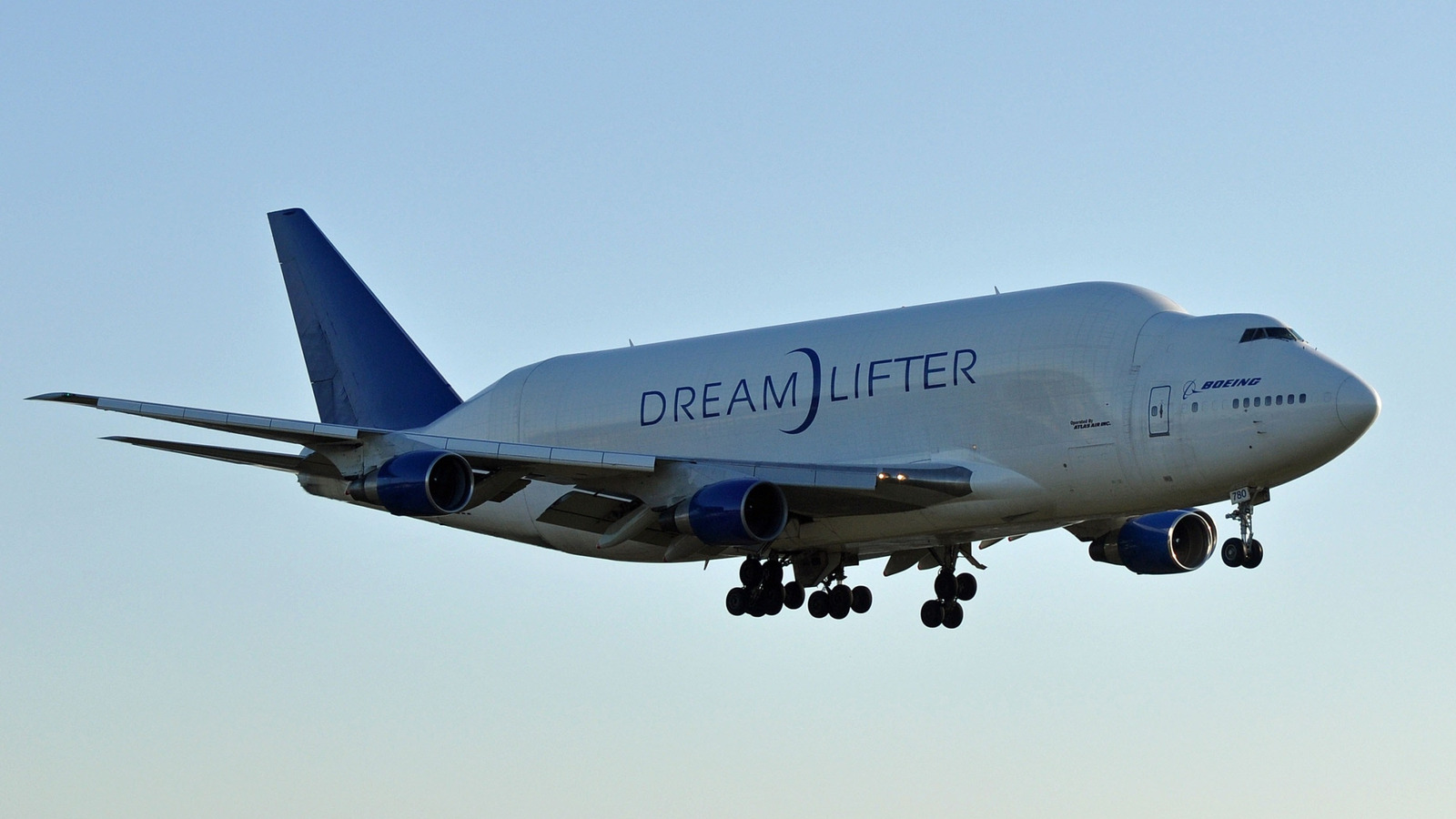
10. Boeing 747 dreamlifter: Though designed for a practical purpose – transporting oversized components for the Boeing 787 Dreamliner – the Dreamlifter’s bulbous upper fuselage is undeniably strange. It’
