
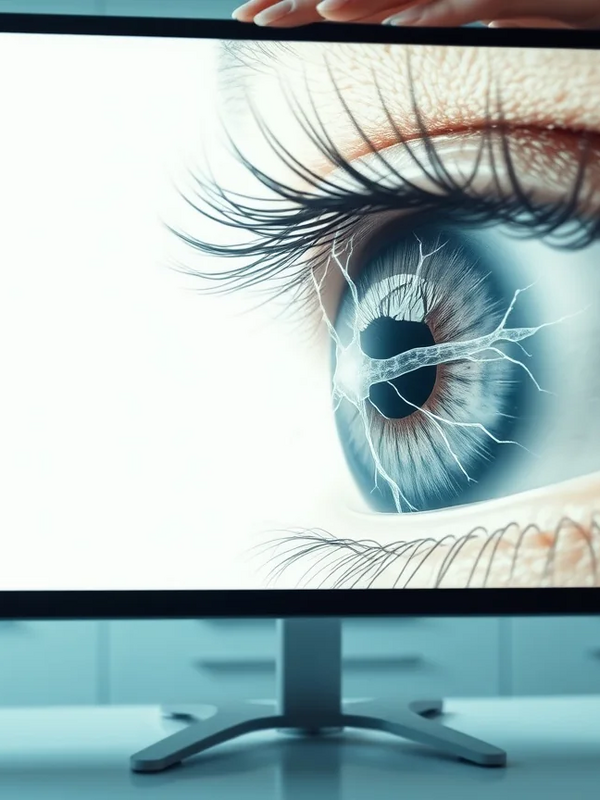
The Eyes as windows to the Brain: Early Dementia Detection Through Vision
Emerging research reveals a surprising link between vision problems and the risk of dementia, offering a potential new avenue for early detection and preventative measures. While not every visual impairment signals cognitive decline, specific changes are increasingly recognized as potential warning signs, going beyond the typical effects of aging.
A recent large-scale study involving nearly 3,000 participants found a significant correlation: individuals struggling to discern contrast exhibited a markedly higher risk of developing dementia. Difficulties with spatial perception and subtle alterations in eye movements are also being investigated as early indicators. The data is compelling – up to 19% of dementia cases observed may be linked to underlying visual functional impairments. This connection was formally acknowledged in 2024 by The lancet Commission, which added untreated visual impairment to its list of 14 modifiable risk factors for dementia.
Harnessing the Power of AI for early Diagnosis
Technological advancements are now making early detection a tangible possibility. Optical Coherence Tomography (OCT) scans provide detailed, non-invasive images of the retina in a matter of seconds.Crucially, artificial intelligence is capable of identifying anomalies that are invisible to the human eye. A system called “Quartz” analyzes the shape, size, and structure of retinal blood vessels, detecting minute changes that serve as potential digital biomarkers. Thes biomarkers are currently undergoing validation with the aim of providing reliable risk screening during routine optician visits.
Furthermore, laser-based spectroscopic methods are showing promise. By analyzing the biochemical composition of the retina,these techniques coudl potentially identify Alzheimer’s-specific changes before the onset of any noticeable symptoms.
Prevention is Key: A Critical Window of Opportunity
Currently, dementia is frequently enough diagnosed only after irreversible brain damage has occurred. A simple, affordable eye scan could revolutionize this approach.
Identifying individuals at risk years before cognitive symptoms manifest opens a crucial window for intervention. During this period, preventative strategies and future therapies could have the greatest impact. The Lancet Commission estimates that correcting visual impairments alone could reduce dementia risk by approximately 2%.
This connection is bidirectional: the eyes reflect the neurodegenerative process occurring in the brain, while concurrently, untreated vision loss can lead to social isolation and reduced cognitive stimulation – both autonomous risk factors for dementia.
Challenges and the Path Forward
While the research is promising, several hurdles remain before widespread implementation. Longitudinal studies are needed to further validate the predictive accuracy of these biomarkers. Standardization of measurement and analysis procedures is also essential.
Experts anticipate that these advancements will be integrated into clinical practice within the next five to ten years. The next critical step involves randomized trials to definitively prove that correcting vision problems can demonstrably slow cognitive decline.
Ultimately, ophthalmologists and opticians could become integral players in a comprehensive, interdisciplinary approach to brain health. The prospect of a simple eye test serving as a defense against one of the most significant medical challenges facing our aging population – once considered science fiction – is rapidly becoming a realistic possibility.
P.S. Interested in proactively supporting your cognitive health before symptoms appear? Download our free PDF report, “Brain Training Made Easy” – featuring 11 practical exercises, nutritional guidance, and a quick self-assessment to gauge your personal risk. Many readers have reported improved concentration and a greater sense of everyday confidence. Download the free report and take the self-test now
