
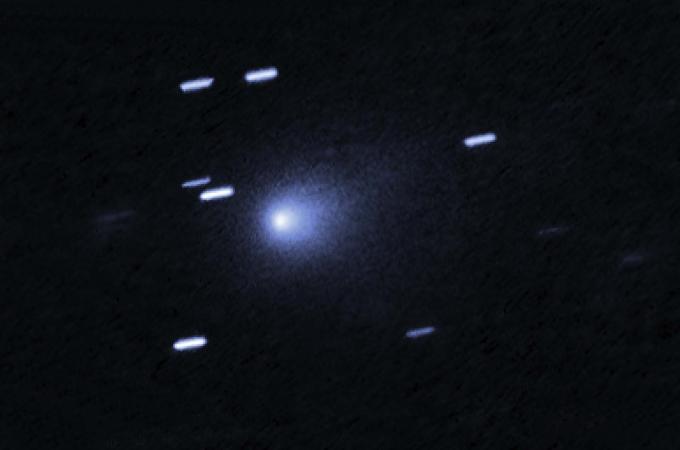
New Study Reveals Seasonal Risk Pattern for Interstellar Objects Posing Threat to Earth
A newly published study suggests interstellar objects, while a persistent potential hazard, exhibit a surprising seasonal pattern in their arrival and pose a disproportionate risk to teh Northern Hemisphere. Research led by Darryl Seligman of Michigan State University, published on the arXiv server on November 25, 2024, focuses not on how many interstellar objects exist, but on their origins and behavior within our solar system.
While planetary formation and destruction occur constantly around us, meaning the number of interstellar objects hasn’t likely decreased over time, detecting these visitors is substantially harder than tracking objects orbiting the Sun. Seligman’s team’s simulations reveal a critical distinction: slower interstellar objects, though less frequent, represent a greater threat to Earth. This is because the Sun’s gravity is more likely to capture these slower, hyperbolic objects, potentially deflecting them into Earth-crossing orbits.
The study also identified a surprising seasonal effect.According to the research, the fastest, least perilous interstellar objects arrive in the Solar System during the spring (from the Northern Hemisphere perspective), while slower, more hazardous objects are more common in the winter months. Seligman attributes this difference to the Earth’s changing position relative to the stream of interstellar objects.
Further analysis indicates that impacts are most likely to occur around the equator, though impacts in the Northern Hemisphere would likely cause more damage due to the higher concentration of population.
Despite these findings, scientists currently lack sufficient data to quantify the overall threat posed by interstellar objects. The upcoming Vera Rubin Observatory is expected to significantly improve our understanding, potentially identifying tens to hundreds of these interstellar visitors.
The research highlights the ongoing need for vigilance and improved detection capabilities as we learn more about these enigmatic travelers from beyond our solar system.
