
Expanded MRI Screening for Dense Breast Tissue to Roll out in 2030
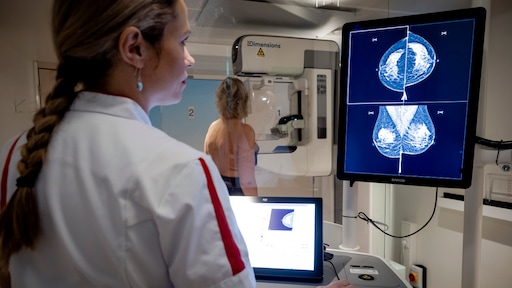
Women with dense breast tissue will have access to MRI screenings as part of the national breast cancer screening program beginning in 2030, State Secretary Judith Tielen of public Health announced. This expansion aims to improve early detection of breast cancer in a segment of the population where mammograms can be less effective.
Currently, all women aged 50-75 are invited for routine mammograms. The new policy will add an MRI scan, following the mammogram, for women identified as having vrey dense breast tissue - a characteristic affecting an estimated 5 to 8 percent of those screened.
While acknowledging the urgency of implementing this change, Tielen explained the phased rollout is necessary. ”Ideally, I would have wanted this in place yesterday,” she stated, “but careful consideration of logistical challenges requires a more measured approach. It will take a few years to fully implement.”
The decision follows extensive consultation with patients, doctors, and researchers, who agreed that a gradual implementation through the existing screening program is the most responsible path forward. A key concern is capacity. The Ministry of Health recognizes that the current infrastructure cannot immediately accommodate all eligible women. Therefore, the number of MRI invitations will increase incrementally each year.
the national screening organization will manage and fund the MRI scans, ensuring consistent quality and eliminating out-of-pocket costs for participants. this centralized approach also allows for a controlled expansion of capacity.
However, this approach wasn’t universally favored. The Dutch Breast Cancer Association advocated for offering MRI scans through standard healthcare channels to expedite access. tielen cautioned that a rapid shift could lead to “repression,” possibly delaying necessary MRI scans for patients with other medical conditions.
The national breast cancer screening program,established in 1990,has already proven highly effective,detecting over 6,000 tumors annually and preventing an estimated 1,300 deaths each year. The addition of MRI screening for women with dense breast tissue represents a further commitment to improving early detection and saving lives.
