
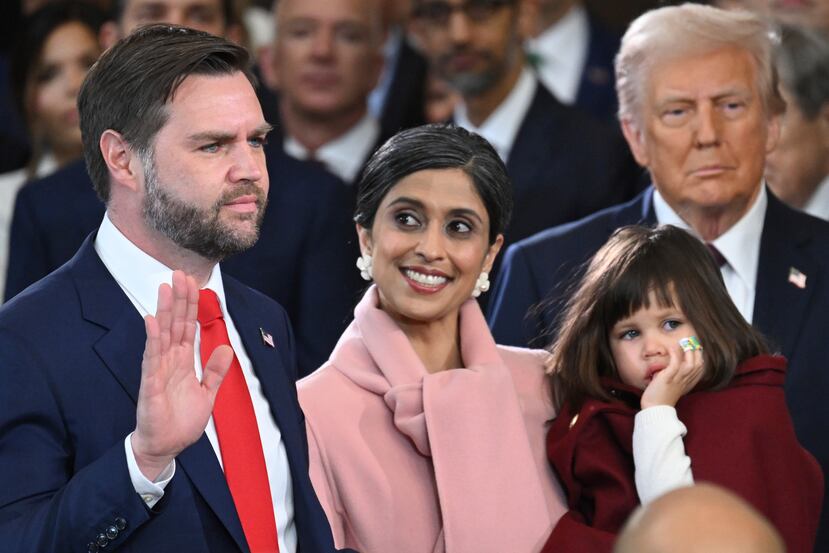
J.D.VanceS Interfaith Marriage Rekindles Debate on Faith and Partnership
WASHINGTON – The recent inauguration of J.D. Vance as Vice President of the United States on January 20, 2025, has brought renewed attention to the complexities of interfaith marriage, sparking discussion about religious conversion, evolving beliefs within partnerships, and interpretations of religious doctrine. Vance’s marriage to Usha vance, whose religious background differs from his own, has become a focal point in broader conversations about navigating faith in modern relationships.
Experts suggest that religious conversion undertaken solely for the sake of marriage can be detrimental to the relationship. Dilip Amin, founder of InterfaithShaadi.org, an online forum serving primarily South Asians, emphasizes the importance of genuine conviction. “If you convert because you’ve had a real change of heart, that’s fine,” he said. “But if it happens because of constant pressure and proselytizing, then it’s wrong. My advice is: Don’t let a religious institution direct your actions. Talk to each othre. You don’t need a third party to interpret the situation for you.”
Conflicts can also arise when a spouse’s religious commitment intensifies after marriage. Ani Zonneveld, founder and president of Muslims for Progressive Values, who has officiated numerous interfaith weddings, noted, “I’ve seen that tension… where a Muslim husband who didn’t care much about practicing Islam became Orthodox after having children.That’s unfair to the other person.”
The Rev. J. Dana Trent,ordained as a Southern Baptist minister,offers a personal outlook through her marriage to a Hindu monk. their experience is detailed in their memoir, “Saffron Cross: The Unlikely Story of How a Christian Minister Married a Hindu Monk.” Trent addresses the biblical verse Corinthians 6:14, often cited to discourage interfaith marriage – which states, “Do not be unequally yoked with unbelievers.”
Trent challenges a literal interpretation of the verse, arguing it’s original context is not applicable to contemporary society. “The goal of an interfaith marriage is not to convert the other,” she said, “but to support and deepen each other’s traditions and faith paths.”
