
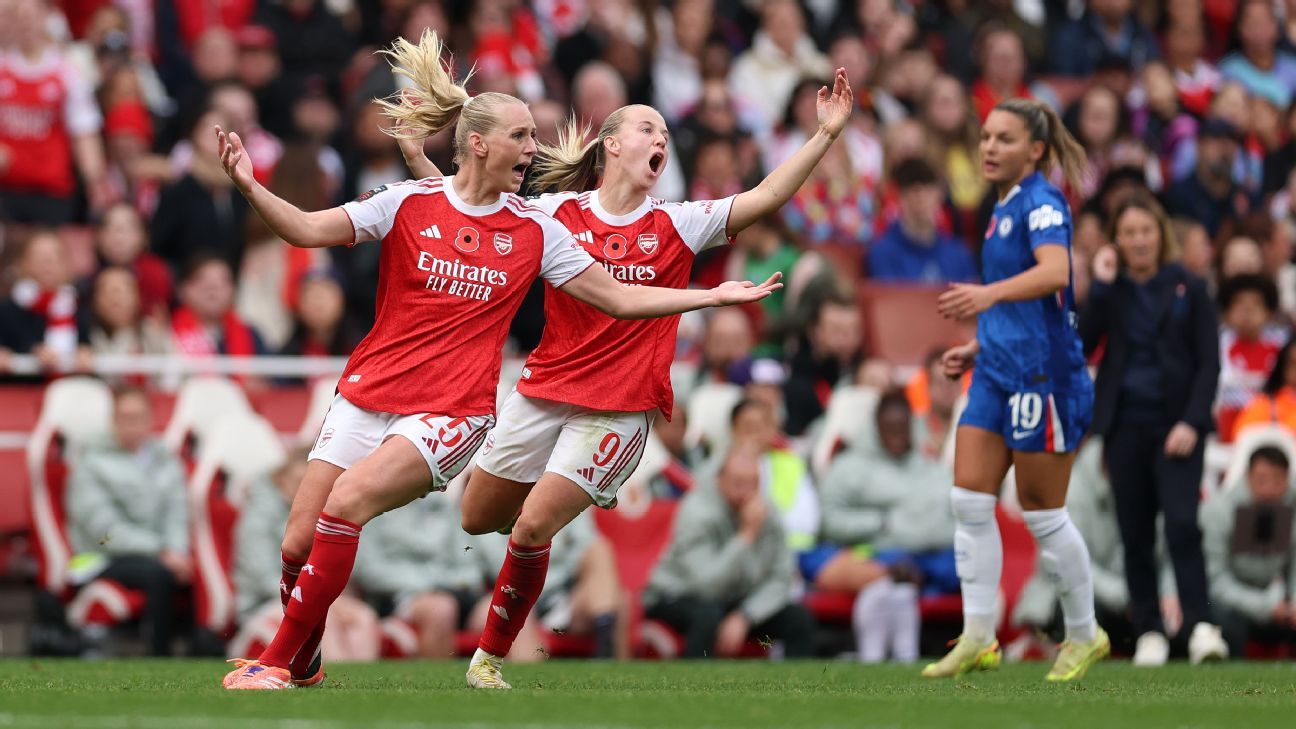
Controversial Officiating Decisions Mar High-Stakes WSL Clash Between arsenal and Chelsea
London, England – A highly anticipated Women’s Super League (WSL) match between Arsenal and Chelsea ended in frustration Sunday, as a series of questionable officiating decisions overshadowed a thrilling contest at the Emirates Stadium. While the game finished level, both managers voiced strong concerns over the standard of refereeing, reigniting the debate over the introduction of VAR technology into the league. Arsenal, needing a win to close the gap on league leaders, were left feeling especially aggrieved by calls that ultimately impacted the game’s outcome.
The match was marred by incidents beginning with a risky tackle by Chelsea’s Keira Walsh in the first half, which earned her a yellow card but, according to many observers, warranted a red. The lack of intervention from officials, even with the potential for VAR review, was a key point of contention.
Further controversy erupted late in the second half. Alessia Russo appeared to have equalized for Arsenal in the 87th minute, but the goal was disallowed for offside – a call described as “marginal” but impactful nonetheless. Shortly after,Frida Maanum thought she’d secured a late winner for Arsenal on a counter-attack,only for the goal to be ruled out for offside,despite Maanum appearing to be level with the last defender.
These decisions sparked outrage from Arsenal, who felt the results were unfairly influenced. Chelsea manager Sonia Bompastor,whose team extended their unbeaten WSL run to 32 games,acknowledged the impact of the officiating but also emphasized the quality of play. “When you analyze the men’s game, it happens also, you have big games and we talk at the end about the refereeing. It happens. People maybe need to focus on the quality we had from both teams,” she said in a post-match press conference.
Arsenal boss Renee Slegers was more direct in her call for change. “At the moment, if you ask me, I think in a game like this, we need just decisions. We need justice. that’s where I think VAR and technology can come in,” Slegers stated. “Yes, there’s more and more at stake in the WSL, at the top, but also in the relegation battle and everything in between. There’s more and more at stake, I think we have to look at how we grow the game in all aspects.”
this isn’t an isolated incident.The reverse fixture last season at Stamford Bridge also drew criticism for poor officiating, highlighting a recurring issue within the WSL.The problems are widely attributed to a lack of fully professional, well-compensated referees, despite promises of investment following a league takeover last season.
The debate now centers on prioritizing investment in referee growth, followed by a discussion on the implementation of VAR - a technology that, while not without its own drawbacks as seen in men’s football, could potentially mitigate the impact of human error in crucial moments. With 14 games remaining in the WSL season, the pressure is mounting for league officials to address these concerns before further matches are impacted by controversial decisions.
