
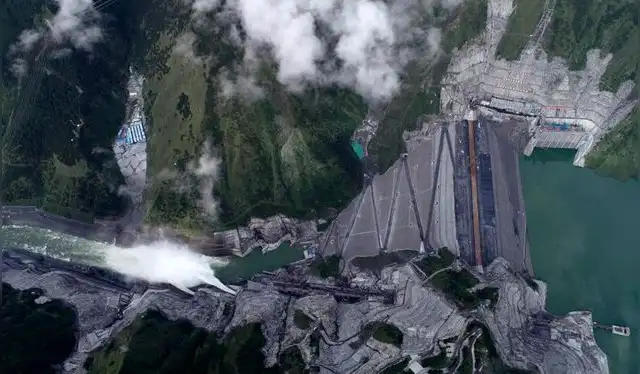
China Bolsters Clean Energy with Massive hydropower Project, Aiming for Stable Power Supply
China has inaugurated the Lianghekou Hydropower station on the Yalong River, a project poised to significantly reshape the nation’s clean energy landscape. The station,with an installed capacity of three million kilowatts (kW),represents a key component of a larger plan to develop 22 central hydropower stations along the Yalong River,creating a large-scale renewable energy model focused on consistent and reliable power distribution.
The newly completed reservoir boasts a storage capacity of 10.8 billion cubic meters,ensuring year-round energy production. The approximately 9.5 billion euro investment underscores China’s commitment to a stable energy transition centered around resources like water. Beyond energy generation, Lianghekou is designed to regulate river flow and mitigate flood risks, adding environmental benefits to it’s primary function.
This project arrives as China seeks to optimize its renewable energy mix. Unlike solar and wind power,hydroelectric energy is not sensitive to climate or time,offering a consistent power supply. Chinese authorities suggest the project will help rebalance the energy market, potentially allowing for the repurposing of less efficient solar panels and wind turbines in regions with lower performance. As a base load power source, hydropower can continuously supply electricity without the intermittency associated with wind or sun, crucial for maintaining a balanced national electrical grid.
The Lianghekou Hydropower Station’s infrastructure spans 1.57 kilometers and includes underground facilities, spillways, ventilation tunnels, and six generation units. A particularly striking feature is the water collection tower, measuring 115 meters high, 160 meters wide, and 33 meters long.These components work in concert to convert the kinetic energy of water into electricity via state-of-the-art turbines.
The plant operates with advanced monitoring and control systems, including automated systems and refined control rooms. Images released by Xinhua state agency showcase both the exterior and interior of the facility, highlighting the technological sophistication employed to ensure continuous operation at high altitude. The station is expected to play a vital role in providing clean energy to the Chengdu-Chongqing economic belt and promoting enduring progress in regions with significant water resources.
