
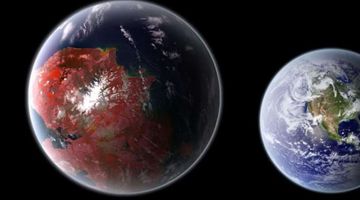
Astronomers Identify Perhaps Habitable Planet orbiting Nearby Star
A newly published study details the discovery of Gliese 251c, a planet located relatively close to our solar system and positioned within its star’s habitable zone, raising the possibility of liquid water and potentially, life. The findings, appearing in The Astronomical Journal, represent a notable step in the ongoing search for extraterrestrial life.
Gliese 251c orbits the red dwarf star Gliese 251, approximately 38 light-years from earth. While the planet’s mass suggests it is likely a rocky world, further examination is needed to confirm its composition and atmospheric conditions.
“We are at the forefront of analytical technologies and methods,” said researcher Beard. “Although the results are significant, the uncertainty of the instruments and methods means additional verification remains critical.”
Currently, directly imaging planets like Gliese 251c is beyond the capabilities of most telescopes.However, next-generation instruments, such as the Thirty Meter Telescope (TMT), offer promise. The TMT, featuring a 30-meter diameter main mirror, is expected to possess the necessary resolution for direct imaging.
“TMT is the only telescope that will have high enough resolution to carry out direct imaging of exoplanets like this. Smaller telescopes would not be able to,” Beard explained.
If future observations can capture direct images or detect the planet’s atmosphere, Gliese 251c could provide crucial insights into the potential for life to develop around small stars. The planet’s proximity and location within the habitable zone make it a prime candidate for continued study in humanity’s quest to determine if we are alone in the universe.
