
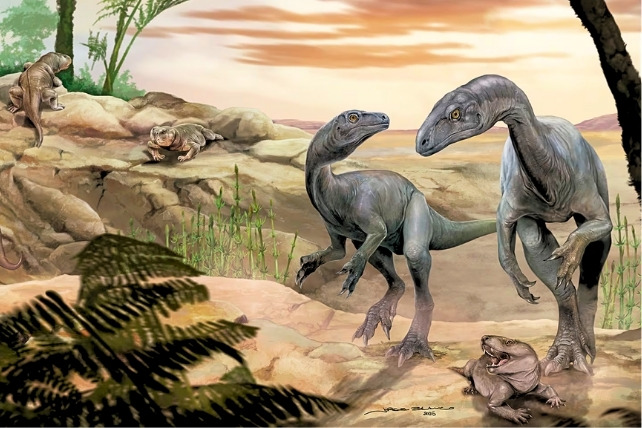
Ancient Dinosaur Revelation in Argentina Rewrites early Dinosaur History
BUENOS AIRES, Argentina – Paleontologists in Argentina have unearthed a remarkably complete fossil of a dinosaur species, Huayracursor jaguensis, estimated to have lived between 230 and 225 million years ago. The discovery, published in Nature magazine, positions Huayracursor as one of the oldest dinosaurs known to science and offers crucial insights into the dawn of the dinosaur age.
The find is significant because it sheds light on a pivotal period in evolutionary history – the late Triassic period – when the first dinosaurs and the ancestors of mammals were emerging. Huayracursor exhibits early characteristics of herbivorous dinosaurs that would eventually evolve into long-necked giants, but remained relatively small, measuring approximately two meters in length and weighing around 18 kilograms (40 pounds). Researchers believe studying this species will inform future investigations into dinosaur evolution and the transition from the Triassic to the Jurassic periods.
“This is one of the oldest dinosaurs in the world,” stated Agustin Martinelli, one of the authors of the study. The fossil’s completeness is particularly valuable, providing a detailed look at the physical traits of early dinosaurs and their evolutionary path. The species’ anatomy reveals early examples of increased body mass and neck elongation within the dinosaur lineage.
The discovery was made in the Ischigualasto Formation in northwestern Argentina, a region already renowned for its rich fossil record of Triassic-era creatures. The research team hopes further analysis of Huayracursor jaguensis will unlock more secrets about the origins and diversification of dinosaurs.
