
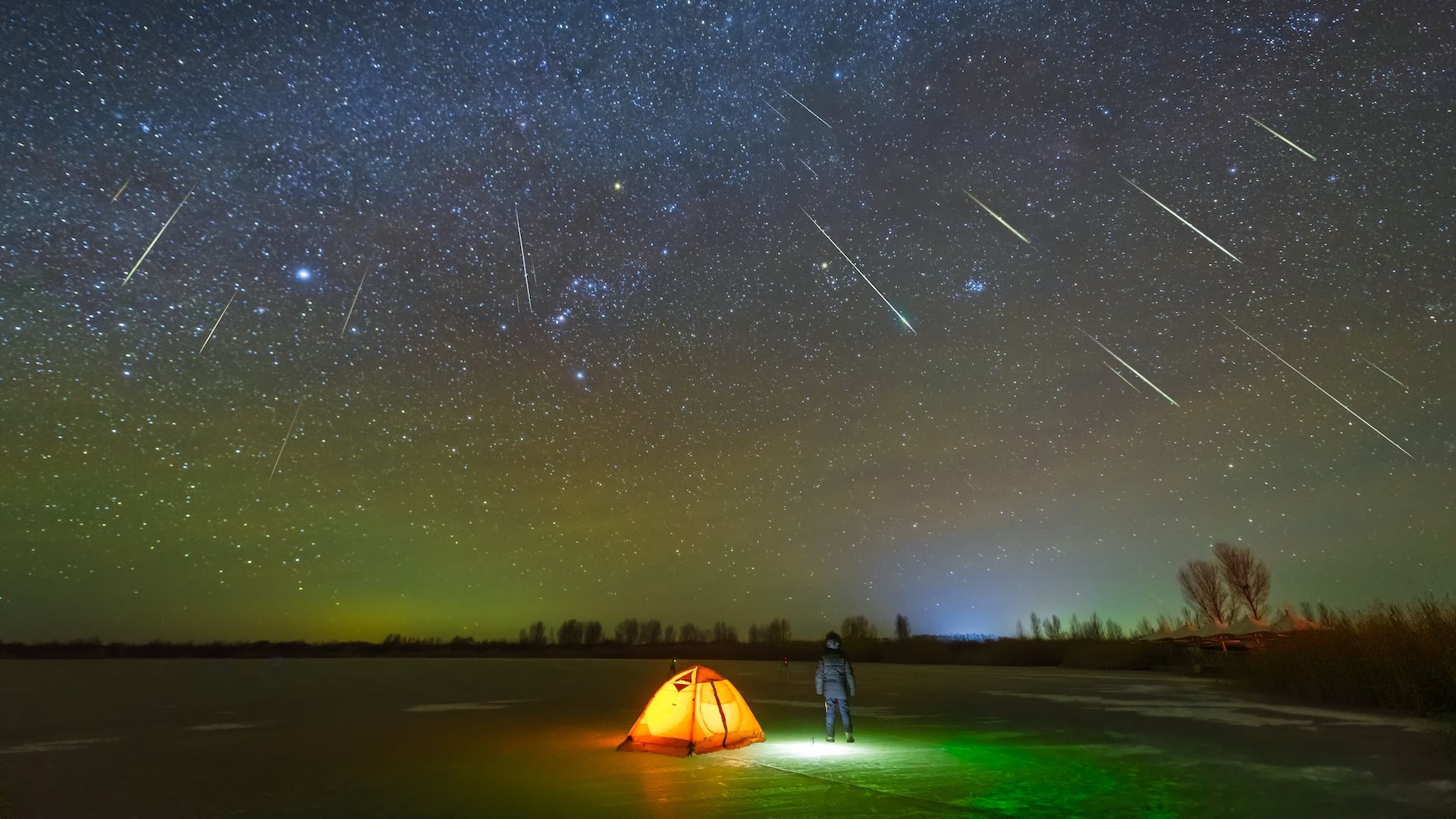
Orionids Meteor Shower too Peak Amidst Rare Comet Pair Viewing Possibility
A dazzling display of shooting stars from the orionid meteor shower will peak overnight October 21-22, coinciding with a rare chance to view two newly discovered comets – Lemmon and SWAN – in the night sky. Skywatchers can anticipate up to 10-20 meteors per hour during the Orionids’ peak,originating from debris left behind by Halley’s Comet.
The Orionids occur annually as Earth passes through streams of particles shed by Halley’s Comet, wich last graced our inner solar system in 1986 and won’t return until 2061. This year’s shower is particularly noteworthy as it falls alongside opportunities to observe Comet Lemmon, discovered in January by the Mt. lemmon SkyCenter observatory in Arizona, and Comet SWAN, first spotted in September by NASA’s orbiting Solar Dynamics Observatory. Both comets offer a unique viewing opportunity for astronomy enthusiasts.
The Orionid meteors will be best observed in the hours following midnight on Tuesday, October 21st, though the comets will be visible earlier the previous evening. Comet Lemmon will appear low in the northwest,positioned between the end of the Big Dipper’s handle and the star Arcturus. Comet SWAN will be found low in the south,just below the bright star Altair,a key component of the Summer Triangle asterism. While perhaps visible to the naked eye from dark locations, stargazing binoculars are recommended for optimal viewing of the comets.
The Orionid meteor shower is one of two annual events caused by Halley’s Comet; the other is the Eta Aquariids in April. These showers provide a consistent, predictable celestial event, allowing both seasoned astronomers and casual observers to connect with the remnants of a famous cosmic visitor.
