
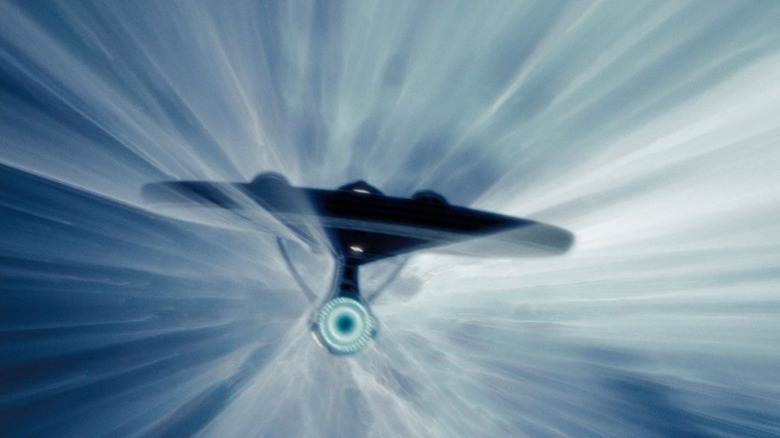
Warp Drive Inches Closer to Reality, Fueled by new scientific Breakthroughs
WASHINGTON D.C. – A concept long relegated to science fiction – faster-than-light travel as depicted in Star Trek – is showing increasing signs of potential feasibility, according to a recent report by National Geographic and ongoing research in theoretical physics. While interstellar voyages aren’t imminent, scientists are making significant strides in overcoming the monumental energy requirements previously thought to make “warp drive” impractical.
For decades, the biggest hurdle to realizing warp drive hasn’t been the idea of manipulating space-time, but the sheer amount of energy needed to do so. A 1994 research paper offered the first scientifically accepted model, proposing to squeeze space-time in front of a spacecraft and expand it behind.However, initial calculations indicated this would require energy equivalent to the mass of our sun to move even a small object.
The pursuit continues, driven by the potential to revolutionize space exploration and fundamentally alter our understanding of the universe. Astrophysicist Alexey Bobrick,along with Gianni Martire,has developed a new warp bubble solution requiring significantly less energy – on the scale of several Jupiter-sized objects. While still insufficient for faster-than-light travel, this represents the most substantial progress yet toward a functional warp drive.
“It’s now a matter of simply making it so… or,in non-picard terms,figuring out how to increase the speed while decreasing the amount of energy required,” the National Geographic report explains. Despite this advancement, researchers caution that practical implementation remains “several lifetimes” away, a timeline considerably longer than the 2063 date established in Star Trek canon for the first successful warp drive test and subsequent Vulcan contact. Nevertheless, the ongoing research offers a compelling glimpse into a future where interstellar travel may one day move beyond the realm of science fiction.
