
New Ichthyosaur Species Discovered in England Sheds Light on Jurassic Ocean Turnover
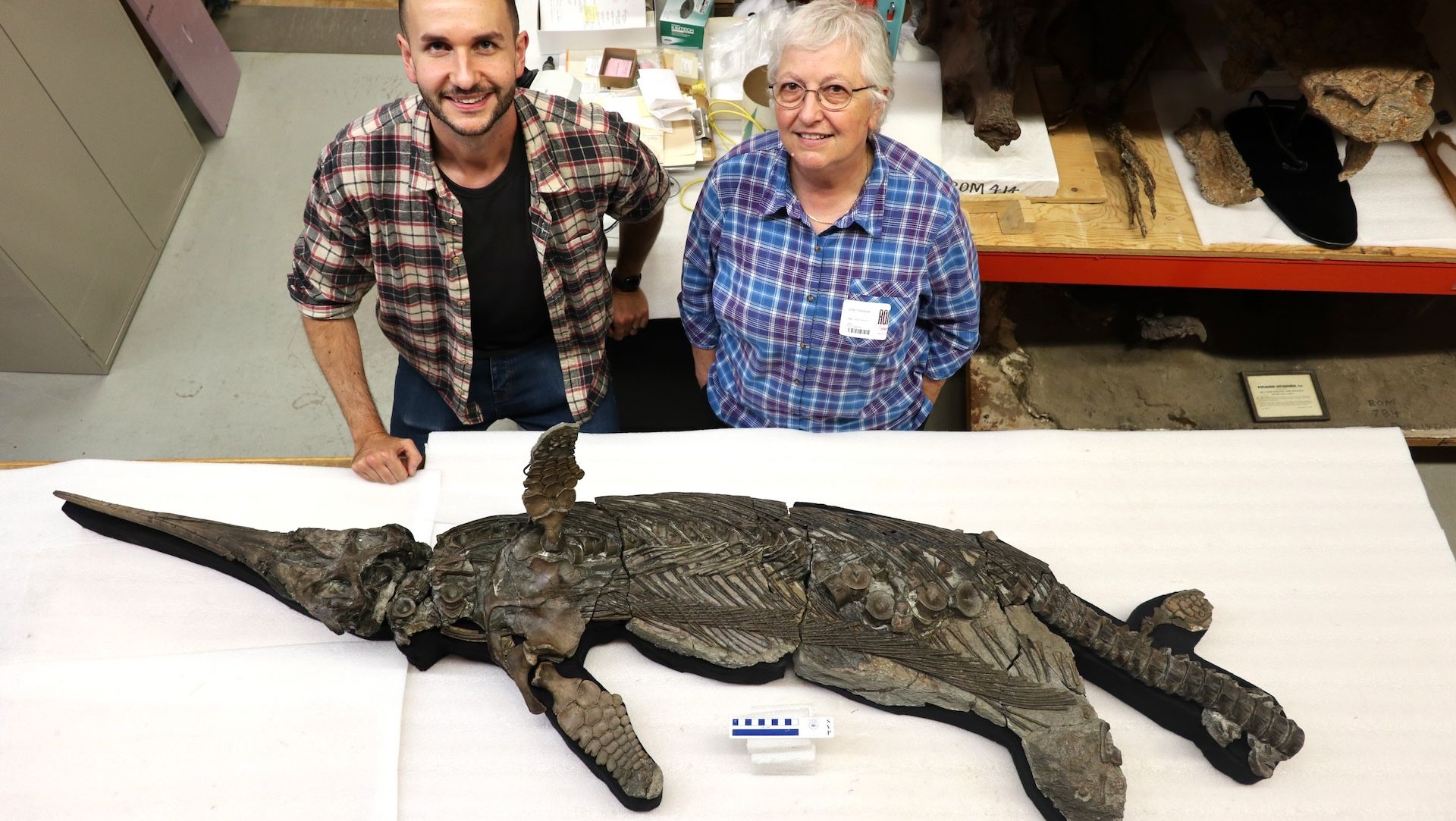
DORSET, ENGLAND – Paleontologists have identified a new species of ichthyosaur, a marine reptile frequently enough called a “sea dragon,” discovered along the Jurassic Coast in Dorset, England. Named Xiphodracon goldencapsis,meaning “sword dragon of Golden Cap” – a reference to both its morphology and the fossil’s discovery location – the find is poised to help scientists understand a critically important,yet poorly understood,evolutionary event in the early Jurassic period.
The fossil reveals an ichthyosaur that lived approximately 200 million years ago during the pliensbachian age. Researchers note the specimen suffered a bite wound to the head, likely inflicted by a larger ichthyosaur predator, and exhibited malformed bones and teeth indicative of injury or disease.
“The limb bones and teeth are malformed in such a way that points to serious injury or disease while the animal was still alive, and the skull appears to have been bitten by a large predator – likely another much larger species of ichthyosaur – giving us a cause of death for this individual,” explained erin Maxwell, curator of fossil aquatic vertebrates at the State Museum of Natural History Stuttgart in Germany. “life in the Mesozoic oceans was a dangerous prospect.”
The discovery is especially significant as the Pliensbachian period is marked by a scarcity of ichthyosaur fossils and a dramatic shift in species. Before and after this period, distinct ichthyosaur groups existed with little overlap. X. goldencapsis appears to be more closely related to later Early Jurassic species, suggesting the major faunal turnover occurred earlier than previously thought – within the early pliensbachian.
“Its discovery helps pinpoint when the faunal turnover occurred, being much earlier than expected,” said Dean Lomax, a paleontologist involved in the research. The cause of this evolutionary upheaval remains unknown.
The Xiphodracon goldencapsis fossil is now on display at the Royal Ontario Museum. The research team included Dean Lomax, Judy Massare, and Erin Maxwell.
