
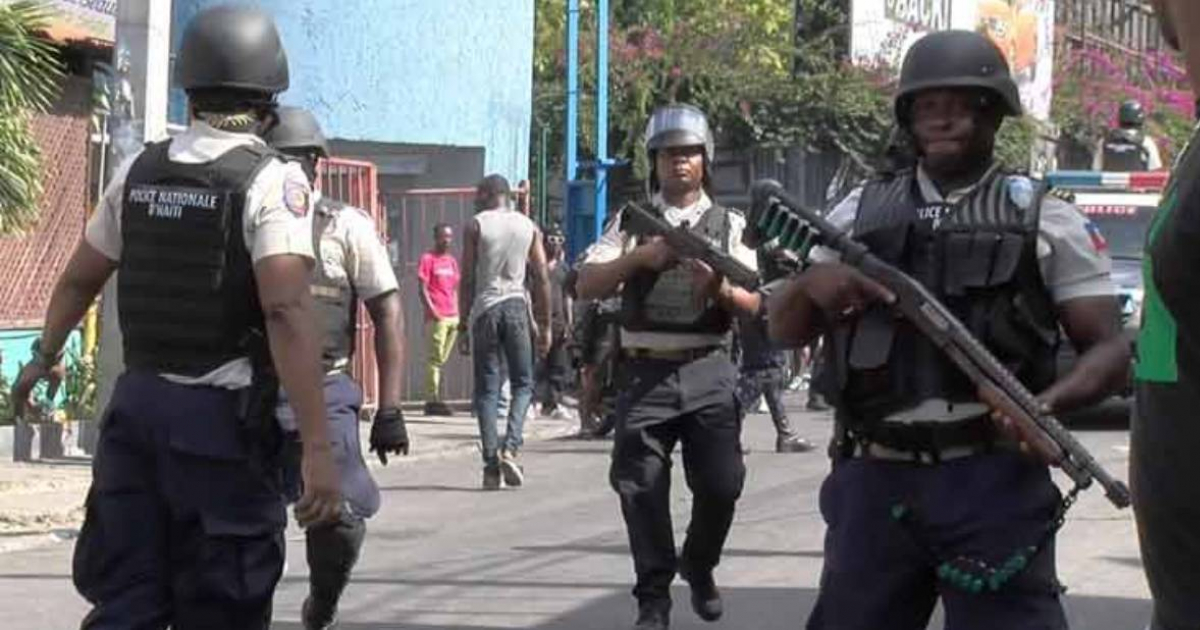
Haitian Police officers Face Medical Debt and Shortages While Receiving Treatment in cuba
Injured Haitian police officers sent to Cuba for medical care are reportedly being required to pay for services, despite expectations of humanitarian assistance, and are facing challenges due to critical drug shortages within the Cuban healthcare system. The situation has led to incomplete treatments, mounting debt, and even death, raising serious concerns about the arrangement between the two nations.
The Haitian state sends officers to Cuba for treatment thru a contract managed by the private intermediary company ”Good Money,” which connects the Haitian government with the Cuban health system.Good Money receives a commission of 3-4% per treatment and is responsible for transferring funds to the Cuban hospitals. Though, numerous officers report consistent failures in payment, leaving them responsible for covering medical expenses.
“Cuban doctors do not provide care without the corresponding payment,” stated Mathieuny Sidel, spokesperson for the National union of Haitian Police (SYNAPOHA), describing the situation as “inhuman and opaque.” Several officers have been forced to pay for surgeries and medications out-of-pocket, with insurance refusing to cover the costs. One officer recounted having to rely on family assistance to avoid a similar fate after being injured in March 2024. Another officer, shot in the leg in october 2024, returned to Haiti with an incomplete treatment plan, specifically lacking rehabilitation for a sciatic nerve injury deemed ineligible for coverage.
the crisis is exacerbated by a severe shortage of essential medications in Cuba,stemming from economic difficulties and the US embargo. Moast antibiotics, painkillers, and drugs for chronic diseases require purchase in US dollars, a currency in short supply due to declining tourism. Good Money has reportedly sought medications from Jamaica and Panama, but patients continue to experience neglect.
The death of haitian inspector Jean Bernard on June 28th highlights the dire consequences of the situation. Suffering from terminal cancer, Bernard died alone in a Cuban hospital after pleading to be repatriated to Haiti to spend his final days with family.
Between June 2024 and June 2025, at least 33 Haitian police officers have died, with 48% of those deaths occurring during operations against armed gangs, according to the National Human Rights Defense Network (RNDDH).
Despite these documented cases and widespread complaints,neither the Haitian National Police nor its medical leadership have issued official statements. Similarly, the Cuban State has remained silent regarding the charges levied against patients who were ostensibly transferred for humanitarian medical care.
One officer currently hospitalized in Cuba summarized the experience: “Most of us do not finish the treatment as they charge us for everything. The agency only covers the minimum, and the rest is on us.”
